If you’ve ever built something from scratch… a gadget, a piece of code, a molecule; you know the strange mix of pride and paranoia that comes with it. Pride, because you’ve made something that didn’t exist before. Paranoia, because in a world where copying is cheaper than creating, someone else could take your work, slap their name on it, and profit before you’ve even caught your breath. That, in essence, is why patents exist.
In India, a patent isn’t just a badge of innovation. It’s a legal right, defined under Section 2(1)(j) of the Patents Act, to stop others from making, using, selling, or importing your invention without permission, for a limited period. But it’s not a blanket “right to use” your invention; it’s the right to exclude others. That difference matters. Imagine you design a brilliant electric scooter that glides silently through traffic, but it runs on a type of battery regulated under environmental law. Even with a patent, you might need other approvals to actually sell it.
Patents only cover inventions that tick three boxes: they’re new, they involve an inventive step, and they’re capable of industrial application. Sounds simple enough, until you meet Sections 3 and Section 4 of the same Act, the gatekeepers that declare certain things unpatentable no matter how novel or clever they are. Think perpetual motion machines, methods of surgery, or plants and animals (other than microorganisms). Those stay out of the system, for reasons ranging from scientific credibility to public policy.
The Making of a Patentable Idea
Every patent starts with a spark: the “what if” moment. But turning that into something patentable in India means crossing a high bar. Novelty means it’s never been disclosed anywhere in the world, not in a journal, a trade fair, or even a conference presentation. Inventive step means it’s not obvious to a skilled person in the field; you’ve added something more than routine tweaking. Industrial applicability means it can be made or used in some kind of industry, which can range from pharmaceuticals to software-integrated hardware.
The “what doesn’t qualify” part is just as important. The Supreme Court’s decision in Novartis v. Union of India in 2013 put teeth into Section 3(d), refusing a patent for a new form of a known cancer drug because the company couldn’t prove “enhanced therapeutic efficacy”. That single case changed the way pharma patents are drafted in India, data on clinical benefit became non-negotiable.
For software-driven inventions, Ferid Allani v. Union of India in 2019 was a game changer. The Delhi High Court said you can’t reject something just because it involves a computer program; if it produces a “technical effect” or “technical advancement,” it can still qualify. That opened the door for AI-driven systems, image-processing tools, and fintech security protocols, as long as they’re claimed with the right technical framing.
Sometimes, the law tilts toward public interest. In Bayer v. Natco, India’s first compulsory licence was granted for a life-saving cancer drug, allowing a generic manufacturer to sell it at a fraction of the price while paying royalties. It’s a reminder that patents are private rights operating in a public ecosystem, your monopoly isn’t absolute if the public’s needs are at stake.
Why It Matters in the Real World
It’s easy to think of patents as dusty legal certificates, but they’re often the difference between an idea surviving or dying in the market. Take James Dyson. Before his first bagless vacuum cleaner took the world by storm, he built over 5,000 prototypes. Without a patent, years of trial and error could’ve been swiped by big appliance brands before he even had a chance to sell his first vacuum. Instead, those patents became his shield and his bargaining chip, giving him the breathing room to turn a scrappy idea into a company that still owns its corner of the market today.
Or think of the Wright brothers. Their 1906 patent on an aircraft control system wasn’t just a technical document; it became the heart of a bitter legal battle with rival aviators. The lawsuits may have slowed America’s early aviation progress, but they also sent a clear message: mastering flight wasn’t just about building machines, it was about owning the ideas that made them work. That push-and-pull between guarding an invention and letting an industry grow hasn’t gone away; it still fuels plenty of patent arguments today.
In pharma, Pfizer’s cholesterol drug Lipitor is a classic example. It ruled the global sales charts for years, and a big part of that success came from the fortress of patents the company built around it. The company even used follow-on patents strategically to extend market exclusivity. In India, however, such tactics face the scrutiny of Section 3(d), as Novartis discovered. The balance here is different: protection is possible, but not without proving genuine added value.
For innovators and entrepreneurs, patents can be your ticket to investment. Venture capitalists love the defensibility that comes with a granted patent; it can make the difference between funding a prototype and scaling a product. For universities and research institutions, patents turn academic output into industry collaborations, licences, and sometimes spin-off companies. And for corporations, they’re both shields and swords, a defensive barrier against copycats and a bargaining chip in cross-licensing negotiations.
The Life and Limits of a Patent
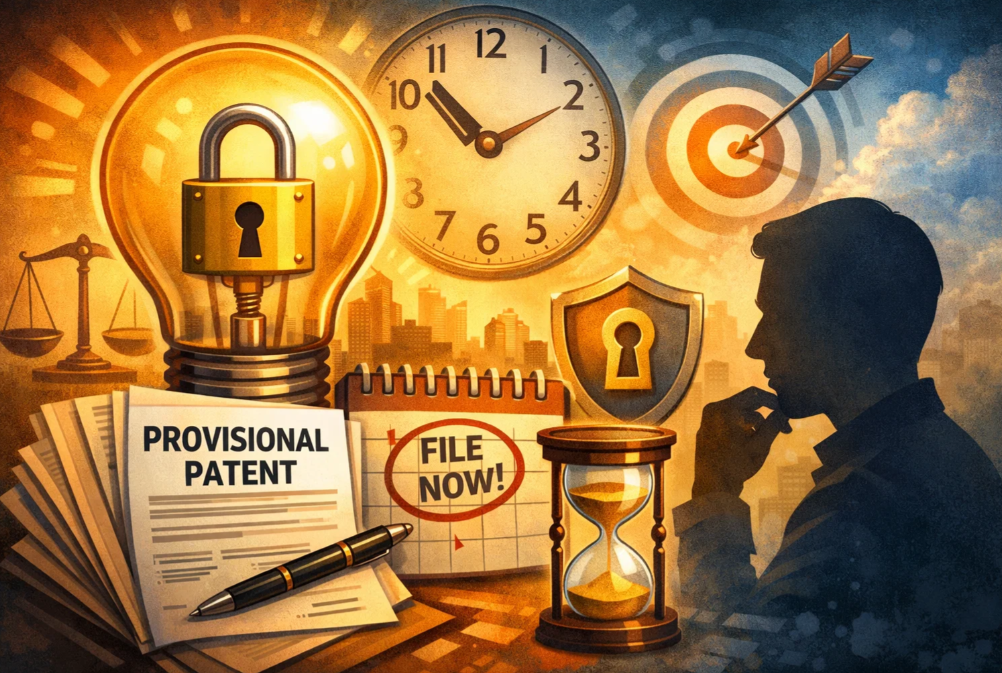
In India, the road to a patent begins at the drafting table, a stage where your idea needs both technical clarity and legal smarts. You can start with a provisional application to lock in your priority date while you polish the details, but within a year you’ll need to file the complete specification. After that, the Patent Office takes over: they check if your invention meets the law’s requirements, dig through prior art to see if it’s truly new, and send you a First Examination Report (FER). That’s your cue to reply… maybe tweak your claims, answer objections, or even show up for a hearing. If everything lines up, you walk out with a granted patent.
That grant gives you 20 years of exclusivity from the filing date, but only if you pay annual renewal fees and comply with working requirements. Neglect those, and the patent lapses. And remember, a patent doesn’t guarantee commercial success. It can give you room to breathe, to scale, to negotiate, but the market decides the rest.
Indian law also keeps a close watch on how patents interact with public welfare. Compulsory licensing provisions mean that if a patented product isn’t available at a reasonable price or being worked in India, the government can step in. That’s not common, but the Bayer-Natco case showed it’s not theoretical either.
Thinking Beyond the Certificate
Patents are a strong tool, but they’re not the only way to guard an idea. Sometimes, keeping it under wraps works even better, like Coca-Cola’s secret recipe, which has stayed locked away for over a century because no one can reverse-engineer it exactly. Sometimes, an industrial design registration is better for protecting the look and feel of a product. And sometimes, copyright covers the creative aspects of code or documentation more effectively than a patent could.
What patents do uniquely well is force you to think through your invention: to define it, prove it, and share it publicly in exchange for exclusivity. They’re a contract between you and society: you disclose, you teach, and for 20 years, you control. After that, it’s everyone’s to use.
Sections 3 and 4 of the Indian Patents Act often get a bad reputation as roadblocks, but they’re more like signposts on the way to a grant. They’re not just there to say “no”; they’re quietly showing you how to refine your idea so it stands a real chance of getting through. When you understand why those exclusions exist, you can steer your R&D, shape your claims, and gather your proof with the examiner’s point of view already in mind.
The real question, then, isn’t just “What is a patent?” or even “Why is it important?” It’s whether you’re ready to see intellectual property as part of your creative process from the very beginning, not a form you fill out at the end. When you do, the law stops feeling like a hurdle and starts feeling like a partner in bringing your best ideas to life.
FAQs
1. If I patent my invention in India, does that mean I can freely use and sell it?
Not necessarily. A patent gives you the right to stop others from making, using, selling, or importing your invention. It does not automatically give you regulatory approval. For example, if your product falls under environmental, drug, telecom, or safety regulations, you still need separate approvals before commercialising it.
2. What exactly counts as “new”? What if something similar exists abroad?
For a patent in India, “new” means it must not have been disclosed anywhere in the world before your filing date. It doesn’t matter if the disclosure happened in another country. If it’s already in a journal, patent database, YouTube demo, or conference paper anywhere globally, your invention may lose novelty.
3. I’ve already presented my idea at a conference. Is it too late to file a patent?
It depends on the facts, but in most cases, public disclosure before filing can seriously damage your chances. India has very limited exceptions, and relying on them is risky. The safest practice is always to file at least a provisional application before any public presentation.
4. My invention is an improvement of an existing product. Can I still patent it?
Yes, improvements can be patented, but only if they involve a genuine inventive step. Simply making a minor modification or routine change is not enough. Especially in pharmaceuticals, Section 3(d) requires proof of enhanced efficacy for new forms of known substances.
5. Can I patent my software or AI algorithm in India?
Pure software or mathematical algorithms by themselves are not patentable. However, if your software produces a technical effect or is part of a system solving a technical problem (for example, improving hardware efficiency or data processing performance), it may qualify. The way the invention is drafted and claimed becomes crucial.
6. How long does it actually take to get a patent granted in India?
It varies. In regular examination, it can take several years depending on backlog and complexity. If you qualify for expedited examination (for example, as a startup or under certain other categories), the process can move significantly faster. But remember, nothing begins until you file a Request for Examination.
7. What happens if I get objections from the Patent Office? Is that the end?
No. Receiving a First Examination Report (FER) with objections is completely normal. Most applications receive objections. You’ll have an opportunity to respond, amend claims, submit arguments, or even attend a hearing. Grant depends on how effectively those objections are addressed.
8. What is compulsory licensing, and should I be worried about it?
Compulsory licensing allows someone else to use your patented invention under certain conditions, usually in situations involving public interest, affordability, or non-working of the patent in India. It’s rare, but it has happened, most notably in the pharmaceutical sector. For most startups and tech innovators, it’s not a daily concern, but it’s part of the larger public-interest framework of Indian patent law.
9. Do I lose my patent if I don’t use it immediately?
You don’t lose it immediately, but Indian law requires you to file a statement of working (Form 27). If a patent is not being worked in India and public requirements are not met, it may open the door to compulsory licence applications. Also, annual renewal fees must be paid to keep the patent alive.
10. Is a patent always the best way to protect my idea?
Not always. Sometimes a trade secret, industrial design registration, or copyright protection may be more suitable. For example, if your invention is difficult to reverse-engineer, keeping it confidential might be strategically stronger than disclosing it in a patent. The right choice depends on your business model, industry, and long-term goals.