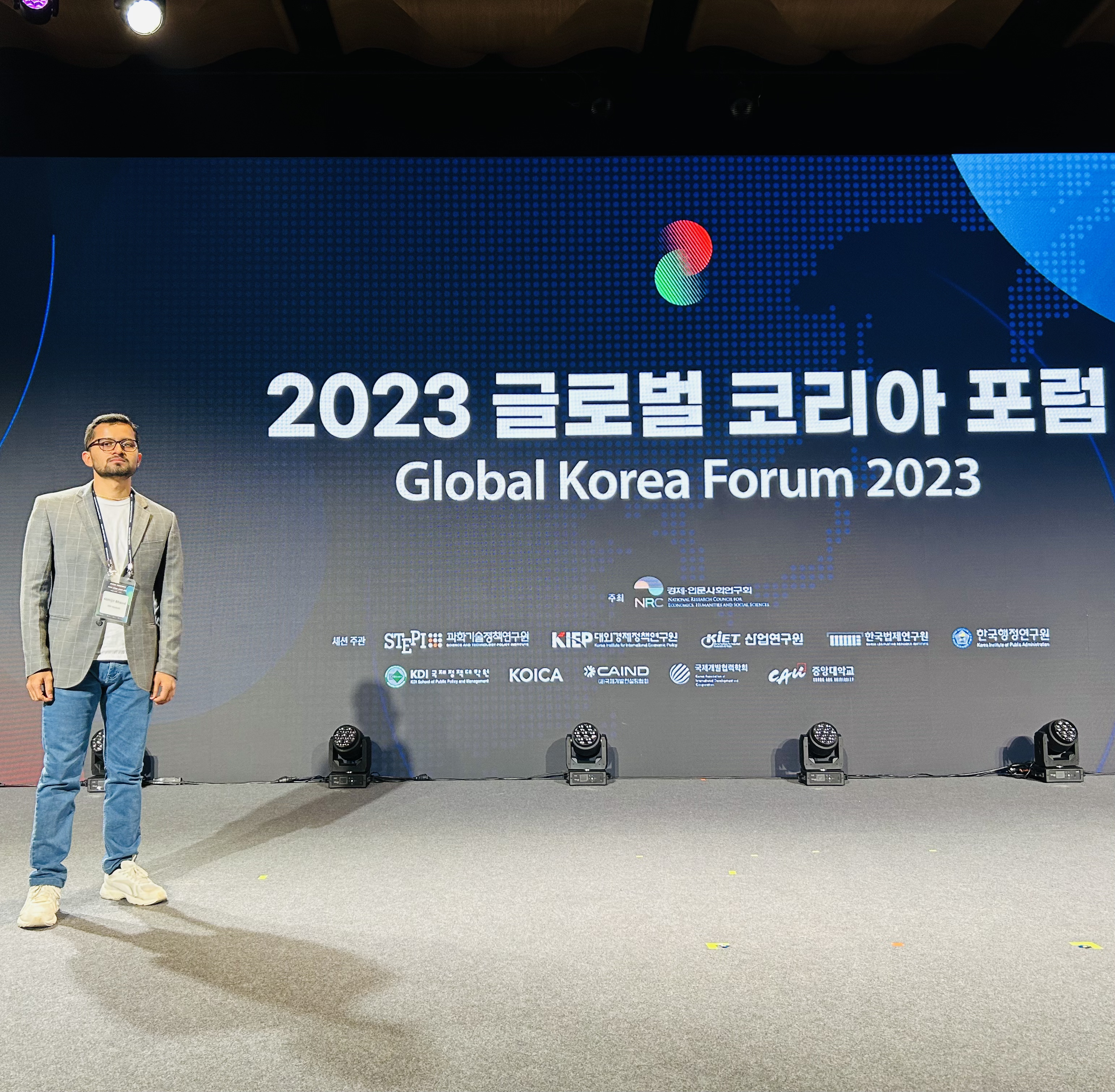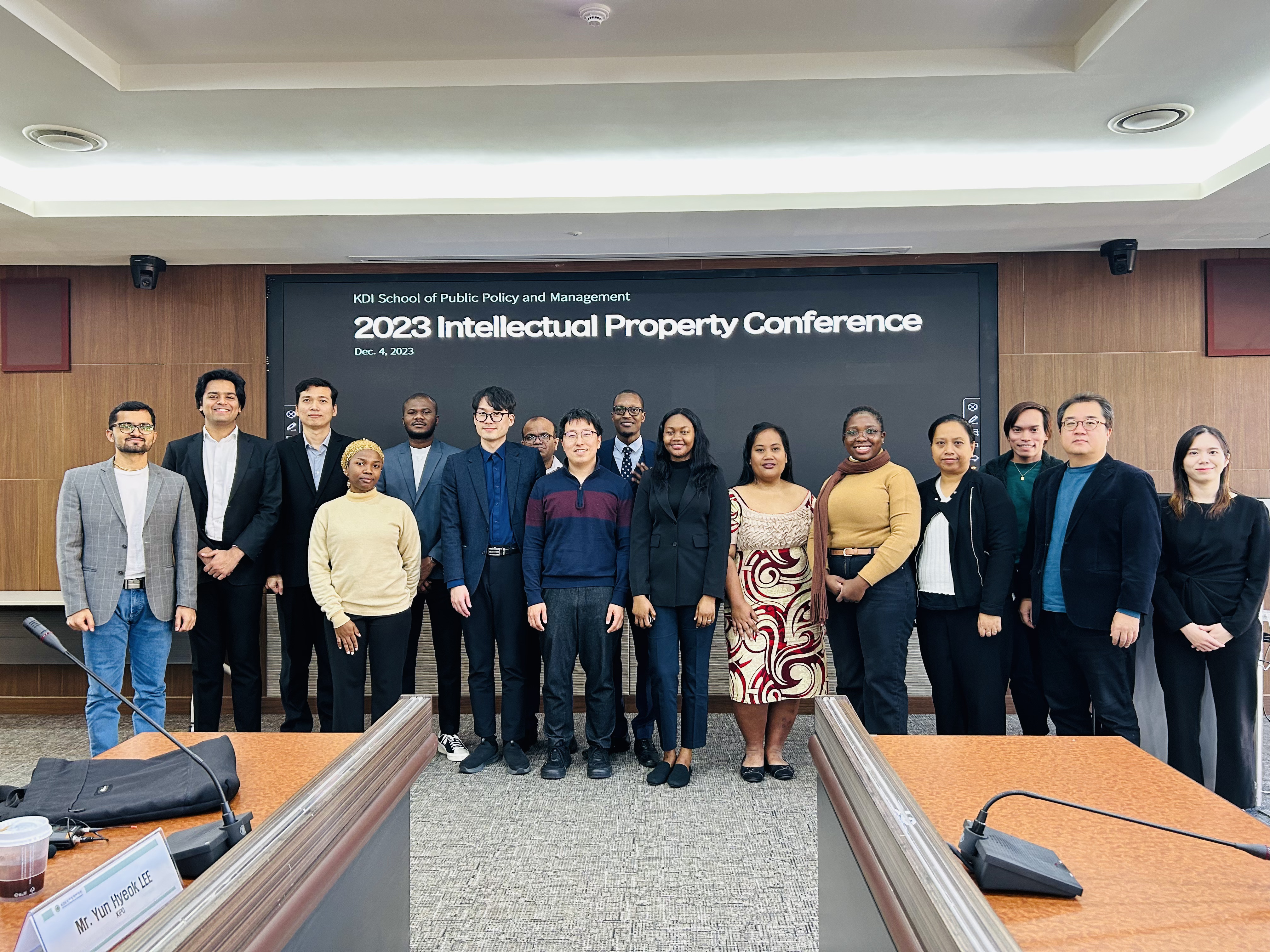
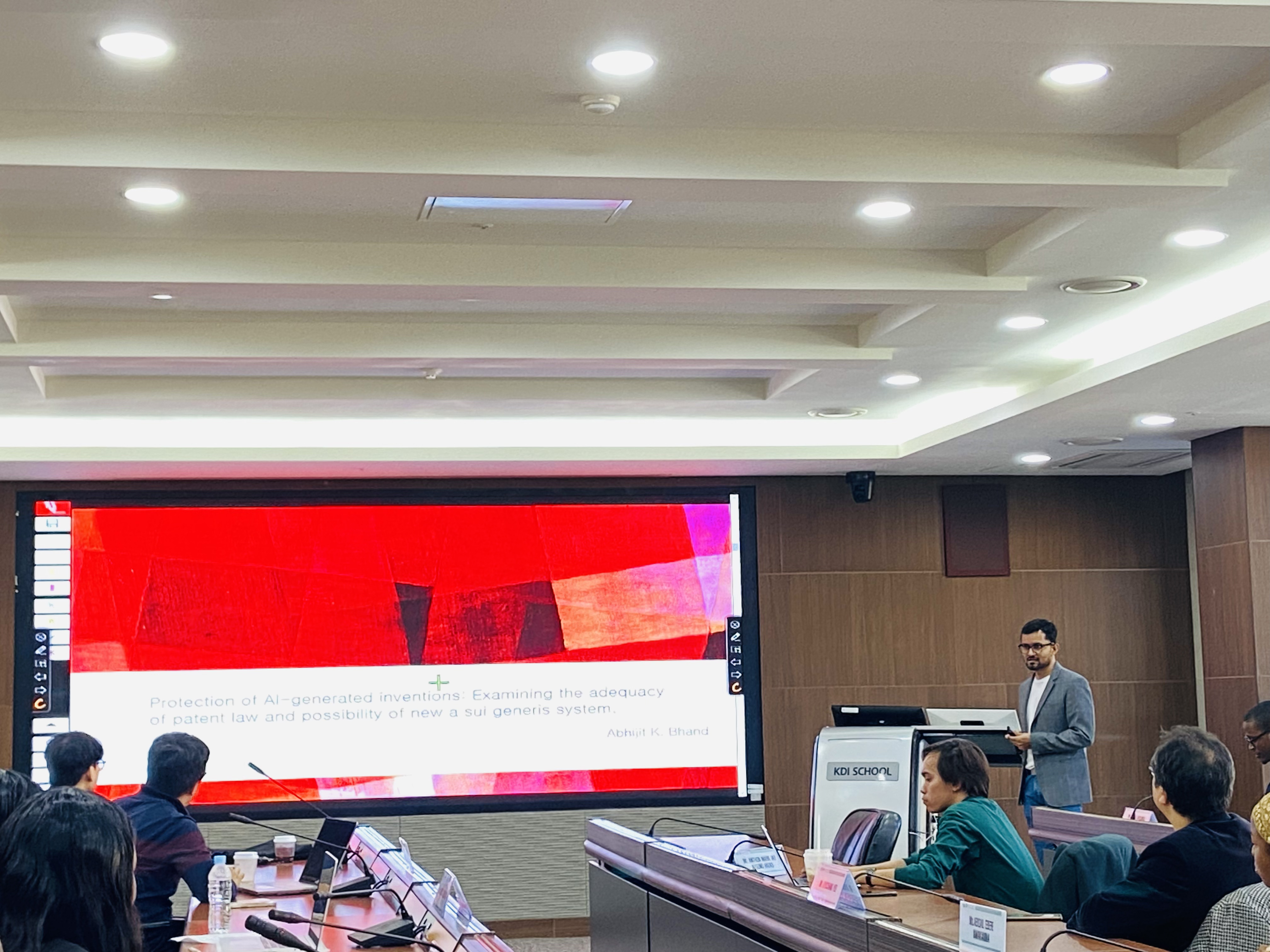
Sejong, South Korea: Abhijit Bhand, an Intellectual Property Consultant and researcher in the field of Artificial Intelligence and Patent Law, presented his research paper titled “Protection of AI-generated Inventions: Examining the Adequacy of Patent Law and the Possibility of a New Sui Generis System” at the prestigious 2023 KDI School-Korean Intellectual Property Office (KIPO) Joint Conference on Intellectual Property held in Sejong, South Korea. The conference brought together distinguished representatives from the Korean Intellectual Property Office (KIPO), faculty members and researchers from KDI School of Public Policy and Management, intellectual property professionals, policymakers, academicians, and students to deliberate on emerging issues at the intersection of artificial intelligence, innovation, and intellectual property law. The event was led by Professor Chungeun Yoon, Chair of the Master of Intellectual Property and Development Policy (MIPD) program at KDI School, who welcomed participants and highlighted the importance of international collaboration in addressing contemporary IP challenges.
During his presentation, Bhand examined one of the most significant legal questions confronting modern patent systems, whether existing patent laws are capable of adequately protecting inventions that are autonomously generated by artificial intelligence. Drawing upon comparative legal research, international policy developments, and landmark AI inventorship disputes across multiple jurisdictions, he critically evaluated the limitations of traditional patent law, which has historically been built around the concept of human inventorship.
Presenting his views, Bhand observed that rapid advancements in generative artificial intelligence are fundamentally reshaping the innovation ecosystem. He argued that while current patent regimes have successfully accommodated inventions created with AI as an assisting tool, they are increasingly challenged when AI systems independently generate technical solutions with minimal or no human inventive contribution. According to him, the debate is no longer centered on whether AI can invent, but rather on how legal systems should respond to such technological developments while preserving the objectives of the patent system.
Bhand expressed the opinion that simply stretching existing legal doctrines to fit AI-generated inventions may create inconsistencies and legal uncertainty. Instead, he suggested that policymakers should begin exploring the feasibility of a dedicated sui generis protection regime specifically designed for AI-generated inventions. Such a framework, he argued, could coexist with the conventional patent system, ensuring that traditional patent protection remains reserved for human-led inventive activity while providing an appropriate incentive structure for innovations autonomously generated by advanced AI systems.
He further emphasized that any future sui generis system should be carefully designed to balance innovation incentives with public interest. It should clearly define ownership, eligibility criteria, duration of protection, disclosure requirements, and the rights and obligations associated with AI-generated inventions. According to Bhand, the objective should not be to replace patent law but to supplement it where existing legal principles become inadequate.
The presentation also highlighted broader policy considerations, including inventorship, ownership, accountability, transparency, ethical implications, and the long-term impact of AI on innovation ecosystems. Bhand stressed that legal reforms should be proactive rather than reactive, enabling intellectual property systems to evolve alongside technological progress instead of responding only after significant legal uncertainty has emerged.
The presentation generated engaging discussions among representatives from KIPO, faculty members of KDI School, researchers, and conference participants on the future of AI inventorship, patent eligibility, ownership of AI-generated inventions, and the possibility of developing alternative legal protection mechanisms. The interactive session reflected the growing international interest in adapting intellectual property frameworks to accommodate transformative technologies.
The KDI School-KIPO Joint Conference continues to serve as an important international platform for fostering dialogue between academia, government, and industry on emerging intellectual property issues. Abhijit Bhand's presentation contributed to the ongoing global discourse on artificial intelligence and patent law, underscoring the need for forward-looking legal frameworks that encourage innovation while maintaining the fundamental objectives of intellectual property protection.