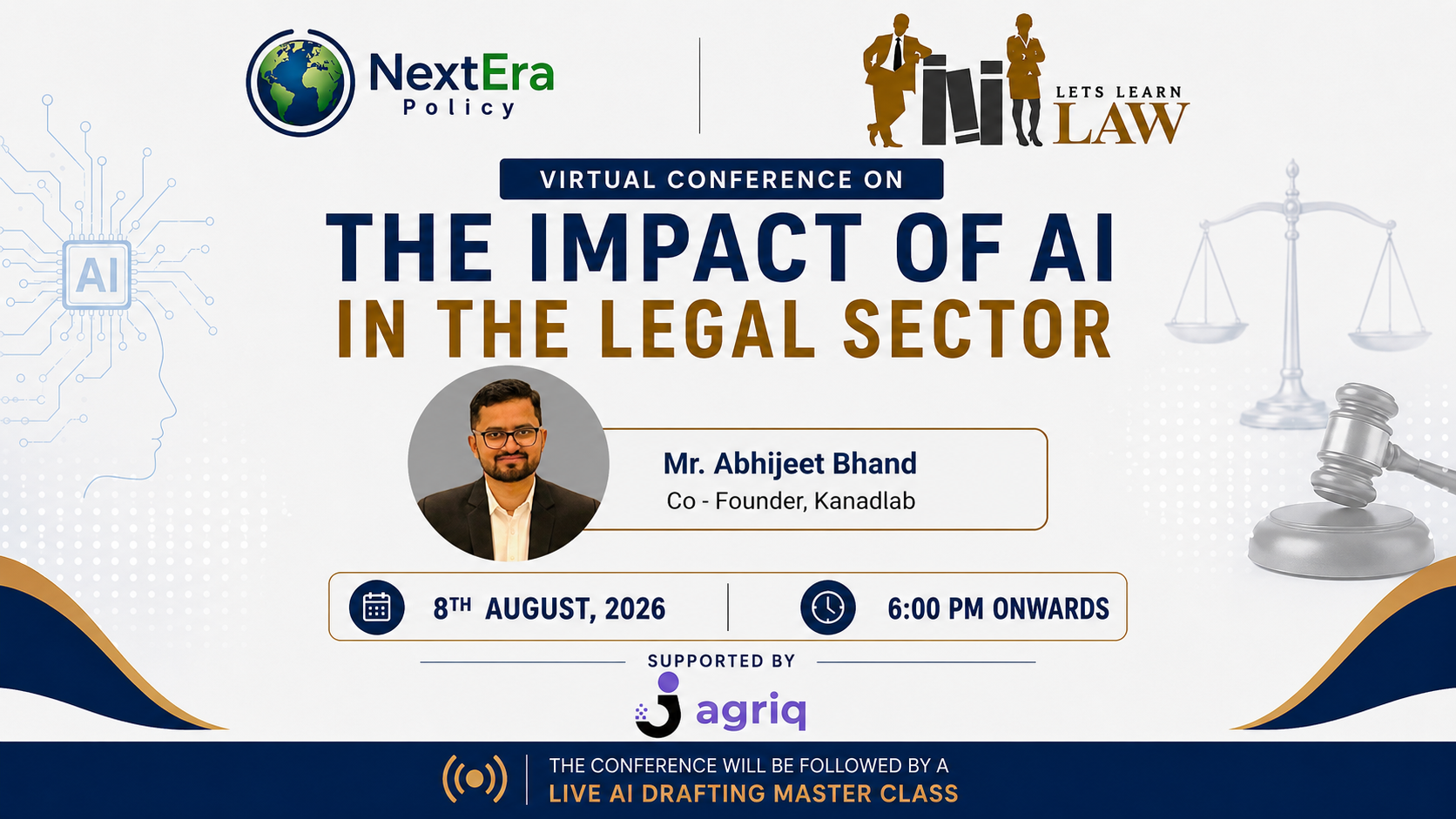
Artificial Intelligence is no longer a peripheral conversation in the legal profession. It is actively reshaping how legal research is conducted, how contracts are drafted, how compliance is managed, and how disputes are resolved. Abhijit Bhand, Co-founder of Kanadlab, joined this panel alongside Dr. Ananya Shrivastava (Co-founder, Jagriq), Dr. Sai Sushanth Samudrala (Cyber Lawyer and CEO, Sushanth IT Law Associates), with the discussion moderated by Anand Verma (Managing Partner, Team Legal, and Founder, Lets Learn Law). Together, the panel moved past the hype to look at what is actually being built, adopted, and tested in the LegalTech ecosystem today, where LegalTech in India is actually headed, what startups are getting right and wrong, how AI adoption is playing out inside legal teams, and what responsible innovation looks like while regulation is still catching up. The conference itself was made possible by Divyaish Shrivastava, Founder of NextEra Policy, whose vision and coordination behind the scenes played an instrumental role in bringing the event and this panel together.
AI is unbundling the legal workflow, not replacing the lawyer
One of the central themes was that AI adoption in law is happening layer by layer rather than all at once. Legal work is being broken into discrete tasks, research, drafting, review, filing, and each is being targeted by a different category of tool. Platforms built for contract lifecycle management, such as SpotDraft and Ironclad, are automating the drafting, negotiation, and tracking of routine agreements. Legal research tools like Casetext's CoCounsel and India's Casemine are compressing what used to take hours of precedent search into minutes.
The point made was not that these tools replace legal judgment, but that they remove the repetitive layer of legal work, freeing professionals to focus on strategy, negotiation, and advisory work that still requires human discretion. Dr. Ananya Shrivastava, Co-founder of Jagriq, brought a founder's vantage point to this theme, speaking to what AI-native legal platforms are getting right, and where they are still overreaching, when it comes to building for real legal workflows rather than for demos.
India's LegalTech ecosystem is maturing beyond research tools
While early LegalTech in India was largely about legal research and case law databases, the ecosystem has broadened considerably. Document automation and e-signature infrastructure players like Leegality are now core to how Indian businesses execute agreements digitally. Online dispute resolution platforms such as Presolv360 are demonstrating that even litigation and arbitration workflows can be digitized and made more accessible, particularly for MSMEs and startups that cannot afford prolonged court battles.
This shift signals a broader trend: LegalTech in India is moving from being a research convenience to becoming transaction and dispute infrastructure.
The innovation-regulation tension is real, and unresolved
A recurring point in the discussion was the friction between rapid AI adoption and the pace of regulatory clarity. Questions around whether AI-assisted drafting constitutes unauthorized practice of law, how client confidentiality holds up when using cloud-based AI tools, and where liability sits when an AI-assisted contract or filing goes wrong remain largely open. Global examples, including scrutiny faced by consumer-facing legal AI tools like DoNotPay, were cited as cautionary reference points for how regulators and courts are beginning to respond when AI tools overstate their capabilities.
Dr. Sai Sushanth Samudrala, Cyber Lawyer and CEO of Sushanth IT Law Associates, grounded this part of the discussion in his cyber law practice, pointing to how data privacy, cybersecurity, and digital evidence questions are increasingly inseparable from LegalTech adoption decisions. The takeaway offered was that responsible adoption, not blanket resistance or blind enthusiasm, is what will determine which LegalTech startups earn long-term trust from law firms, in-house counsel, and regulators alike.
What this means for legal and IP professionals
For practitioners, especially those in high-volume, process-heavy areas like patent prosecution, trademark filing, and contract review, the message was clear: the professionals who treat AI tools as a starting point rather than a threat will be the ones who compound an advantage over the next five years. Prompt literacy, the ability to evaluate AI output critically, and knowing precisely where automation should stop and human judgment should begin are becoming as important as traditional legal skills.
Moderated by Anand Verma, Managing Partner at Team Legal and Founder of Lets Learn Law, the panel closed on the view that the future of the legal ecosystem will not be defined by lawyers versus machines, but by which firms, consultants, and legal professionals build a technology-augmented practice early enough to lead their field rather than catch up to it. The session was followed by a live AI drafting masterclass for attendees.