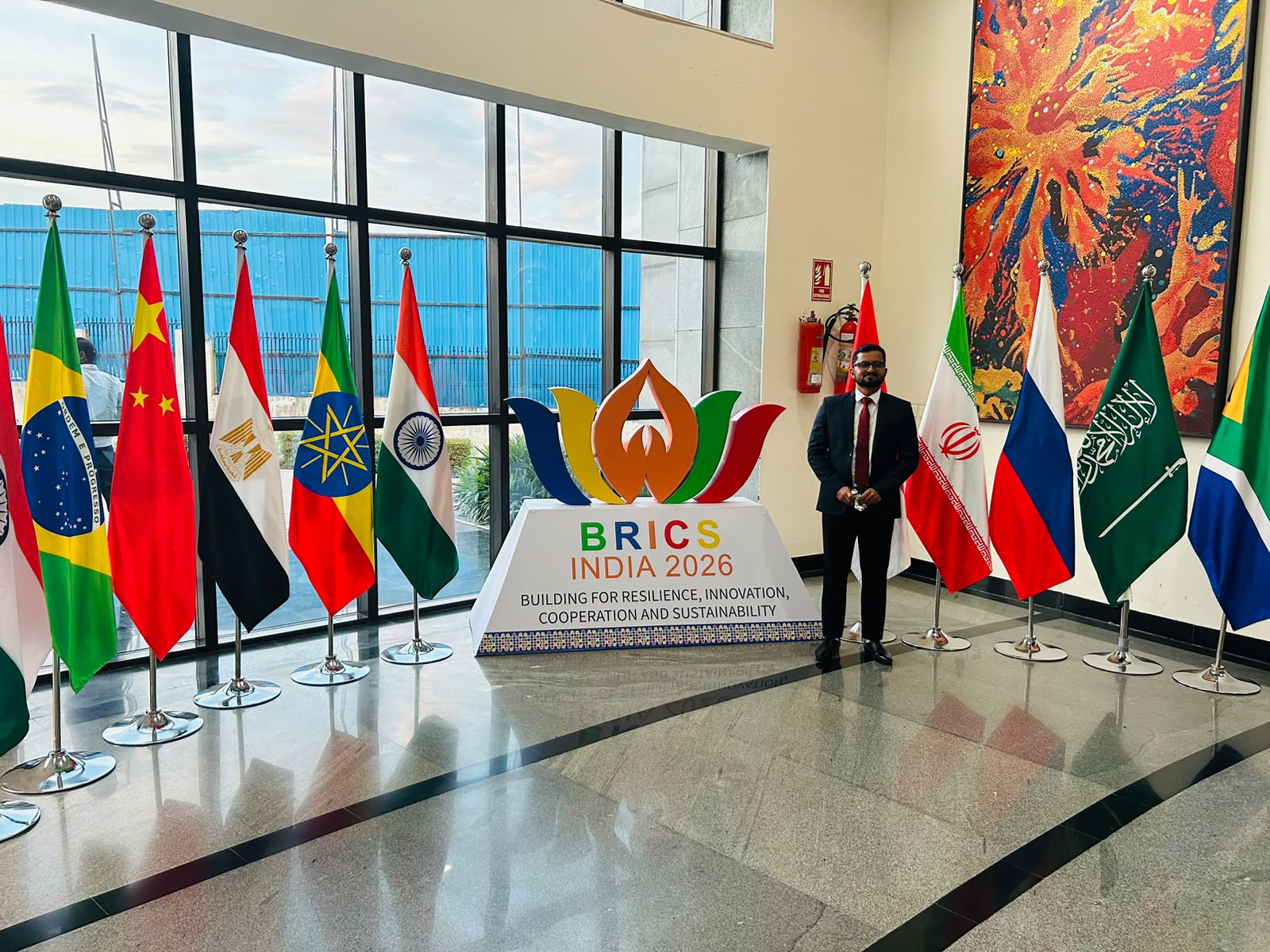
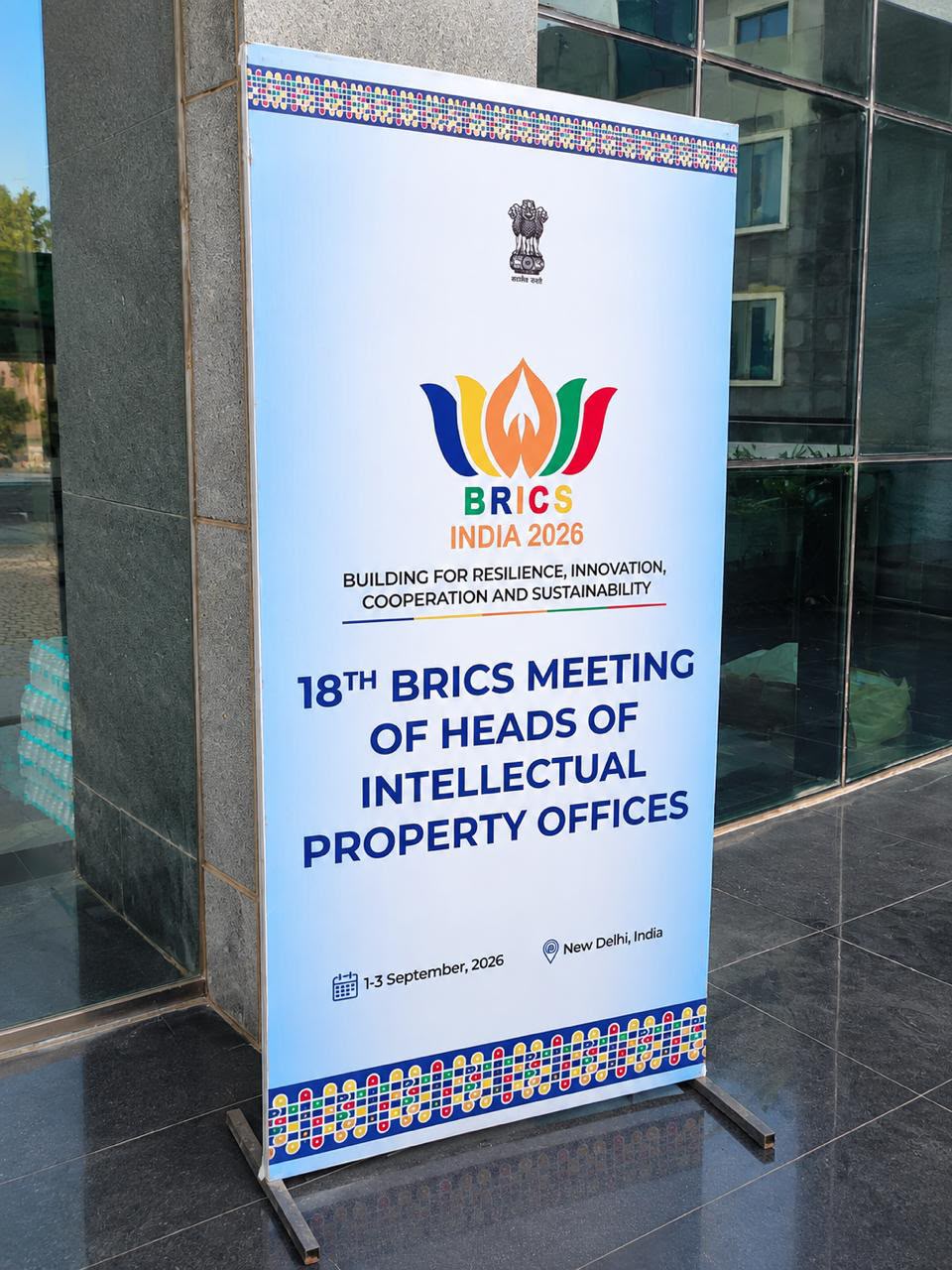
Somewhere between the trade negotiations and the diplomatic photo-ops that dominate headlines during any BRICS gathering, a quieter meeting recently took place in New Delhi that may matter more for the next decade of global innovation than most people realise. The Meeting of Heads of Intellectual Property Offices, convened under India's BRICS 2026 Chairship and hosted by the Office of the Controller General of Patents, Designs and Trade Marks under the Department for Promotion of Industry and Internal Trade, brought together IP leaders, policymakers and ecosystem stakeholders from across the BRICS bloc at AICTE, New Delhi. Abhijit Bhand was among the Indian IP professionals and ecosystem stakeholders invited to attend and contribute perspective at the gathering.
Five Economies, One Growing Question
BRICS, originally Brazil, Russia, India, China and South Africa, has expanded in recent years to include additional economies, and together the bloc now represents a substantial share of the world's population, a significant proportion of global GDP by purchasing power, and an increasingly influential voice in how international economic rules get written. For decades, the architecture of global intellectual property law, patent examination standards, trademark classification systems, copyright terms, was shaped overwhelmingly by developed economies in North America and Europe, largely through institutions like the World Intellectual Property Organization and the World Trade Organization's TRIPS framework.
That architecture is now being renegotiated, not through confrontation, but through the quieter work of coordination. When the heads of IP offices from major emerging economies sit in the same room to compare notes on patent backlogs, trademark disputes, examiner training and enforcement mechanisms, they are effectively asking a question that has enormous economic consequences: should the rules governing who owns innovation continue to be set primarily by the economies that industrialised first, or should the economies now producing an increasing share of global patents, trademarks and creative output have a proportionate say in how those rules evolve?
This is the real significance of a summit like the one held in New Delhi. It is not a ceremonial gathering. It is a working session among the institutions that decide, in practical terms, how easy or difficult it is for an inventor in São Paulo, an entrepreneur in Shenzhen, a startup in Bengaluru, or a designer in Johannesburg to protect their work and take it to global markets.
Connecting the Dots Between IP and Culture
Among the themes explored at the summit, one in particular carried unusual weight: "Connecting the Dots between IP and Culture." On the surface, intellectual property is often discussed purely as a commercial mechanism, a way to protect inventions, brand names and creative works so their creators can profit from them. But for BRICS nations specifically, this framing has always been incomplete.
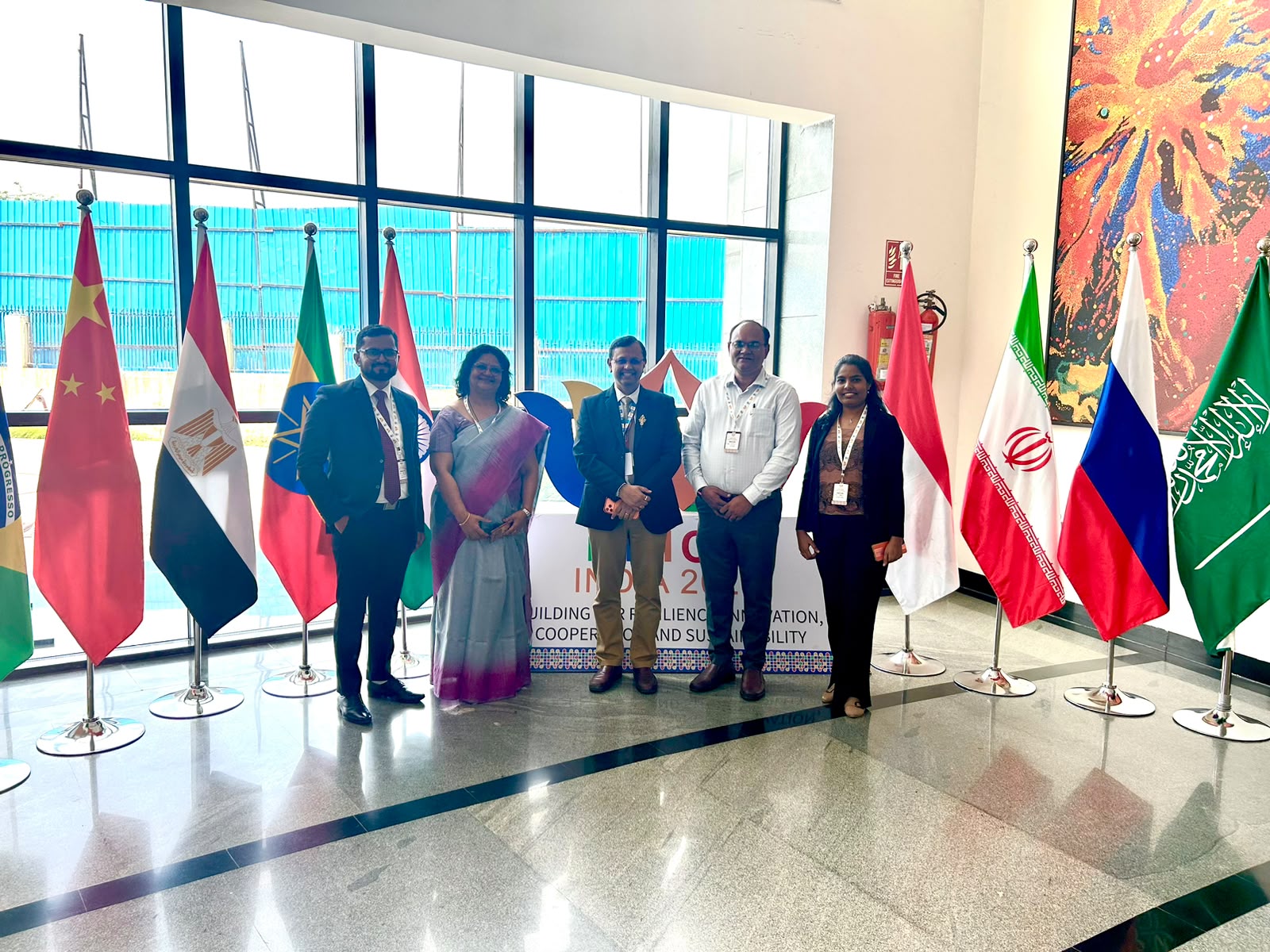
(Abhijit Bhand with Dr. Unnat Pandit, The Controller General of Patents Designs & Trademarks, Government of India)
India holds one of the world's largest bodies of traditional knowledge, documented in the Traditional Knowledge Digital Library, covering centuries of Ayurvedic, Unani and Siddha medical practices, along with countless indigenous crafts, textile traditions and agricultural techniques developed by communities long before the modern patent system existed. Brazil sits atop some of the planet's richest biodiversity, and has spent years navigating the complex question of how genetic resources and the traditional knowledge of indigenous communities should be protected, and who should benefit when that knowledge is commercialised elsewhere. China's intellectual heritage spans everything from traditional medicine to centuries-old craft techniques now finding new commercial life. South Africa and Russia carry their own deep wells of indigenous and cultural knowledge systems facing similar questions of recognition and protection.
For years, the dominant international IP framework struggled to accommodate any of this. Patents require novelty and a clearly identifiable inventor. Traditional knowledge, by contrast, is often collectively held, passed down across generations, and impossible to attribute to a single inventor or a single filing date. This mismatch has, historically, left a great deal of traditional knowledge vulnerable to what is often called biopiracy, where entities outside the originating community file patents on plant-based remedies, agricultural techniques or cultural designs without any benefit flowing back to the communities that developed and preserved that knowledge over centuries.
A summit where BRICS nations explicitly connect intellectual property policy to cultural preservation signals a shift in priority. It suggests these economies are no longer content to simply adopt IP frameworks built for a different kind of economy elsewhere. They are beginning to shape frameworks that reflect their own knowledge systems, their own histories, and their own stakes in making sure cultural and traditional knowledge gets treated as an asset worth protecting, not an afterthought.
Why This Matters for Economic Growth
Intellectual property policy might sound like a narrow, technical concern, but its economic footprint is enormous. Every patent filed, every trademark registered, every design protected represents a piece of economic value that someone is trying to build a business around. When IP offices across major economies work toward greater harmonisation, faster examination timelines, shared search and examination resources, mutual recognition of certain filings, the practical effect is that it becomes cheaper, faster and less risky for an innovator in one BRICS country to protect and commercialise their work in another.
For a startup in India looking to expand into Brazil, or a manufacturer in China looking to protect a trademark in South Africa, this kind of institutional cooperation translates directly into lower legal costs, faster market entry, and reduced risk of intellectual property disputes derailing an otherwise promising expansion. At a macro level, this is exactly the kind of infrastructure that supports intra-BRICS trade and investment, an increasingly important priority as these economies look to deepen commercial ties with each other rather than relying exclusively on trade routes and legal frameworks built around older economic relationships.
There is also a resilience dimension worth naming directly. As global supply chains face repeated disruption, from pandemics to geopolitical tensions to climate-related shocks, economies are increasingly interested in reducing dependency on any single external partner for critical technology, from semiconductors to pharmaceuticals to renewable energy components. Strong, well-coordinated domestic and regional IP systems are part of what allows a country to develop, protect and commercialise its own technology rather than remaining permanently reliant on licensing innovation developed elsewhere. When BRICS IP offices collaborate on capacity building, examiner training and technology transfer mechanisms, they are, in effect, building some of the institutional muscle that underpins genuine technological self-reliance across the bloc.
A Platform for the Global South
Perhaps the broadest significance of this summit lies in what it represents for the Global South more generally. BRICS nations, individually and collectively, have increasingly positioned themselves as a counterweight to the traditional dominance of a handful of developed economies in setting global economic and legal norms. Intellectual property policy is one of the clearest arenas where this shift is visible, because IP rules directly determine who captures the economic value created by innovation.
A coordinated BRICS approach to IP, one that takes traditional knowledge and cultural heritage seriously, that invests in building efficient and accessible IP systems for individual inventors and small businesses rather than only large multinational filers, and that treats technology transfer as a genuine priority rather than a footnote, offers something of a template for other developing and emerging economies watching from outside the bloc. It suggests that a country does not need to simply inherit intellectual property frameworks designed elsewhere. It can participate in shaping frameworks that reflect its own economic priorities, its own knowledge systems, and its own path toward innovation-led growth.
Looking Ahead
India's BRICS Chairship in 2026 places it at the center of this conversation for the year, and summits like this one in New Delhi are likely to be followed by further working-level engagement as member nations translate broad commitments into concrete cooperation mechanisms. Whether that translates into formal agreements on work-sharing between patent offices, joint frameworks for protecting traditional knowledge, or simply a stronger habit of coordination between BRICS IP institutions, the direction of travel is clear. Intellectual property, once treated as a purely technical or legal matter, is increasingly understood by these economies as core economic infrastructure, as important to national development strategy as ports, power grids or digital payment systems.
That, ultimately, is why a meeting most people will never hear about deserves more attention than it gets. The decisions being shaped in rooms like this one in New Delhi will quietly determine how the next generation of inventors, entrepreneurs and cultural custodians across nearly half the world's population get to protect, share and build value from what they create.