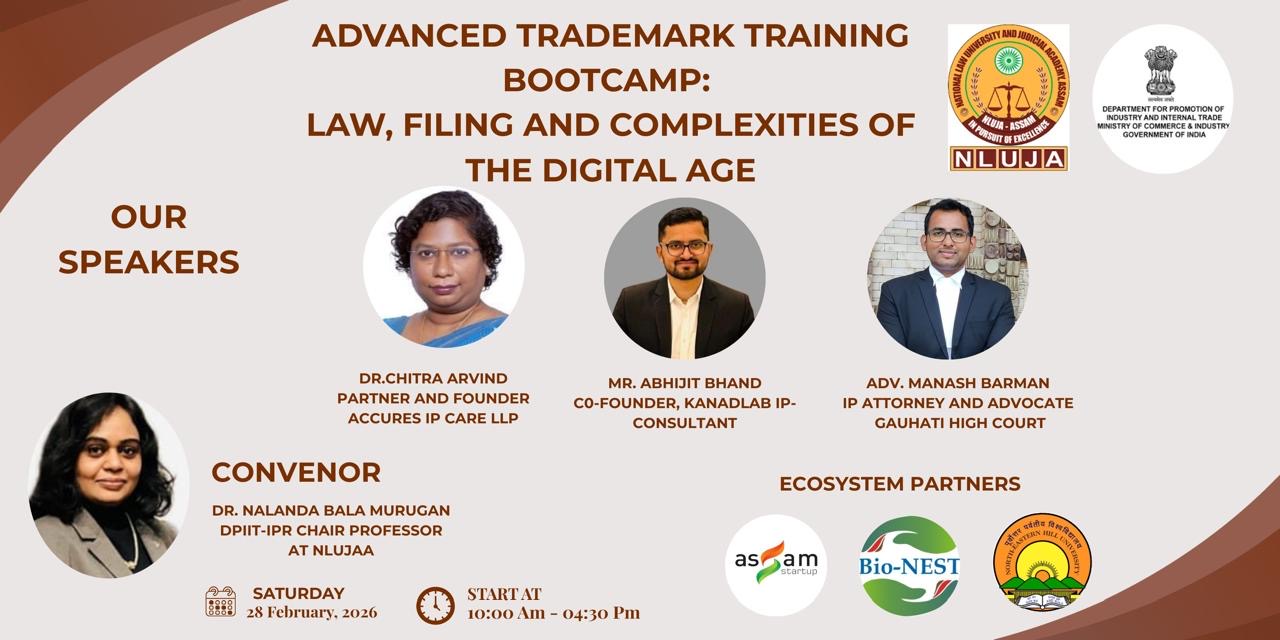
On 28 February 2026, the National Law University and Judicial Academy Assam hosted the Advanced Trademark Training Boot Camp: Law, Filing, and Complexities of the Digital Age, an intensive academic and professional program designed to explore the evolving landscape of trademark law in the digital economy. The event was organised under the DPIIT-IPR Chair initiative, bringing together law students, entrepreneurs, intellectual property practitioners, and academicians for a day of in-depth discussions on contemporary trademark practice. The programme featured ecosystem partners including Assam Startup, BioNEST, and NEHU.
Among the invited speakers was Abhijit Bhand, Co-Founder of Kanadlab and an intellectual property consultant who has worked extensively with innovators and businesses across multiple jurisdictions. The programme also featured Dr. Chitra Arvind, Founder and Partner at Accures IP Care LLP, and Adv. Manash Barman, IP Attorney and Advocate at the Gauhati High Court.
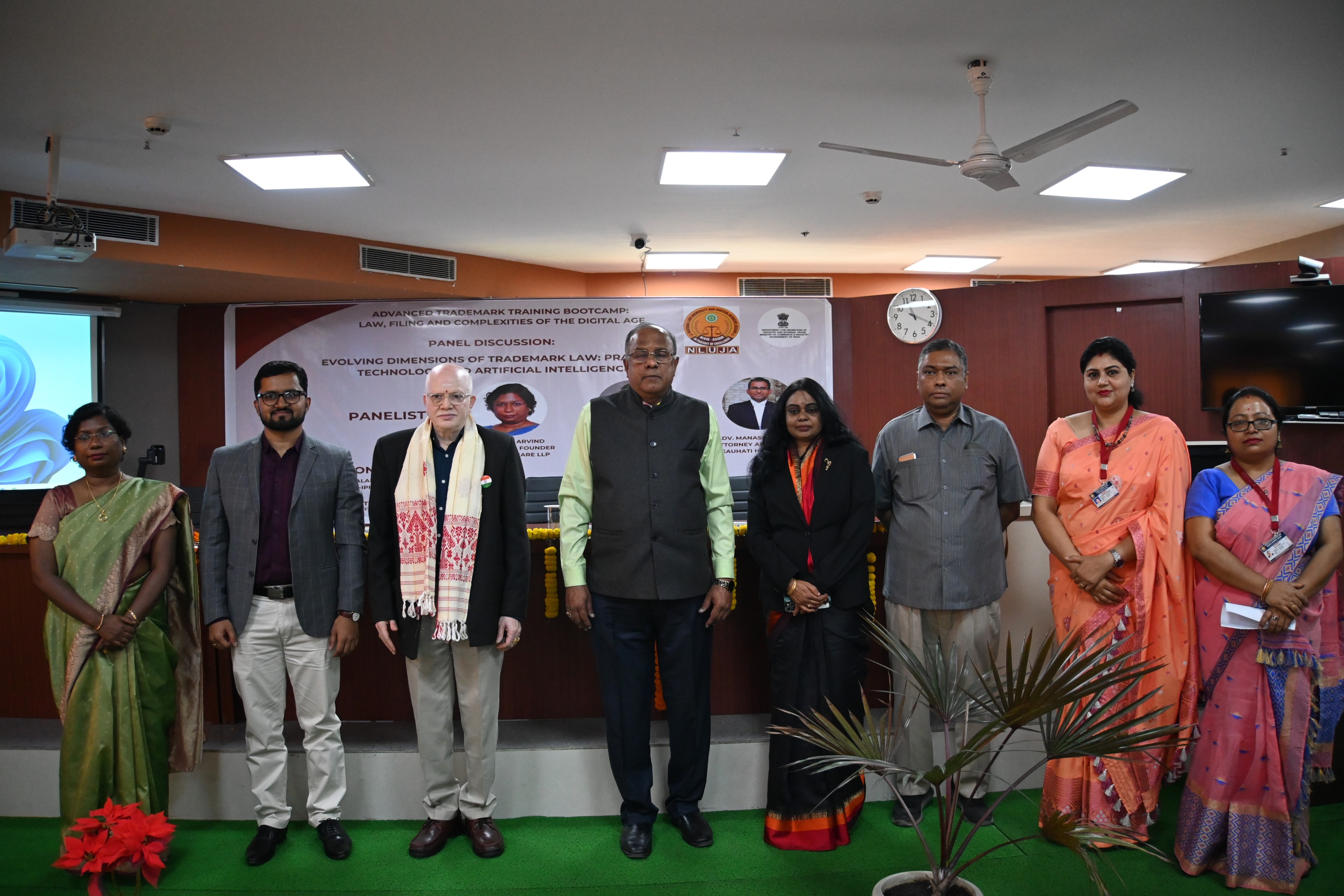
The programme was conducted in the presence of distinguished academic leaders and experts from both the legal and scientific communities. The event was held under the leadership of Dr. K. V. S. Sarma, Vice Chancellor of National Law University and Judicial Academy Assam, who has been instrumental in strengthening research-driven legal education at the university.
The concluding session of the program was chaired by Dr. U. S. N. Murty, Director of the National Institute of Pharmaceutical Education and Research Guwahati, an Institute of National Importance under the Government of India that plays a critical role in pharmaceutical education and research in the North-East region.
Also present during the discussions was Dr. Nalanda Bala Murugan, DPIIT-IPR Chair Professor, who moderated the panel discussion and guided a thoughtful exchange between the speakers on the evolving dimensions of trademark law in the digital era.The boot camp was structured to bridge the gap between theoretical legal understanding and the practical realities of trademark protection in a rapidly digitising marketplace.
Strategic Foundations of Trademark Protection
During his session, Mr. Bhand focused on the conceptual and strategic foundations of trademarks. He discussed how trademarks function not merely as legal identifiers but as powerful economic assets that shape the identity and value of businesses.
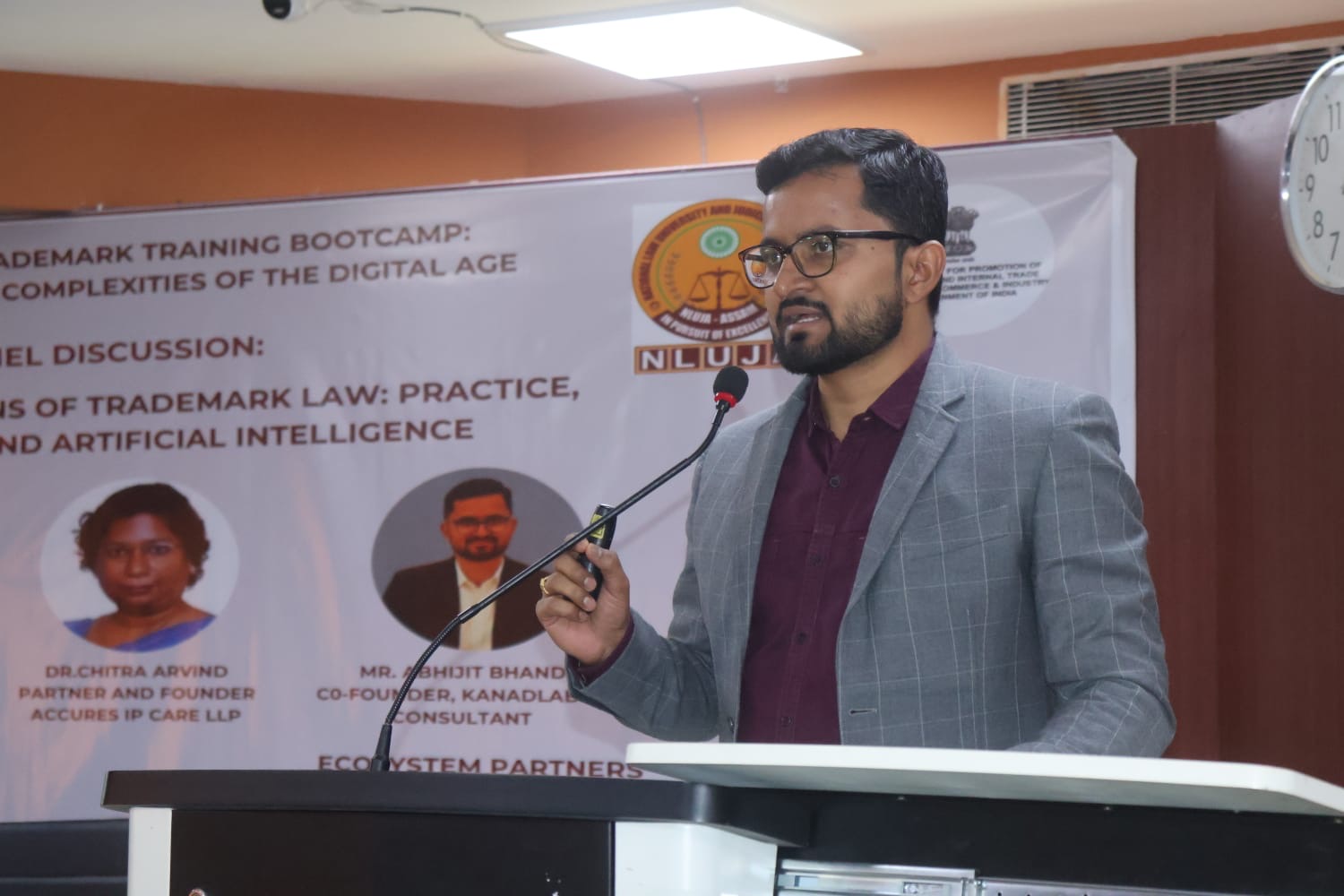
A central idea discussed during the session was the importance of distinctiveness in trademark creation. Businesses frequently attempt to register descriptive marks that directly describe their goods or services, often leading to refusal under the provisions of the Trade Marks Act.
Students were introduced to the principle that strong trademarks are not descriptive but inventive. The philosophy he emphasised during the session was simple but powerful:
“Invent, don’t describe.”
Coined or invented marks often receive the strongest protection because they possess inherent distinctiveness and are less likely to conflict with existing trademarks. Through practical illustrations, participants explored how selecting a distinctive trademark can significantly strengthen a company’s brand strategy and legal protection.
The discussion also explored the statutory framework governing trademark registration in India, particularly Sections 9 and 11 of the Trade Marks Act, which deal with absolute and relative grounds for refusal. Understanding these provisions, students learned, is essential for ensuring that a proposed trademark is capable of registration and long-term protection.
Trademarks as Economic Assets
Another important theme of the session was the economic value of trademarks. In modern economies, intellectual property increasingly forms a substantial portion of corporate value.
Participants were introduced to real-world examples demonstrating how trademarks can become valuable financial assets. One striking illustration discussed during the session was the $1.3 billion licensing agreement associated with the Louvre brand with Government of UAE, which demonstrated how the licensing of intellectual property rights can generate substantial economic returns.
The discussion also explored how businesses in some jurisdictions use intellectual property as collateral for raising finance, highlighting the growing recognition of intangible assets within financial systems.
Students were also encouraged to understand how businesses can adopt defensive trademark strategies. For example, companies often register their trademarks in adjacent classes to prevent dilution or misuse of their brand identity. Similarly, prioritising word marks over stylised logos ensures long-term brand flexibility because the textual element of a mark can be used across different visual formats.
These practical strategies illustrated how trademark law operates not only as a legal safeguard but also as a strategic component of business planning.
Trademark Prosecution and Practical Filing Considerations
The boot camp also addressed the procedural aspects of trademark prosecution. Dr. Chitra Arvind provided participants with insights into responding to examination reports, establishing prior use claims, and navigating the stages of the trademark registration process.
These discussions highlighted how trademark filing involves more than submitting an application. Practitioners must carefully assess potential conflicts, substantiate claims of prior use, and respond effectively to objections raised by the trademark registry.
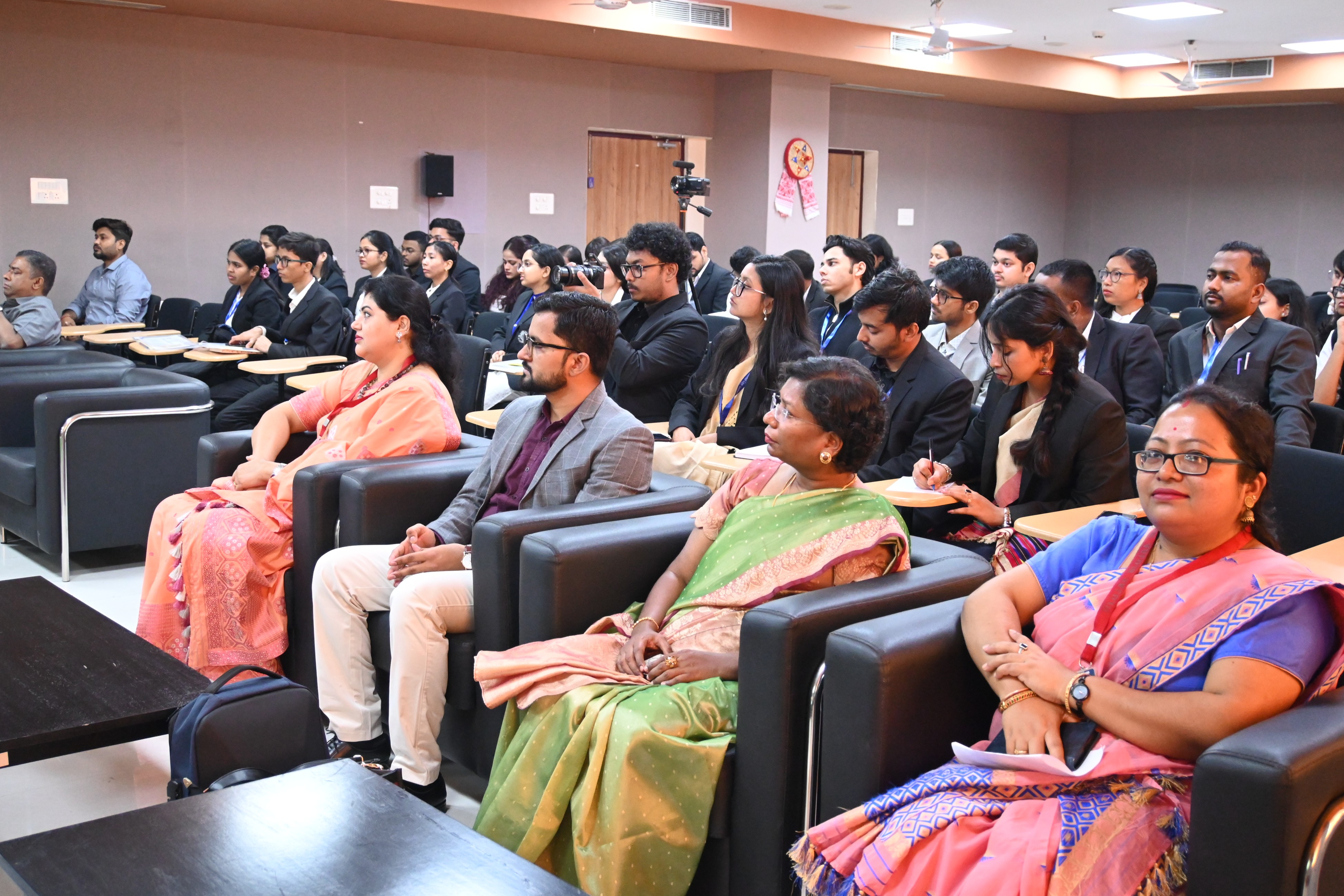
For many participants, this session provided a clearer understanding of the practical responsibilities of trademark attorneys and consultants.
Panel Discussion: Trademark Law in the Digital Age
The final segment of the boot camp featured a panel discussion titled “Evolving Dimensions of Trademark Law: Practice, Technology and Artificial Intelligence.”
Moderated by Dr. Nalanda Bala Murugan, the panel brought together the expertise of Mr. Bhand, Dr. Arvind, and Advocate Manash Barman to examine the intersection of trademark law with emerging technologies and digital commerce.
The discussion addressed several contemporary challenges.
One major topic was the growing complexity of trademark enforcement in online environments. The panel explored how courts increasingly rely on doctrines such as purposeful availment to establish jurisdiction in cross-border digital disputes.
Advocate Manash Barman discussed the responsibilities of online platforms and clarified that the safe harbour protection available to intermediaries is not absolute, particularly when platforms actively facilitate misleading listings.
Dr. Chitra highlighted the structural challenges within trademark law, noting that the Trade Marks Act was enacted long before the emergence of digital marketplaces, NFTs, and artificial intelligence. As a result, courts often play a critical role in adapting legal principles to new technological realities.

Another fascinating aspect of the discussion involved algorithmic deception and trademark misuse in AI-driven environments. Participants explored scenarios where automated systems recommend brand names, keywords, or product listings that could inadvertently lead to trademark infringement.
Mr. Bhand emphasised an important legal principle in this context.
Even when artificial intelligence systems are involved, legal responsibility ultimately lies with the commercial entity deploying the mark, not with the algorithm itself.
This perspective highlighted a key takeaway of the panel discussion: technological innovation does not operate in a legal vacuum. Legal accountability continues to remain with human actors and commercial enterprises.
Bridging Law, Technology, and Business
The Advanced Trademark Training Boot Camp demonstrated how intellectual property law increasingly sits at the intersection of law, technology, and business strategy.
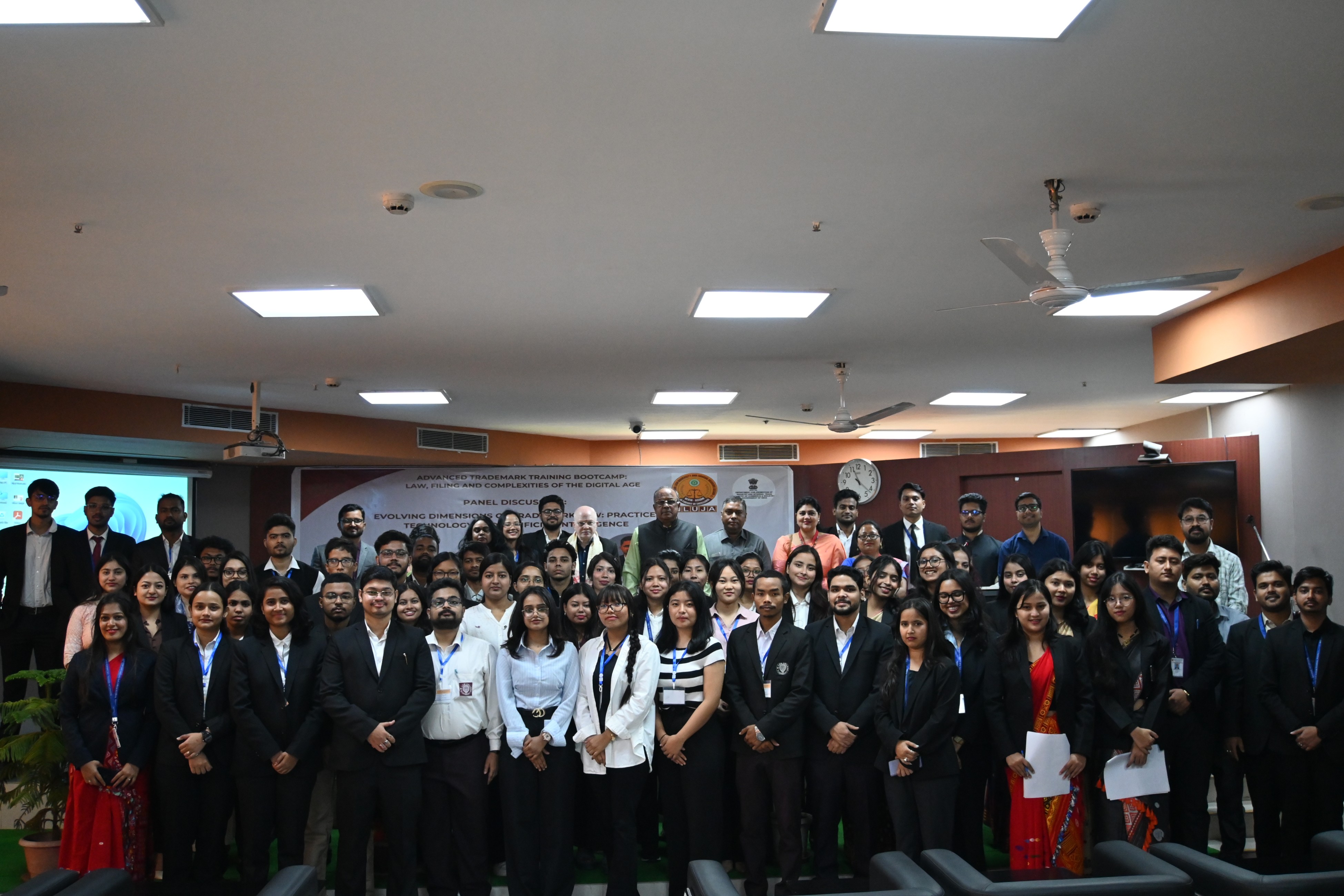
For students and practitioners, the programme provided valuable insights into how trademark law is evolving to address digital marketplaces, artificial intelligence, and cross-border commerce. The discussions reinforced the importance of informed legal advocacy and strategic brand management in navigating this complex environment.
The event also highlighted the growing role of academic institutions in fostering dialogue between legal scholars, industry practitioners, and policymakers.
By bringing together diverse perspectives from academia, legal practice, and industry, the programme at the National Law University and Judicial Academy, Assam created a meaningful platform for understanding how trademark law continues to evolve in response to technological and economic transformation.