A seminar on “Understanding Intellectual Property in Technical and Legal Perspectives” was conducted for final-year students at Pune Vidyarthi Griha's College of Engineering and Technology, where more than 200 students participated in a thoughtful and interactive session on innovation, patents, and industrial design protection.
The session was delivered by Abhijit Bhand, who discussed how intellectual property bridges the technical and legal worlds. Engineering students often concentrate on developing machines, software, or product designs, but the legal protection of those innovations is equally important. Intellectual property ensures that when an original idea is developed, the creator has a legal framework that protects it from imitation and enables it to generate economic value.
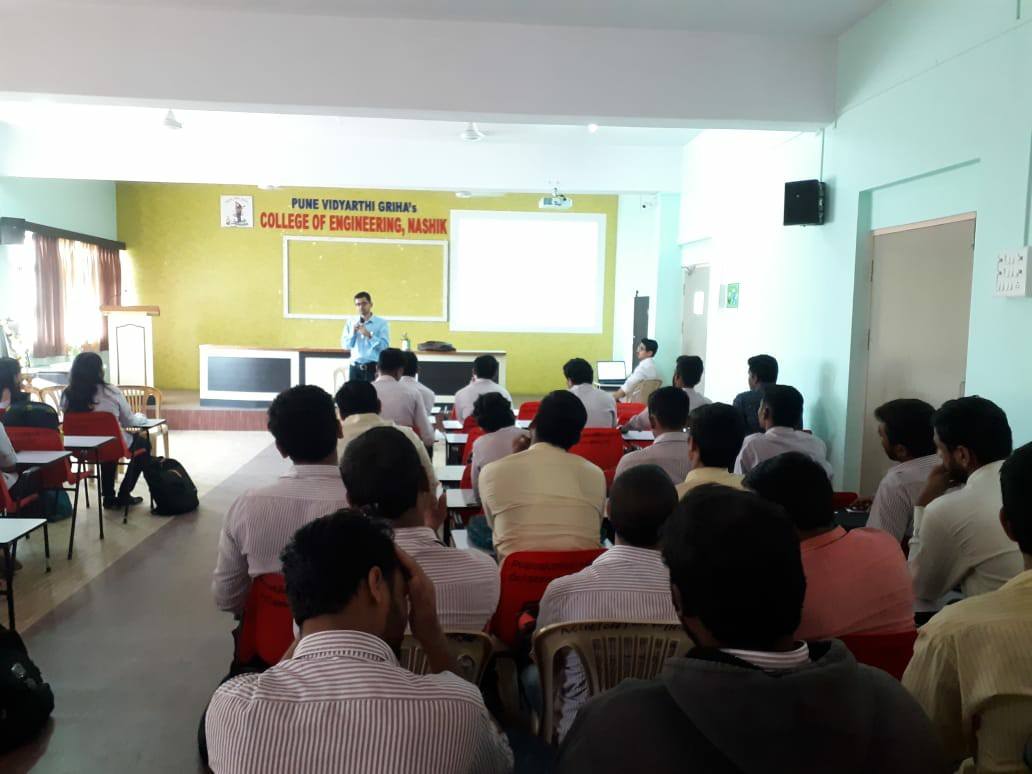
The interaction particularly focused on patents and industrial designs, two forms of intellectual property that are especially relevant for engineers. Patents protect the functional and technical aspects of inventions such as machines, devices, or manufacturing processes. Industrial designs protect the external appearance of products including shape, configuration, and aesthetic elements. Together, these protections help ensure that original engineering ideas cannot be copied or commercially exploited by others without permission.
A significant portion of the discussion also explored how MSMEs and startups can strategically use intellectual property to build competitive advantages. Many small manufacturing units and technology startups invest years in refining products or improving engineering processes. Without proper intellectual property protection, these improvements can easily be replicated by competitors with larger production capacity. Protecting innovations through patents and designs allows smaller companies to maintain their uniqueness and secure a stronger position in the marketplace.
The most engaging part of the seminar emerged during the question-and-answer session, where students raised practical questions based on their project work and technical experiments.
One student asked a particularly interesting question:
“Sir, if we improve an existing machine that already exists in the market, can that improvement also be patented?”
Responding to this, Mr. Bhand explained the practical nature of patent law: “In fact, many patents are not entirely new machines but improvements over existing ones. If your modification introduces a new technical advantage, such as increasing efficiency, reducing energy consumption, or simplifying the mechanism, and if that improvement was not obvious to someone skilled in that field, it may qualify for patent protection. Innovation often happens through such incremental improvements.”
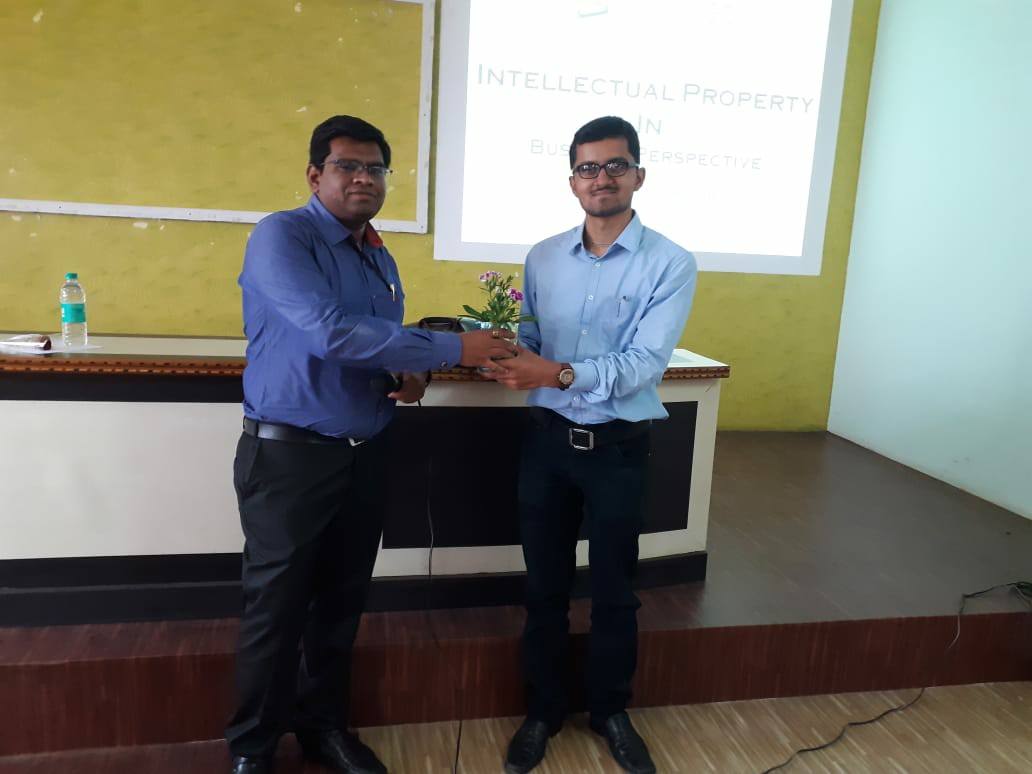
This short exchange immediately connected the subject of intellectual property with the students’ own academic projects. Many of them were working on engineering models or modifications of existing systems, and the explanation helped them realise that even small technical improvements could potentially become protectable inventions.
Students also showed strong curiosity about the mechanics of patent filing and design registration. Questions ranged from how novelty is determined to how engineers can ensure that their ideas are protected before presenting them publicly. The discussion highlighted the importance of documenting inventions carefully and seeking protection before commercializing or disclosing new technologies.
The seminar at PVG College demonstrated how engineering students are increasingly interested in understanding the intersection of technology, law, and entrepreneurship. Conversations during the session reflected a growing awareness that innovation does not stop at invention. Protecting those inventions and strategically using intellectual property can transform technical ideas into valuable assets capable of driving industrial growth and entrepreneurial success.