As India's startup ecosystem continues to expand, entrepreneurs are increasingly realizing that innovation alone is insufficient to sustain a competitive business. In an economy where technology, branding, and intangible assets drive enterprise value, the ability to identify, protect and commercialize intellectual property has become a defining characteristic of successful startups. Recognizing this growing need, Ashoka Business School, under the Ashoka Education Foundation, organized an Awareness Programme on "Start-up & Intellectual Property" to acquaint management students with the strategic importance of intellectual property rights in entrepreneurship and business development.
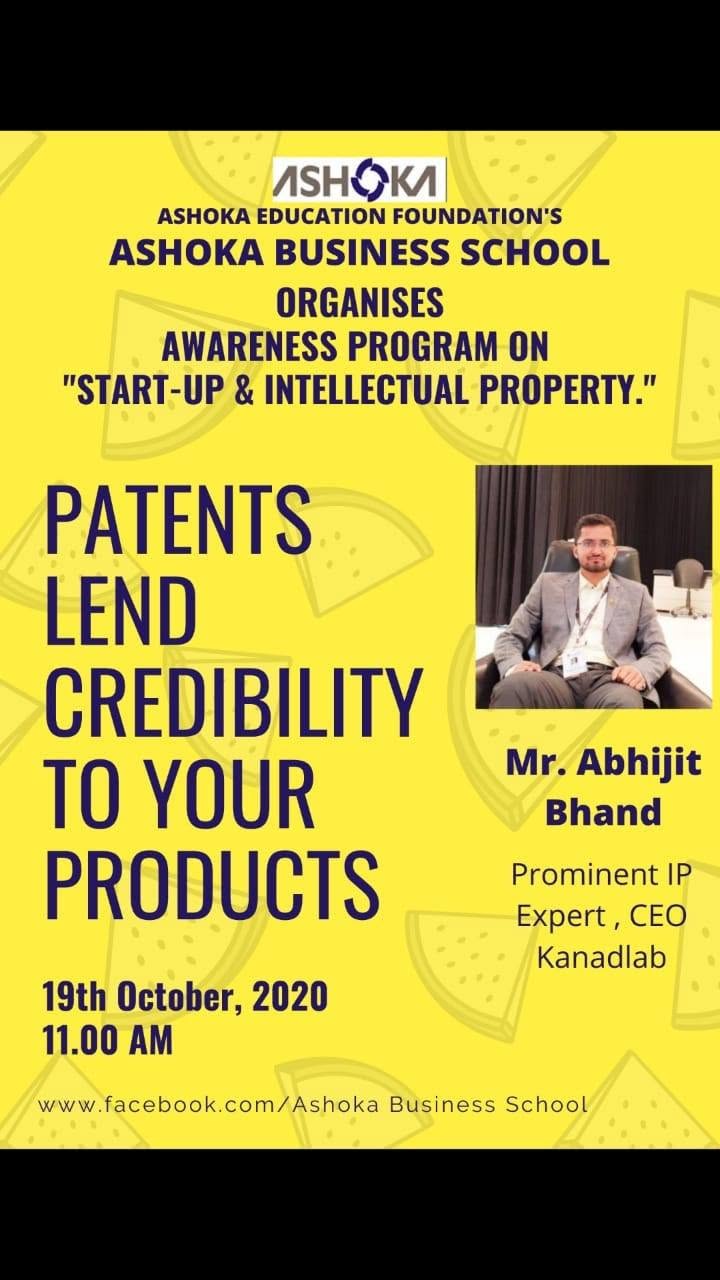
Ashoka Business School has consistently promoted industry-oriented management education by integrating academic learning with practical exposure to contemporary business issues. The institution regularly collaborates with industry experts and professionals to prepare future managers for the evolving demands of the global economy. The intellectual property awareness programme reflected this commitment by introducing students to a subject that increasingly influences innovation, investment decisions, market competitiveness and sustainable business growth. Around 160 students attended the program.
The keynote address was delivered by Mr. Abhijit Bhand, Founder & CEO of Kanadlab Institute of Intellectual Property & Research, who emphasized that intellectual property is no longer a specialized legal discipline but a fundamental component of modern business strategy. Addressing the participants, he explained that startups often invest substantial resources in product development, branding and marketing, yet many overlook the importance of legally protecting the innovations that differentiate them from competitors.
During the session, Mr. Bhand introduced participants to the principal forms of intellectual property, including patents, trademarks, copyrights, industrial designs and trade secrets, while illustrating how each contributes to building a sustainable enterprise. He explained that patents protect technological innovations, trademarks establish consumer trust through brand identity, copyrights safeguard creative and digital works, industrial designs protect product aesthetics, and trade secrets preserve confidential business information. Together, these rights form an integrated intellectual property strategy capable of strengthening both market position and long-term commercial success.
A central theme of the programme was the relationship between intellectual property and startup credibility. Referring to the programme's message that "Patents lend credibility to your products," Mr. Bhand explained that patents do more than confer exclusive legal rights. They demonstrate technological capability, validate innovation, and signal to investors, customers and business partners that a company possesses proprietary technology with commercial potential. For technology-driven enterprises, a granted patent often enhances confidence among stakeholders by indicating that the underlying innovation has undergone rigorous legal and technical examination.
The discussion also examined how intellectual property has become an increasingly important consideration during investment and business expansion. Venture capital firms, angel investors and corporate partners frequently assess the strength of a startup's intellectual property portfolio while evaluating investment opportunities. Mr. Bhand explained that a well-structured patent strategy can improve enterprise valuation, facilitate licensing arrangements, attract strategic collaborations and create barriers against competitors seeking to replicate innovative products or technologies.
Participants were introduced to the evolving policy landscape supporting innovation in India. Mr. Bhand highlighted the objectives of the National Intellectual Property Rights Policy, 2016, which seeks to promote awareness, encourage creativity and strengthen commercialization of intellectual assets. He also discussed the Startup India Action Plan, under which recognized startups receive significant incentives, including expedited patent examination, reduced statutory fees and assistance from government-appointed patent facilitators. According to him, these policy reforms have substantially improved access to intellectual property protection for emerging entrepreneurs and technology-based enterprises.
To demonstrate the strategic value of patents, the session examined the history of Dyson, the British technology company that transformed household appliances through continuous engineering innovation backed by an extensive patent portfolio. Mr. Bhand explained how the company's founder, Sir James Dyson, invested years in developing cyclone vacuum technology while simultaneously securing patent protection that enabled commercial success and discouraged imitation. The example illustrated that patents are not merely defensive legal instruments but valuable commercial assets capable of creating sustainable competitive advantage.
The programme also explored the importance of conducting intellectual property due diligence before launching a product. Students were introduced to concepts such as prior art searching, freedom-to-operate analysis, and technology landscaping, which enable innovators to identify existing technologies, minimize infringement risks and make informed research and development decisions. Mr. Bhand observed that startups frequently encounter avoidable legal disputes because intellectual property considerations are introduced only after product development has been completed rather than during the conceptual stage.
Another important aspect of the discussion focused on the role of management professionals in intellectual property strategy. While engineers and scientists often generate technological innovations, business leaders are responsible for identifying commercialization opportunities, evaluating licensing models, protecting brand identity and integrating intellectual property into corporate strategy. Mr. Bhand encouraged management students to develop a working understanding of intellectual property, noting that future executives would increasingly participate in decisions involving technology acquisition, mergers, brand management, research commercialization and international market expansion.
Recognized for his work in intellectual property awareness, innovation management and startup advisory, Mr. Bhand emphasized that organizations achieving sustained success are those that systematically identify, protect and leverage their intellectual assets throughout the business lifecycle. He remarked that intellectual property should not be viewed as a legal expense but as an investment capable of generating long-term economic value through licensing, partnerships, technology transfer and enhanced market reputation.
The session concluded with an engaging interaction in which students raised questions concerning patent filing procedures, startup registration, ownership of innovations, international protection strategies, commercialization of academic research and career opportunities in the field of intellectual property. The discussion reflected an increasing recognition among future business professionals that intellectual property is closely linked with entrepreneurship, corporate governance and innovation management.
The organizers expressed their appreciation to Mr. Bhand for delivering an insightful session that effectively bridged the gap between legal principles and practical business strategy. They observed that programmes of this nature are essential for preparing aspiring entrepreneurs to navigate an economy where intangible assets increasingly determine enterprise value and global competitiveness.
As India continues its transition towards an innovation-led economy, educational initiatives promoting intellectual property awareness assume growing significance. By familiarizing students with the strategic, commercial and legal dimensions of intellectual property, institutions are contributing to a stronger innovation ecosystem capable of transforming research, creativity and entrepreneurial ambition into globally competitive enterprises.