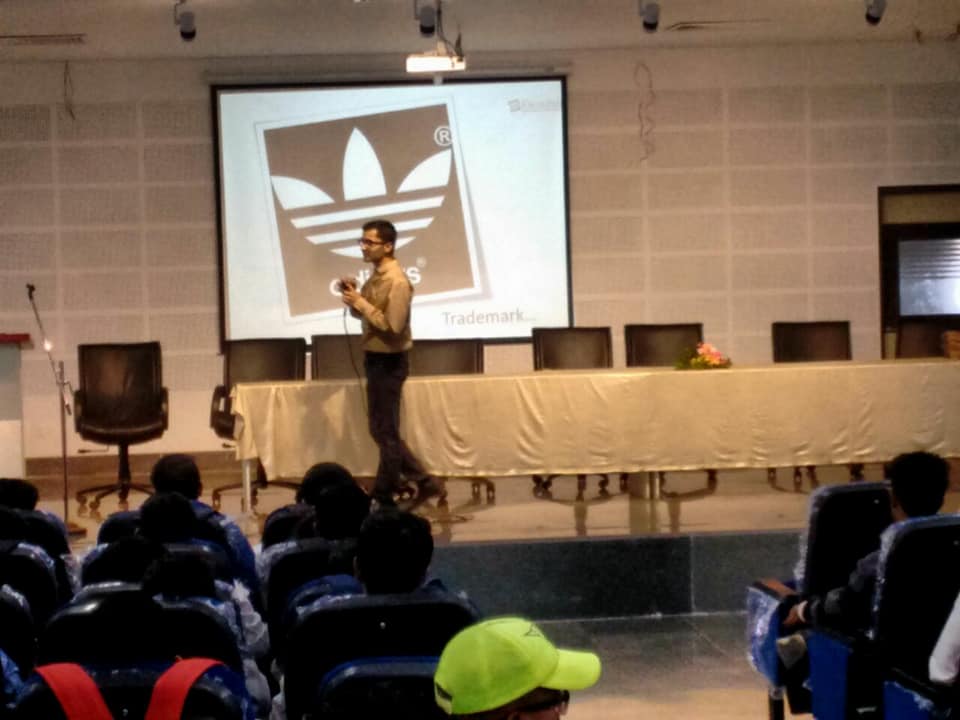
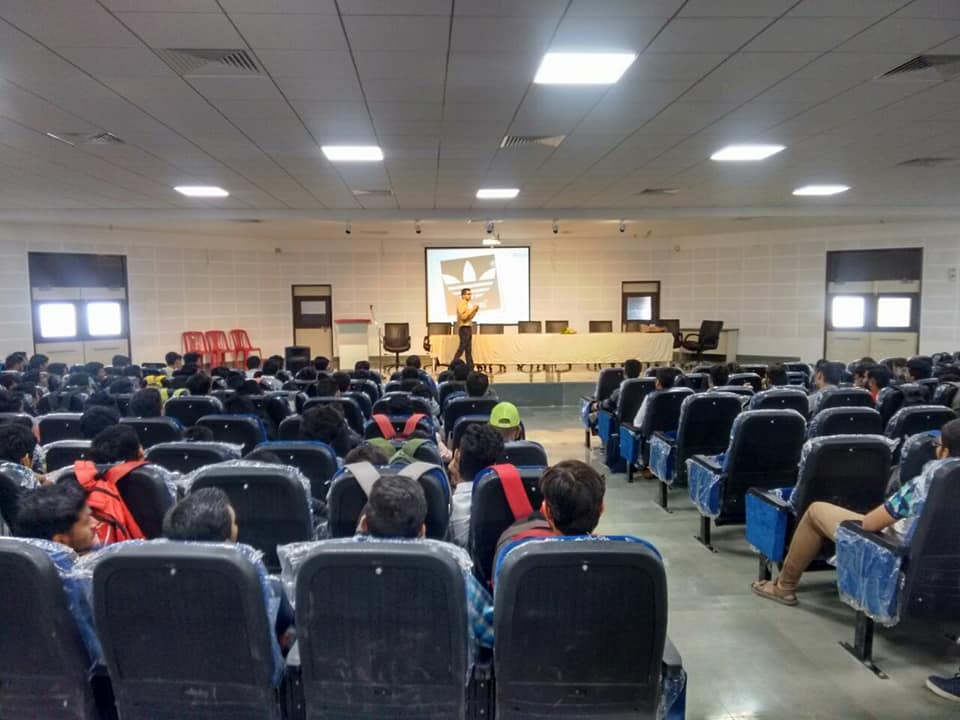
On 20 February 2019, an awareness seminar on “Idea, Innovation & IPR” was conducted at Sandip Polytechnic, Nashik. The programme was organised by Kanadlab Institute of Intellectual Property and Research and was attended by more than 300 students from the Mechanical Engineering department.
The session was delivered by Abhijit Bhand, who interacted with the students on how ideas emerging from everyday engineering thinking can turn into inventions and how intellectual property helps protect those innovations. Many students present in the auditorium were already working on technical models and final-year projects. The discussion therefore revolved around how such project ideas can move beyond academic evaluation and potentially evolve into real technological solutions.
The seminar began with a simple question posed to the students. If an engineer develops a new mechanism that saves time, energy, or cost in a manufacturing process, what prevents others from copying it the moment it becomes successful? This question helped introduce the purpose of intellectual property rights.
Patents exist to encourage innovation. They grant inventors a temporary exclusive right over their inventions so that innovators can benefit from their work and investment in research. Without this protection, new ideas can be copied instantly, discouraging individuals and small innovators from developing new technologies.
Many students assume that patents are relevant only for large corporations or advanced laboratory research. The interaction during the seminar focused on correcting this misconception by discussing several real-life inventions created by individual innovators and small inventors. These examples helped students understand that many everyday products around us originated from simple ideas that were later protected through patents.
One interesting example discussed during the session was the Spencer Silver invention that led to the creation of the Post-it Notes. The adhesive used in these notes was developed accidentally while experimenting with weak adhesives. The innovation was later patented and eventually turned into one of the most widely used office products around the world. Today sticky notes are used in offices, classrooms, and homes for reminders and notes.
Another practical example involved the Arthur Fry bookmark concept that led to the development of repositionable notes. What began as a simple idea for marking pages in a book became a global product used daily by millions of people.
Students also learned about the innovation behind the Lonnie Johnson, an engineer who developed a high-powered water gun while experimenting with fluid mechanics. The invention was patented and later became the famous Super Soaker toy used by children worldwide. This example demonstrated how experimentation in engineering can unexpectedly lead to successful products.
An Indian example discussed during the session was the innovation of Arunachalam Vaidyanathan, who developed a machine capable of extracting fibre from banana stems. The invention addressed a problem faced by farmers who previously treated banana stems as waste. With the help of patent protection, such technologies can help small industries develop new markets using agricultural by-products.
Another interesting everyday innovation is the Harvey Ball concept which later evolved into numerous commercial uses through trademark and design protection. The simple smiling symbol, now widely used in digital communication and branding, illustrates how even small creative ideas can gain economic value when properly protected.
The session also referred to the widely used George de Mestral invention that led to the creation of Velcro. De Mestral observed how burr seeds stuck to his clothing during a walk in the countryside. This observation inspired the hook-and-loop fastening mechanism that is now used in shoes, bags, jackets, medical equipment, and even aerospace technology. What began as a simple observation of nature eventually became a patented product used worldwide.
Through these examples, students realised that inventions do not always originate from large laboratories or expensive research facilities. Many innovations arise from everyday problems, practical observations, or small improvements to existing systems.
The discussion emphasised that intellectual property protection plays a crucial role in enabling innovators to benefit from their ideas. When inventions are protected, inventors can license their technology, start businesses around their innovation, or collaborate with manufacturers to scale production.
For mechanical engineering students, this understanding is particularly important. Many of the projects developed during diploma or engineering courses involve machines, tools, mechanisms, or product improvements. If such solutions are new and technically useful, they may qualify for patent protection.
After the seminar concluded, a large number of students approached the speaker with questions related to intellectual property rights. Their queries ranged from how patents are filed to whether student projects can become patentable inventions. Several students also expressed curiosity about the cost and time required for patent filing.
The enthusiastic interaction reflected a growing interest among young engineers in exploring innovation beyond traditional academic boundaries. The invitation from the institution’s leadership and faculty members created a platform where engineering education could connect directly with the practical realities of innovation and intellectual property.
The session provided students with a new perspective on their technical work. Instead of seeing their ideas only as classroom projects, they began to view them as potential inventions capable of generating real value when protected and developed further.