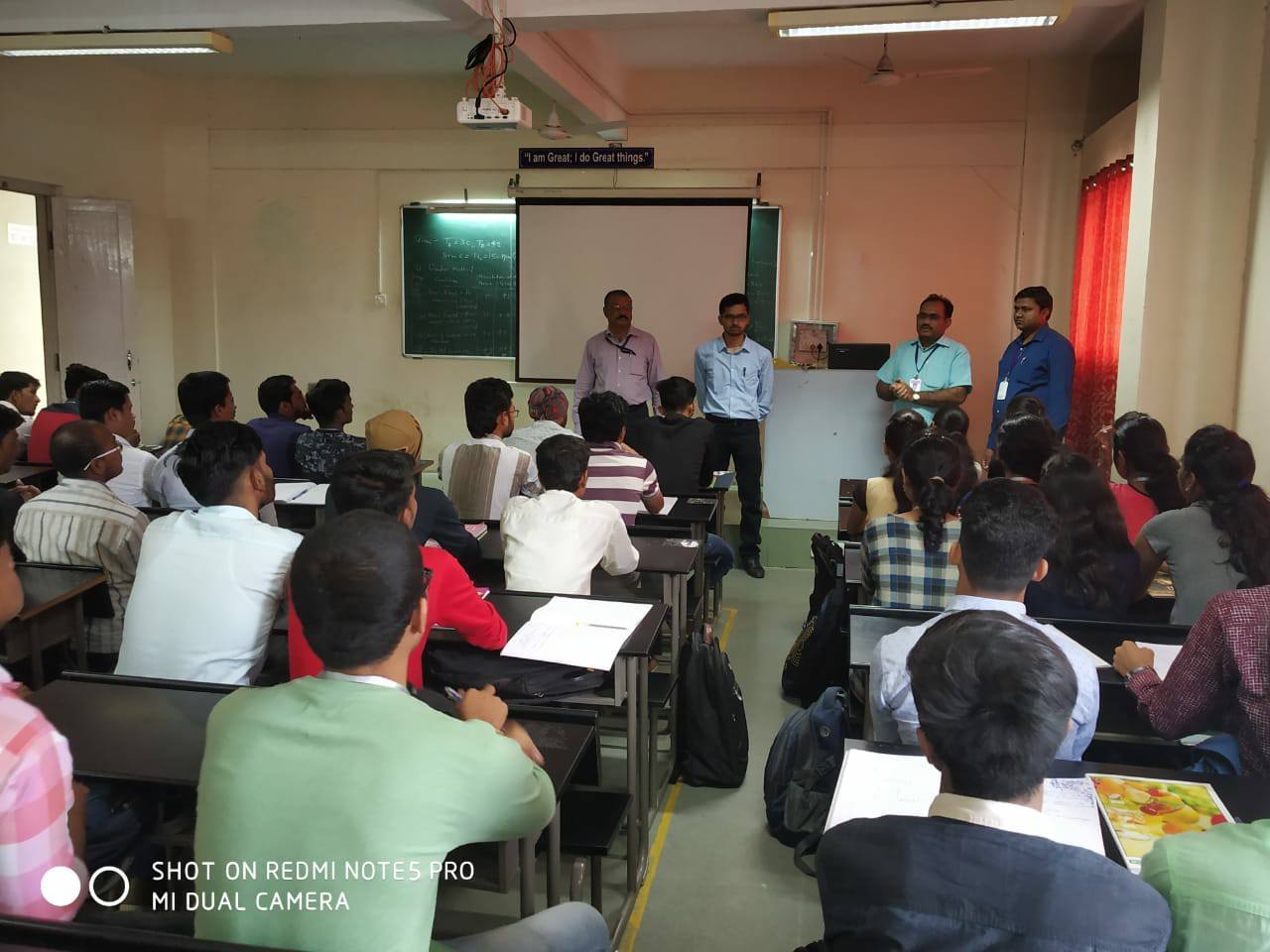
An awareness seminar on “Intellectual Property – Area, Effect & Opportunities” was conducted for final-year students at Amrutvahini College of Engineering by the Department of Production Engineering. The program was attended by more than 100 students who were preparing to enter professional engineering careers and were eager to understand how innovation and intellectual property influence industrial development.
The session was delivered by Abhijit Bhand, who addressed the students on the fundamentals of intellectual property and its increasing role in technological growth and economic progress. The program was conducted in the presence of Prof. Bhaskar Borkar, Head of the Department, along with faculty members Professor Wakchaure and Professor Pathade, who actively supported the initiative of introducing intellectual property awareness among engineering students.
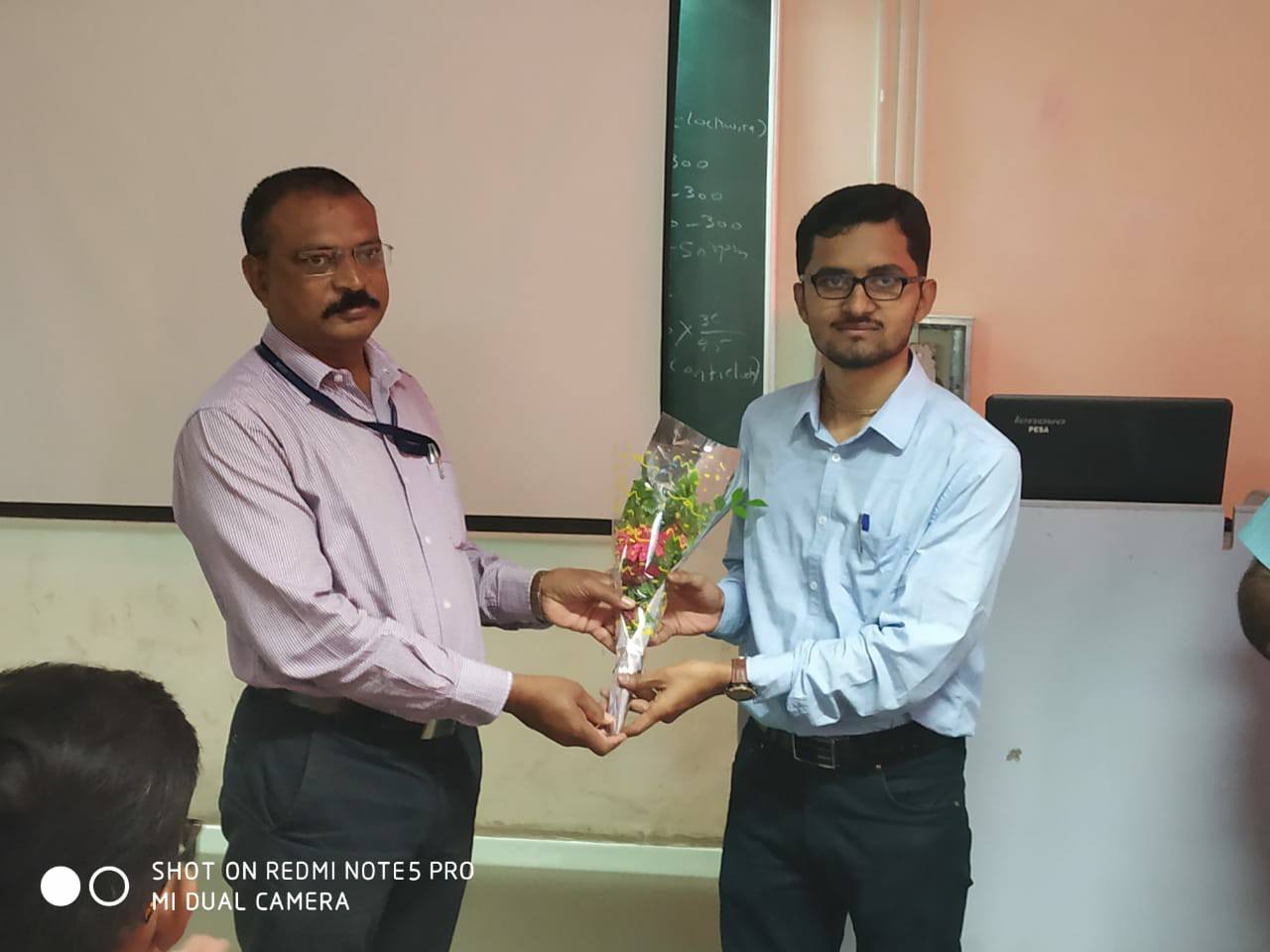
The discussion began with a broader perspective on how innovation shapes economic growth in modern societies. In many industries today, technological ideas and creative solutions have become more valuable than traditional physical assets. Engineers and technologists are often the people who generate these ideas, making intellectual property awareness particularly important for students from technical backgrounds.
One of the most engaging parts of the session was the discussion on the well-known turmeric patent case, which demonstrated how intellectual property can protect traditional knowledge and prevent misuse of indigenous innovations. In the mid-1990s, a patent was granted in the United States claiming the wound-healing properties of turmeric. For many in India, this claim appeared surprising because turmeric had been used in traditional medicine for centuries for treating cuts and wounds.
The matter was challenged by the Council of Scientific and Industrial Research, which presented documented evidence showing that the healing properties of turmeric had already been described in ancient Indian texts and traditional knowledge systems. After reviewing the evidence, the United States Patent Office revoked the patent. This case became one of the most prominent examples of India successfully challenging biopiracy and protecting its traditional knowledge.
For students, the turmeric case illustrated an important principle of patent law. A patent can only be granted for an invention that is new, involves an inventive step, and has industrial applicability. If knowledge already exists in the public domain, it cannot be patented by anyone. This is why proper documentation of knowledge is crucial in the global intellectual property system.
The seminar also explained how patents function as economic instruments rather than merely legal protections. When an inventor develops a new machine, process, or technological improvement, a patent grants the inventor exclusive rights to commercially use that invention for a limited period of time. This exclusivity allows innovators to recover their research investments and potentially build businesses around their inventions.
Students were introduced to the basic mechanism behind the patenting process. An inventor first files a patent application describing the invention in technical detail. The application is then examined by patent authorities to determine whether the invention meets the required criteria of novelty, inventive step, and industrial applicability. If the invention qualifies, the patent is granted, giving the inventor legal protection against unauthorised use.
This protection plays a crucial role in encouraging innovation. Without patent protection, new technologies could be easily copied by competitors, leaving innovators without any incentive to invest time and resources in research.
The discussion also highlighted how many successful businesses around the world have grown around patented technologies. A single patented invention can become the foundation of a startup or an industrial enterprise. Engineers who develop useful technologies can license their patents to manufacturing companies or even establish their own ventures based on those inventions.
Students were encouraged to think about their own academic projects in this context. Many engineering projects involve designing machines, improving manufacturing processes, or creating new mechanisms. If such solutions demonstrate novelty and technical advantage, they may qualify for patent protection and potentially lead to entrepreneurial opportunities.
The interaction also touched upon the broader role of intellectual property in industrial development. Countries that actively promote innovation and protect intellectual assets tend to experience faster technological progress. By encouraging engineers and researchers to develop new solutions, intellectual property systems help drive industrial competitiveness and economic growth.
Throughout the session, students showed strong interest in understanding how intellectual property connects with their future careers. Questions were raised about patent filing procedures, the cost involved, and the role engineers can play in research and innovation activities.
The presence of faculty members and the department leadership reinforced the importance of integrating intellectual property awareness into engineering education. Programs like this help students realise that innovation is not limited to laboratories or multinational corporations. It can emerge from academic projects, small engineering improvements, or creative solutions developed by young technologists.
The seminar concluded with a shared understanding that intellectual property is not merely a legal concept but a strategic tool that empowers innovators to transform ideas into technologies, technologies into businesses, and businesses into engines of economic development.