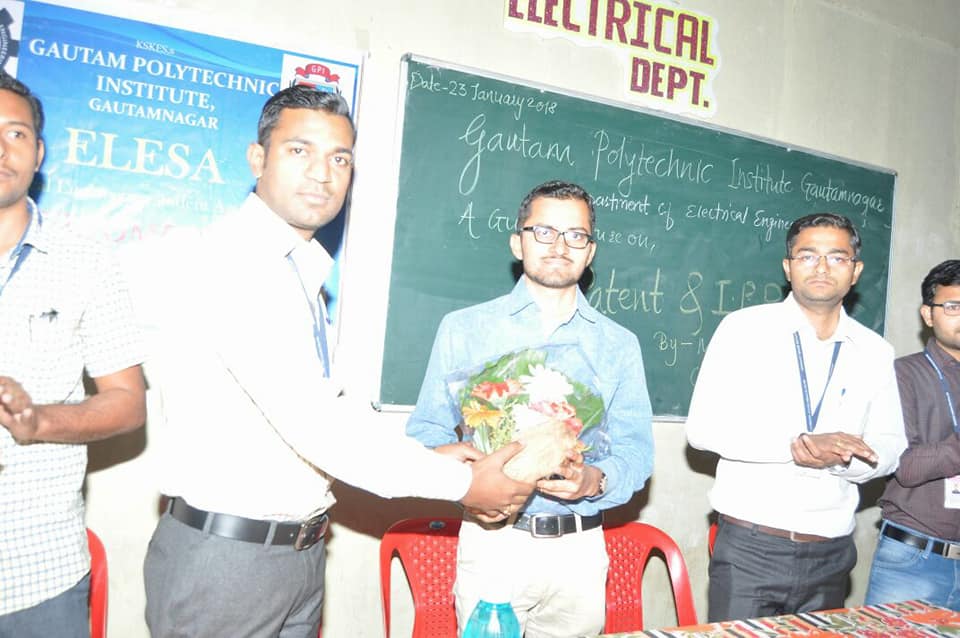
On 22 March 2018, an expert seminar on “Innovation and Intellectual Property Protection” was conducted at Gautam Polytechnic, Kolpewadi. The programme was organised by Kanadlab Institute of Intellectual Property and Research, Nashik, with the objective of introducing engineering students to the role of intellectual property in technological innovation and research-driven careers.
The session was delivered by Abhijit Bhand, who interacted with more than 80 electrical engineering students on the emerging opportunities in research, innovation, and intellectual property rights. The programme was specifically designed for students from the electrical engineering discipline, allowing the discussion to focus on technologies and industries that are closely connected to electrical systems, electronics, and energy innovations.
The seminar created an engaging atmosphere where technical education was connected with real-world examples from industry and research.
Innovation in Electrical Engineering
Electrical engineering has historically been one of the most innovation-intensive branches of engineering. From power generation systems to modern electronics, advancements in this field have shaped the technological landscape of the world.
The session began with a discussion on how many groundbreaking inventions originated from engineers who were experimenting with electrical systems and scientific ideas. Students were encouraged to view their academic projects not merely as assignments but as opportunities to explore new technological solutions.
Research and experimentation were presented as the foundation of innovation. When such innovations demonstrate novelty and technical advancement, they can be protected through intellectual property rights.
Understanding Intellectual Property in Technology Development
The seminar explored how intellectual property functions within technology-driven industries. Patents, industrial designs, and trademarks were discussed as different mechanisms through which innovators protect their creations.
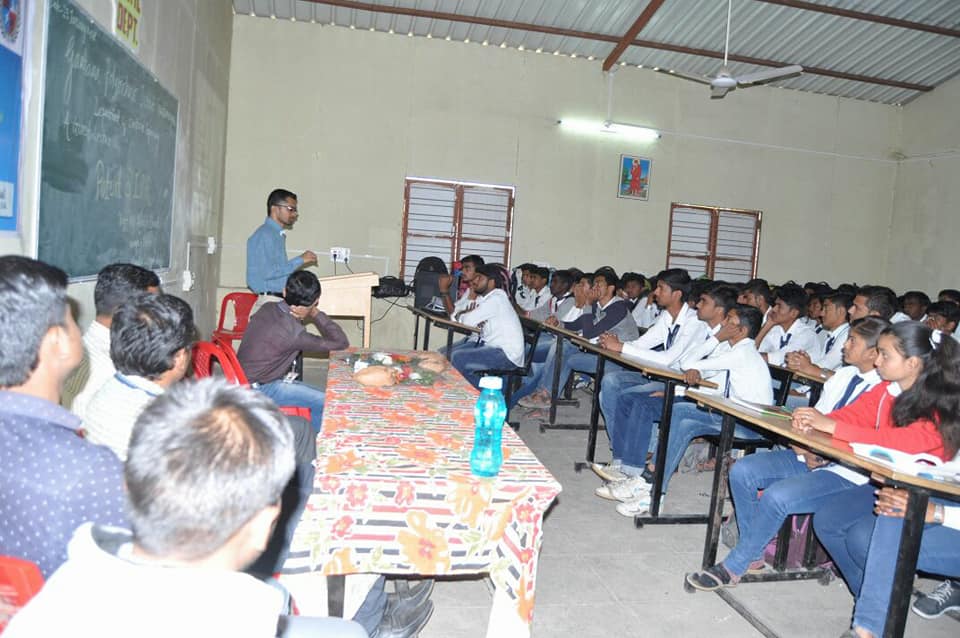
For electrical engineers, patents are particularly relevant because many innovations involve circuit designs, control systems, energy management technologies, and electronic devices. Protecting such technologies through patents allows inventors to prevent unauthorised use and build long-term technological advantage.
Students were introduced to the concept that intellectual property is not limited to large corporations. Individual researchers, startups, and small technology companies frequently rely on intellectual property to secure their innovations.
How Technology Companies Build Value Through Intellectual Property
To illustrate how intellectual property creates value in modern industries, the session referred to examples from global technology companies.
Companies such as Samsung Electronics have built vast patent portfolios covering semiconductor technologies, display systems, and consumer electronics. These patents allow the company to maintain leadership in highly competitive global markets.
Another example discussed during the seminar was Qualcomm, which developed foundational technologies for mobile communication standards. Qualcomm’s patents in wireless communication systems form the backbone of modern smartphone networks and generate substantial licensing revenue across the global telecommunications industry.
These examples helped students understand that intellectual property often represents the technological backbone of modern industries.
Innovation Emerging from Student Environments
The seminar also highlighted how student research projects can evolve into meaningful technological innovations. Engineering colleges often provide laboratories, project opportunities, and mentorship that allow students to experiment with ideas.
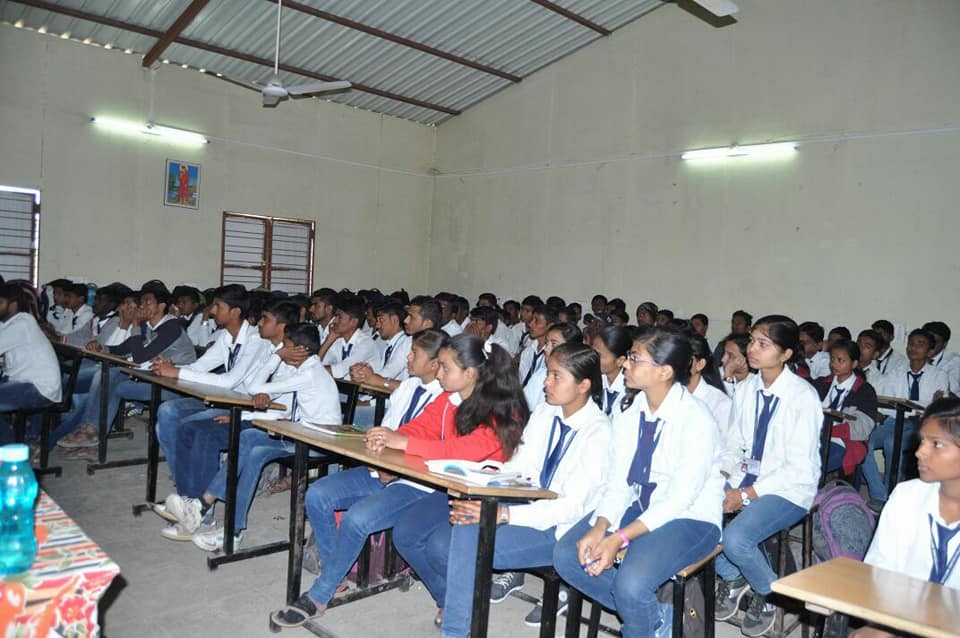
Many well-known technologies have originated from university environments where students and researchers worked on experimental solutions to practical problems.
One example discussed during the interaction was Google, which began as a research project developed by Larry Page and Sergey Brin during their doctoral studies at Stanford University. Their research on search algorithms eventually became the foundation of one of the world’s most influential technology companies.
Stories such as these resonated strongly with the students, demonstrating that innovative ideas emerging from academic environments can evolve into transformative technologies.
Interaction with Electrical Engineering Students
The interactive nature of the session encouraged students to ask questions about the relationship between engineering research and intellectual property protection. Discussions covered topics such as patent filing procedures, how to identify patentable inventions in technical projects, and the role of intellectual property in startup ventures.
Students were particularly interested in understanding how their final-year projects could potentially be evaluated for patentability. The discussion emphasised that proper documentation, experimentation, and novelty evaluation are essential steps in identifying inventions.
Building Awareness in Emerging Innovation Ecosystems
The seminar also emphasised the importance of intellectual property awareness within regional innovation ecosystems. Engineering institutions play an important role in nurturing the next generation of innovators and entrepreneurs.
When students understand intellectual property early in their academic journey, they become more conscious about protecting their ideas and exploring opportunities for commercialisation.
The interaction at Gautam Polytechnic demonstrated that students are increasingly curious about research and innovation pathways beyond traditional employment.
The programme also marked the beginning of a broader engagement with the institution, with plans for a two-day Intellectual Property Awareness Camp aimed at further strengthening students’ understanding of research, innovation, and intellectual property protection.
The session concluded with appreciation from the institution’s leadership, who welcomed initiatives that bring intellectual property awareness into technical education. The invitation from the respected Principal of Gautam Polytechnic reflected the growing recognition that innovation and intellectual property literacy must become an integral part of engineering education.