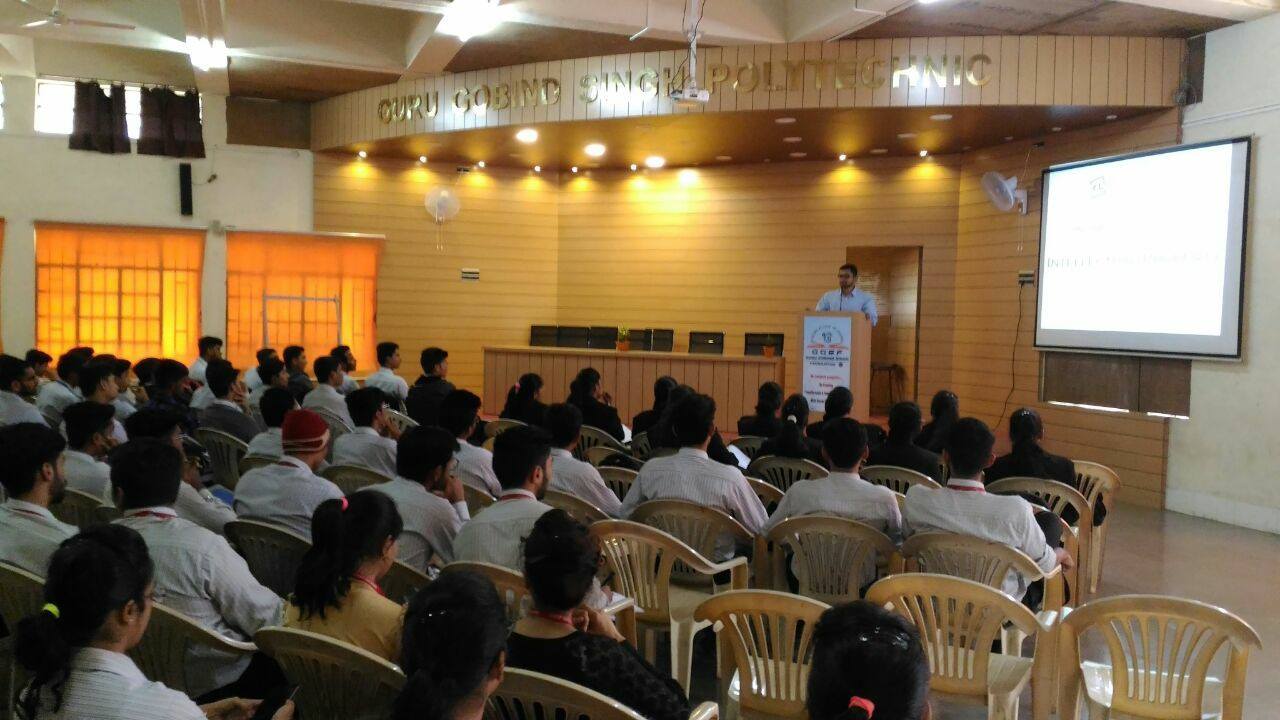
A session on “Intellectual Property for Business” was conducted at Guru Gobind Singh College Of Engineering And Research Centre, Nashik as part of an Entrepreneurship Awareness Camp organized by Udyogwardhini. The program was attended by more than 200 students from the Mechanical and Electrical Engineering departments who participated enthusiastically in a discussion on innovation, startups, and intellectual property protection.
The session was addressed by Abhijit Bhand, who introduced students to the fundamentals of intellectual property and its growing importance in technology-driven industries. The interaction focused on helping engineering students understand how ideas developed during technical education can evolve into protected inventions and eventually into successful businesses.
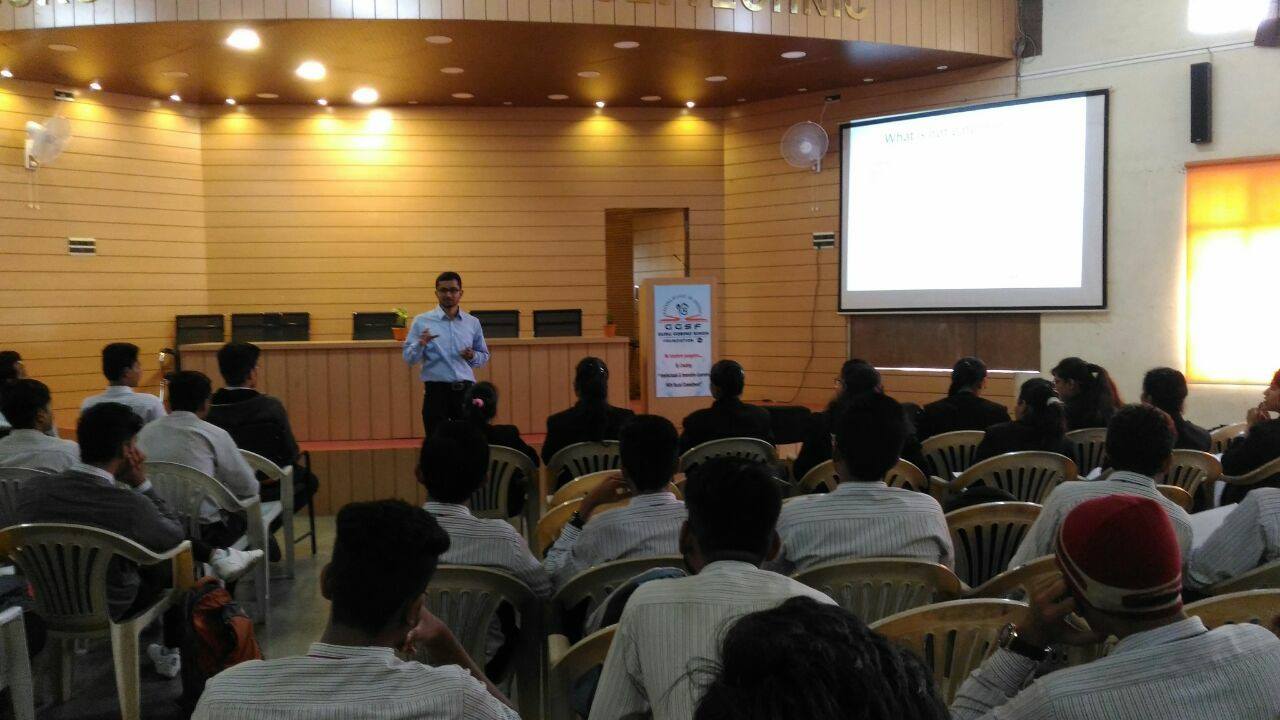
The discussion began with an overview of the four primary forms of intellectual property protection: patents, trademarks, copyrights, and industrial designs. Each of these plays a different role in protecting business assets. Patents safeguard technological inventions, trademarks protect brand identity, copyrights protect creative works and software, and industrial designs protect the visual appearance of products.
To make the subject more relatable for engineering students, the session explored several inventions from electrical and electronics engineering that were protected by patents and eventually transformed the modern world.
One of the earliest and most influential examples discussed was the invention of the electric light bulb by Thomas Edison. Edison’s patented improvements in electric lighting systems enabled practical and long-lasting bulbs that replaced gas lighting in cities and homes. The patent protection surrounding electric lighting technology allowed companies to build large-scale electrical infrastructure and laid the foundation for the modern power industry.
Another remarkable invention that changed communication worldwide was the telephone developed by Alexander Graham Bell. Bell’s patented technology for transmitting voice over electrical signals created an entirely new communication industry. The telephone quickly became one of the most widely adopted technologies in history and continues to influence modern telecommunications systems.
Students were also introduced to the invention of radio communication by Guglielmo Marconi, whose patented wireless transmission technologies enabled communication without physical wires. This breakthrough later led to the development of broadcasting systems, satellite communication, and modern wireless technologies.
Another revolutionary development discussed during the session was the transistor invented by John Bardeen, Walter Brattain, and William Shockley. The transistor replaced bulky vacuum tubes and became the fundamental building block of modern electronics. Today, billions of transistors are embedded inside microprocessors, smartphones, and electronic devices around the world.
The session also highlighted the invention of the microprocessor by Ted Hoff and his colleagues at Intel.
The microprocessor integrated thousands of electronic components onto a single chip, making modern computers and digital devices possible. This invention triggered the personal computing revolution and laid the groundwork for today’s digital economy.
These examples demonstrated a powerful lesson for students: a single patented technological breakthrough can create entirely new industries and transform society. Many of the devices used daily today—from smartphones and computers to communication networks—are built upon inventions that were once protected through patents.
The discussion then moved toward the concept of multi-layer intellectual property protection, where businesses protect their technologies through a combination of patents, trademarks, and designs. A technological product may have a patented internal mechanism, a registered industrial design for its external appearance, and a trademark representing the brand under which it is marketed.
Students were particularly curious about the process of patent filing. The session explained how inventors first document their invention, conduct prior-art searches to determine novelty, prepare patent specifications describing the technology, and submit the application for examination by patent authorities. If the invention satisfies the requirements of novelty, inventive step, and industrial applicability, the patent is granted, providing exclusive rights to the inventor.
This exclusivity plays a vital economic role. Patents allow innovators and companies to commercialize their inventions, attract investment, and build businesses around their technologies. Many startups today begin with a technological idea that is first secured through intellectual property protection before being introduced into the market.
The interaction quickly turned into a lively discussion where students asked numerous questions about patent filing procedures, innovation opportunities, and the role engineers can play in intellectual property-driven industries. Many participants were curious to know whether their own academic projects could potentially become patentable inventions.
With more than 200 engineering students participating actively, the session highlighted a growing awareness among young technologists that intellectual property is not merely a legal framework but an essential tool for innovation, entrepreneurship, and economic development in a technology-driven world.