On 30 January 2018, a focused seminar on “Idea, Innovation and IPR” was conducted at the Pooja Industrial Training Centre located in the Nashik MIDC industrial area. The programme brought together technocrats and professionals from various technical domains working across small and medium industries in the region.
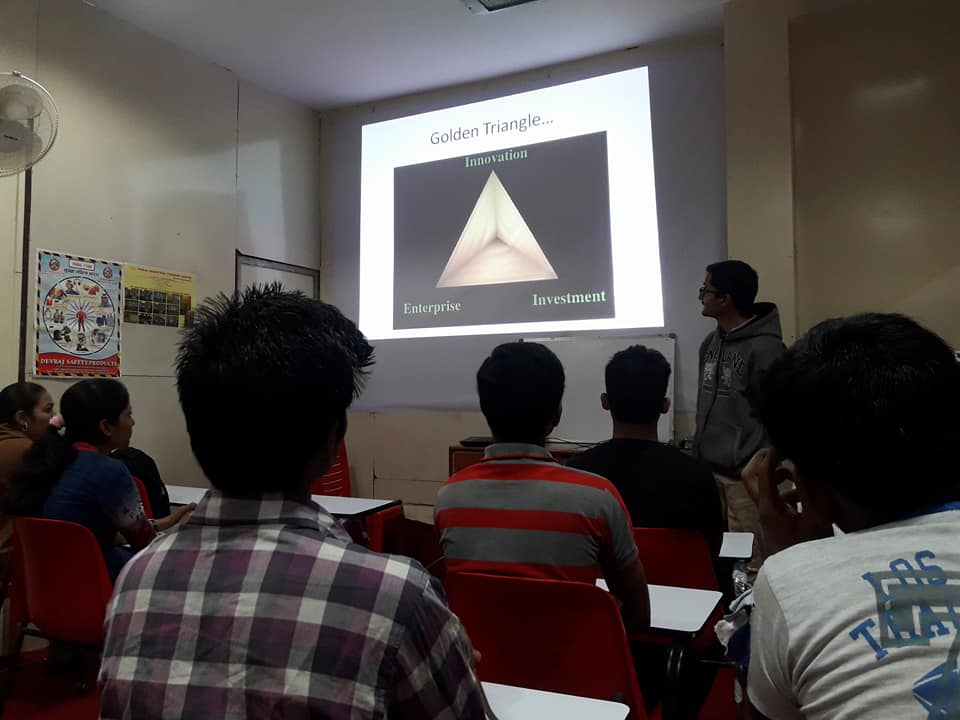
The session was delivered by Mr. Abhijit Bhand, who interacted with participants on the growing importance of intellectual property rights in industrial innovation and technology-led business development. Around 20 industry professionals attended the seminar, creating a compact yet highly interactive environment where practical industrial challenges and innovation opportunities could be discussed in depth.
Understanding the Journey from Idea to Innovation
The seminar began with a discussion on how innovation actually emerges within industrial environments.
In many manufacturing and engineering setups, innovation often takes the form of incremental improvements. Engineers modify machines, improve production processes, design tools, or develop more efficient methods of solving operational challenges. These improvements may appear routine within the factory floor, yet many of them have the potential to qualify as valuable intellectual property.
Participants were encouraged to view these technical solutions not merely as internal process improvements but as innovations capable of creating long-term business value when properly documented and protected.
How the Patent System Works
A key focus of the session was explaining how patents function in practice. While many industry professionals are familiar with the concept of patents, the mechanisms behind patent protection are often not clearly understood.
The seminar explained the fundamental objective of the patent system. Patent law is designed to encourage technological progress by granting inventors exclusive rights over their inventions for a limited period, in exchange for public disclosure of the invention. This system ensures that innovators are rewarded for their creativity while also contributing knowledge to the wider technological community.
Participants were introduced to the basic requirements of patentability such as novelty, inventive step, and industrial applicability. The discussion also addressed how industrial inventions can be identified within everyday engineering activities.
For many of the attendees, this discussion helped clarify how ideas emerging from practical industrial problem solving can potentially evolve into patentable technologies.
Importance of Patents for MSMEs
A significant portion of the session focused on the role of patents for micro, small, and medium enterprises. MSMEs often operate in highly competitive markets where technological differentiation becomes essential for survival and growth.
Patents can provide a strategic advantage by protecting unique technological solutions and preventing competitors from copying them. A patented innovation can strengthen a company’s market position, attract potential partnerships, and even generate revenue through licensing arrangements.
Participants discussed how small industries can benefit from identifying innovations within their manufacturing processes, machinery modifications, or product development activities. Even modest technical improvements can hold significant commercial value when protected under the patent system.
Indian Examples of Innovation Creating Value
To illustrate the practical impact of intellectual property, the seminar also referred to well-known Indian innovators whose ideas evolved into valuable technologies.
One such example discussed during the session was the innovation of Mansukhbhai Prajapati, the creator of the Mitticool refrigerator. Developed as a low-cost cooling solution using clay, the invention demonstrated how grassroots innovation combined with intellectual property awareness can create both commercial value and social impact.
Another example highlighted the work of Arunachalam Muruganantham, whose low-cost sanitary pad manufacturing machine addressed a critical public health challenge while also demonstrating the power of engineering innovation emerging from unconventional settings.
These stories resonated with the participants because they showed that innovation capable of attracting intellectual property protection does not always originate in large research institutions. Often, it arises from individuals and small enterprises responding to practical challenges.
Opportunities for Engineers and Small Industries
The session also explored the growing opportunities for engineers and small industries in the areas of research, product development, and intellectual property. With increasing emphasis on innovation within India’s industrial policies, companies that invest in research and protect their technological developments are better positioned to compete in both domestic and international markets.
Participants discussed how structured documentation of research and development activities within industries can help identify patentable inventions. When such innovations are protected early, they can form the foundation for long-term technological leadership.
Role of Industry Associations in IP Awareness
An important part of the discussion focused on the role of industrial associations in promoting intellectual property awareness. Organisations such as the Nashik Industries and Manufacturers Association (NIMA) and Ambad Industries and Manufacturers Association (AIMA) have the potential to play a significant role in educating industries about intellectual property rights.
Through workshops, training programmes, and collaborative initiatives, such associations can help industries understand how intellectual property contributes to business value. By building awareness among manufacturers, engineers, and entrepreneurs, industry bodies can strengthen the innovation ecosystem across the Nashik region.
The discussion highlighted that when industrial clusters begin to recognise the importance of intellectual property, it encourages a culture where innovation is systematically protected and commercialised.
Strengthening the Innovation Ecosystem in Nashik
Nashik has developed into an important industrial hub with a strong base of manufacturing enterprises and technical talent. When industries operating within such clusters become aware of intellectual property rights, the potential for innovation-driven growth increases significantly.
Awareness programmes like the seminar conducted at Pooja Industrial Training Centre help bridge the gap between technology development and intellectual property protection. By equipping engineers and industry professionals with this knowledge, such initiatives contribute to the development of a stronger startup ecosystem and a more innovation-oriented business environment.
Conclusion
The seminar on “Idea, Innovation and IPR” conducted on 30 January 2018 at Pooja Industrial Training Centre in Nashik MIDC provided an important platform for engaging industry professionals in discussions around patents and innovation. With around 20 technocrats participating, the programme offered an interactive setting where practical industrial experiences could be connected with intellectual property strategies.
Through discussions on how patents work, why they are important for MSMEs, and how industry associations can promote intellectual property awareness, the session highlighted the growing importance of IP in creating value for small industries.
As India continues to strengthen its innovation and manufacturing capabilities, initiatives that connect intellectual property knowledge with industry practice will remain essential for fostering sustainable growth within regional business ecosystems such as Nashik.