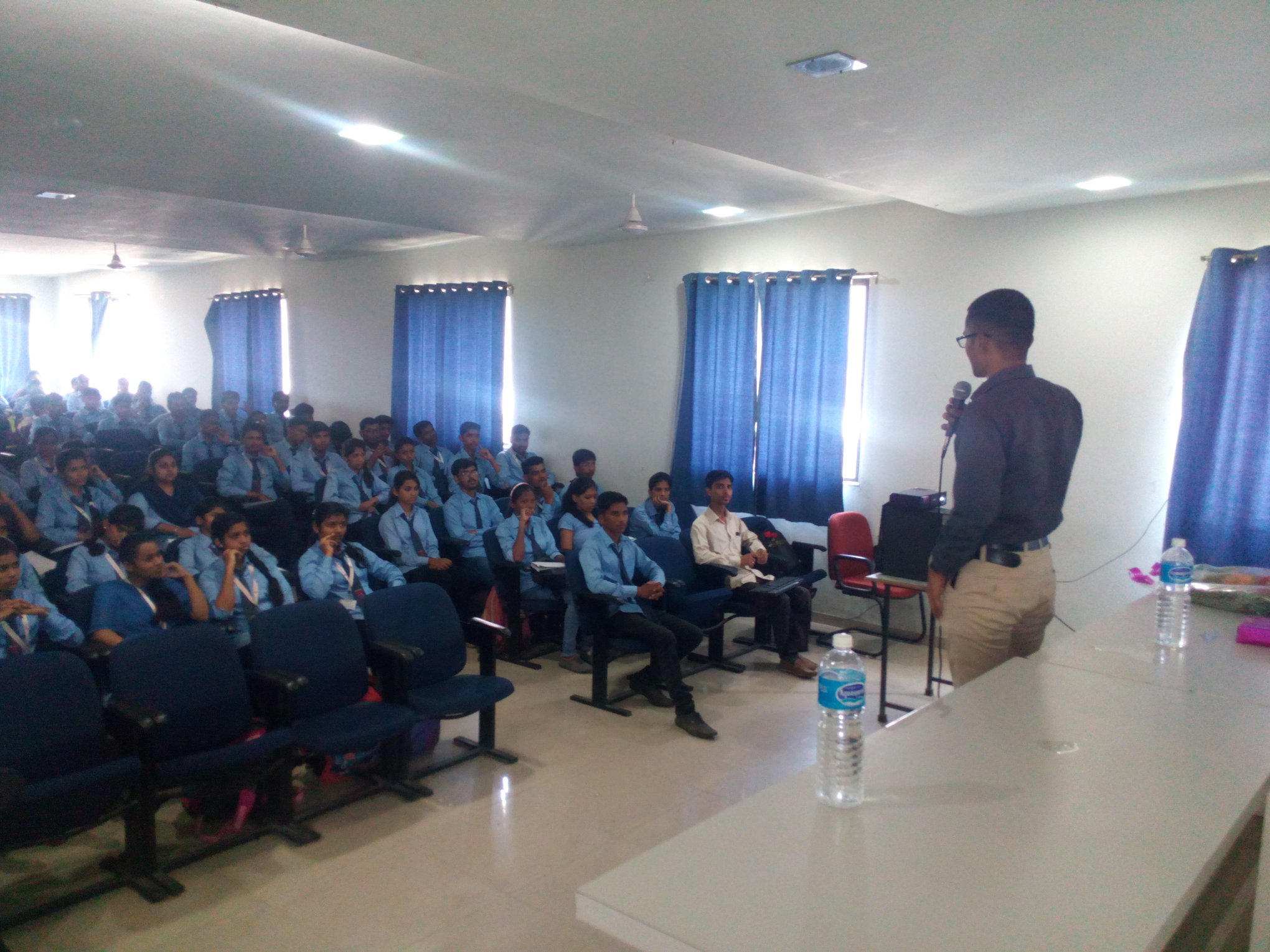
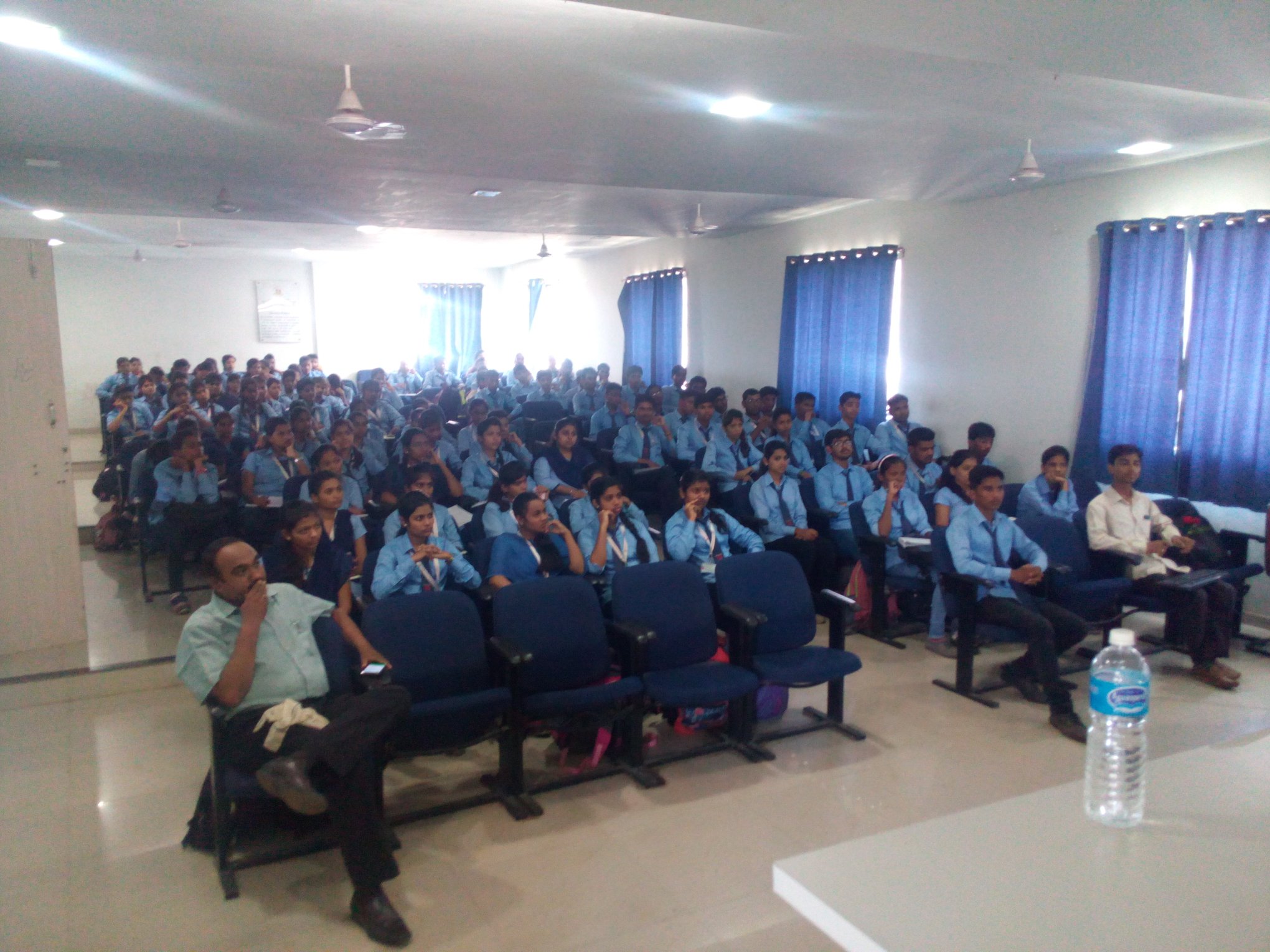
On 28 January 2018, an Intellectual Property Rights Awareness Seminar was conducted at Matoshri Polytechnic, Nashik, under the initiatives of Udyogvardhini, Nashik, with sponsorship from the Ministry of Science and Technology, New Delhi. The programme was designed to introduce students to the practical role of intellectual property in innovation, entrepreneurship, and technology-driven business development.
Around 300 students from the engineering and technical streams of the institute attended the programme. To ensure better interaction and discussion, the seminar was conducted in two separate sessions. This format allowed students from different departments to engage with the subject more closely and participate in discussions around real-world applications of intellectual property.
The session was delivered by Abhijit Bhand, who addressed the students on how intellectual property rights such as patents, trademarks, copyrights, and industrial designs can support innovation and play an important role in building sustainable businesses.
Introducing Intellectual Property in the Context of Innovation
The seminar began by placing intellectual property within the broader context of innovation and economic growth. Engineering students frequently develop technical solutions, prototypes, and creative ideas during their academic projects. However, without proper awareness of intellectual property rights, these innovations often remain unprotected.
The discussion emphasised that intellectual property is not merely a legal subject reserved for lawyers. It is a strategic tool that innovators and entrepreneurs must understand in order to protect their work and convert it into viable commercial opportunities.
Students were encouraged to view their ideas as potential assets. When protected properly, these assets can contribute to new products, startups, and technological advancements.
Patents and the Protection of Technological Inventions
One of the central themes of the seminar was patents and their importance in protecting technical inventions. The session explained the basic principles of patentability including novelty, inventive step, and industrial applicability.
To make the concept more relatable, several well-known Indian examples were discussed. One such example was the patent granted to Mansukhbhai Prajapati for the Mitticool refrigerator, a clay-based cooling device that works without electricity. The story of this innovation illustrated how simple yet inventive ideas can solve real problems and still qualify for patent protection.
Another example referred to the widely known Jaipur Foot, a low-cost prosthetic limb that has helped thousands of amputees regain mobility. The innovation demonstrated how engineering solutions combined with intellectual property awareness can create both social impact and technological recognition.
These examples helped students understand that patents are not limited to large corporations or complex laboratory inventions. Many impactful innovations originate from practical problem-solving.
Trademarks and the Power of Brand Identity
The seminar also discussed trademarks and their significance in building business identity. Students were introduced to the idea that while patents protect technology, trademarks protect the reputation associated with products and services.
Indian brands such as Amul and Tata were discussed as examples of how trademarks build long-term trust and recognition. Over decades, these brands have become synonymous with quality and reliability, demonstrating the commercial value of trademark protection.
Students were encouraged to think carefully about brand names when launching startups or products. A distinctive trademark not only differentiates a business but also becomes an important business asset over time.
Copyright and Creative Works
The session also covered copyright protection and its relevance in the digital age. Copyright applies to creative and literary works such as software programs, technical drawings, design layouts, presentations, and digital media.
To illustrate this concept, examples from the Indian film and software industries were discussed, where copyright protection plays a central role in safeguarding creative content. Students working on software projects or multimedia applications were encouraged to understand how their creative outputs are automatically protected under copyright law.
The discussion also emphasised the importance of respecting the intellectual property rights of others while developing new works.
Industrial Designs and Product Aesthetics
Another topic discussed during the seminar was industrial design protection. Design registration protects the visual appearance of products, including their shape, configuration, and ornamental features.
Examples from the Indian automobile and consumer product industries were used to explain how product aesthetics can influence consumer perception. Even when two products perform the same function, the design often determines market preference.
For students engaged in product design and mechanical engineering, understanding design protection was particularly relevant because many innovative products combine both technical functionality and distinctive appearance.
Real Stories That Highlight the Value of Intellectual Property
To make the subject more engaging, the session also referred to real-world stories that demonstrate the importance of intellectual property awareness.
One such example discussed during the seminar involved the well-known dispute surrounding the Maggi brand. The case highlighted how trademarks and brand reputation can become extremely valuable assets for a company. Even temporary regulatory challenges attracted national attention because the brand itself had enormous recognition and market value.
Another story discussed was the recognition of Darjeeling Tea as a protected geographical indication. This example helped students understand how intellectual property can protect not only inventions and brands but also traditional products associated with specific regions.
Through such examples, students could see how intellectual property affects real businesses, industries, and even regional identities.
Intellectual Property and Entrepreneurship
A key takeaway from the seminar was the connection between intellectual property and entrepreneurship. Startups and technology companies often rely on intellectual property to secure competitive advantage.
A patented technology, a protected product design, or a strong trademark can significantly increase the value of a business. Investors frequently examine a company’s intellectual property portfolio before making funding decisions.
For engineering students who aspire to launch startups, understanding intellectual property at an early stage provides a strong strategic advantage.
Encouraging Innovation at the Academic Level
The seminar at Matoshri Polytechnic also emphasised the role of educational institutions in nurturing innovation. Engineering projects, laboratory experiments, and prototype development often contain elements that could potentially be protected under intellectual property law.
When students learn about intellectual property during their academic years, they become more conscious about documenting their work, evaluating novelty, and protecting their ideas before public disclosure.
This awareness can transform academic innovation into commercial opportunity.
Conclusion
The IPR Awareness Seminar conducted on 29 January 2018 at Matoshri Polytechnic, Nashik, served as an important platform for introducing students to the role of intellectual property in technology and business. Organised under the initiatives of Udyogvardhini, Nashik, and supported by the Ministry of Science and Technology, New Delhi, the programme brought intellectual property awareness to around 300 engineering students through two interactive sessions.
By discussing patents, trademarks, copyrights, and industrial designs along with real Indian examples and industry stories, the seminar helped students understand how ideas can be protected and transformed into valuable assets.
For many of the participants, the session offered a first introduction to the strategic role intellectual property plays in innovation and entrepreneurship. Such initiatives contribute to building a stronger culture of innovation within educational institutions and support the development of future entrepreneurs in the region.