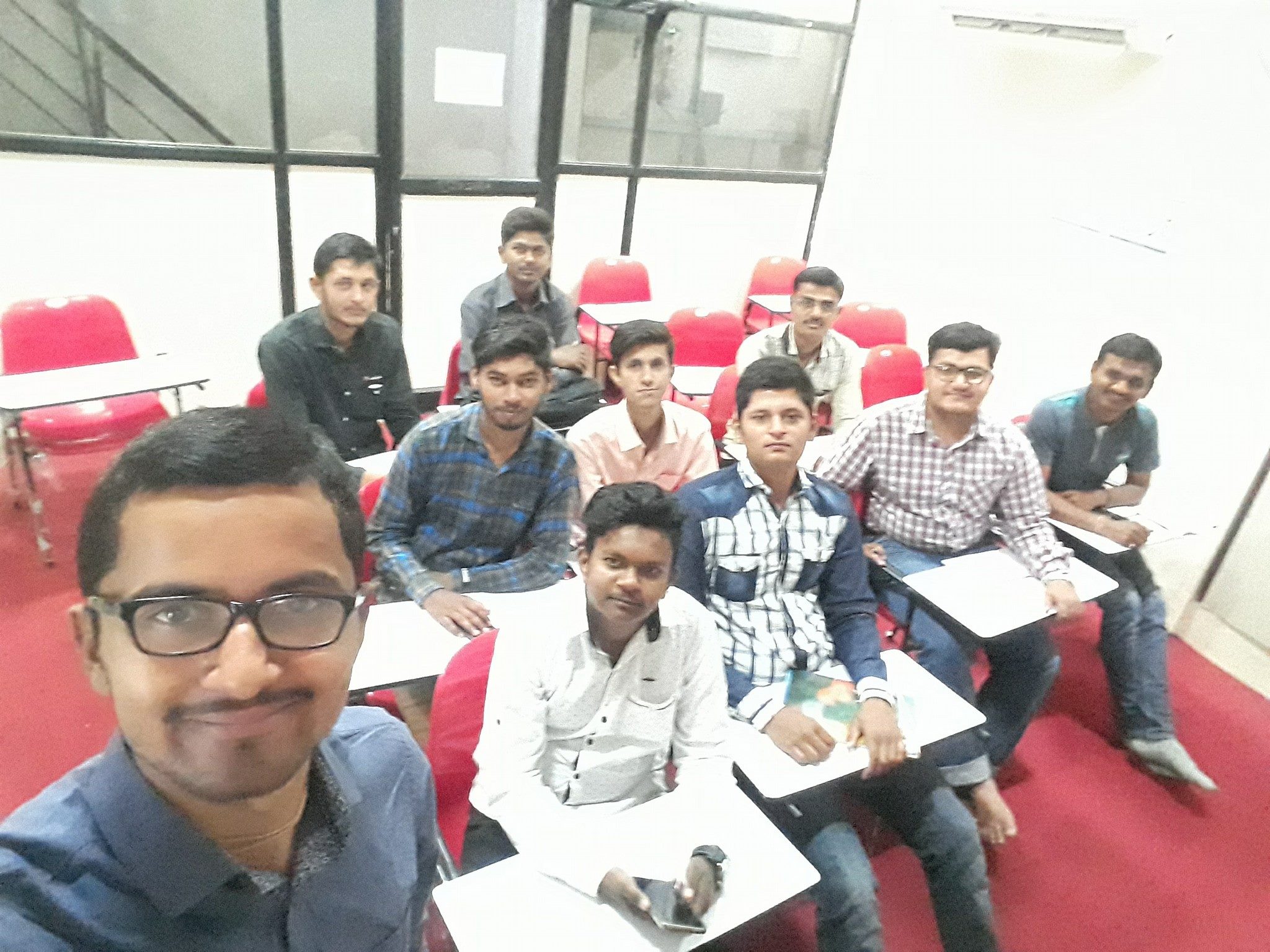
On 15th and 16th November 2017, a specialised training camp titled “Kanadlab Innovation & Startups Camp” was organised for students pursuing industrial and manufacturing-oriented courses. The interaction focused on the practical aspects of innovation and intellectual property, particularly from the perspective of small industries and manufacturing units that form the backbone of India’s industrial economy.
The session was addressed by Abhijit Bhand, who shared personal experiences from his work in the field of innovation and intellectual property. The discussion was designed to help students understand how ideas emerging from workshops, factory floors, and engineering experimentation can evolve into protected innovations and eventually into business opportunities.
Instead of approaching innovation as a distant or theoretical concept, the interaction focused on examples that students from industrial and manufacturing backgrounds could easily relate to. In many small factories, improvements in tools, machine components, or production processes happen quite frequently. A technician may redesign a jig to hold components more accurately during machining. A small workshop may develop a customised fixture that reduces manufacturing time. Sometimes a simple modification in a cutting tool can increase tool life and improve productivity.
These kinds of improvements often remain undocumented even though they represent valuable technical solutions. When properly recorded and protected, such improvements can become patentable inventions.
During the session, students were encouraged to observe how many everyday industrial tools originated from such practical improvements. Consider the example of a quick-release spanner mechanism that allows faster tightening and loosening of nuts and bolts. Innovations like these are often created by small engineering teams or individual innovators who encounter practical problems during maintenance or assembly work. Once protected through patents or designs, such tools can be manufactured and sold to workshops across the country.
Another relatable example discussed was the development of specialised agricultural implements by small manufacturing units in rural India. Many MSMEs design improved seed sowing devices, low-cost irrigation attachments, or compact crop processing machines suited for local farming conditions. These inventions may not always attract global headlines, yet they solve real problems and generate sustainable business opportunities for small manufacturers.
Students were also introduced to the idea that innovation does not necessarily mean inventing an entirely new machine. Often it means improving an existing one. A small fabrication unit might redesign a welding jig that reduces alignment errors. A packaging unit might create a modified conveyor system that improves product handling. A local machine shop might develop a compact attachment for a lathe that performs multiple operations. Such improvements, when they offer novelty and practical advantage, may qualify for intellectual property protection.
The conversation also touched upon how intellectual property plays a crucial role for micro, small and medium enterprises. MSMEs typically operate with limited resources and intense competition. When a company develops a unique tool, mechanism, or manufacturing method, protecting that innovation ensures that competitors cannot immediately replicate it.
Intellectual property therefore becomes a way of securing competitive advantage. A small manufacturing unit that patents a machine component or registers a distinctive product design can build its market reputation and establish a technological identity.
During the interaction, Mr. Bhand also shared experiences from his early exposure to innovation activities while studying engineering. Working with peers on small ideas and technical experiments helped him understand how innovation actually unfolds. Sometimes an idea works immediately, sometimes it fails repeatedly before improvement becomes visible. The process teaches persistence, teamwork, and practical problem solving.
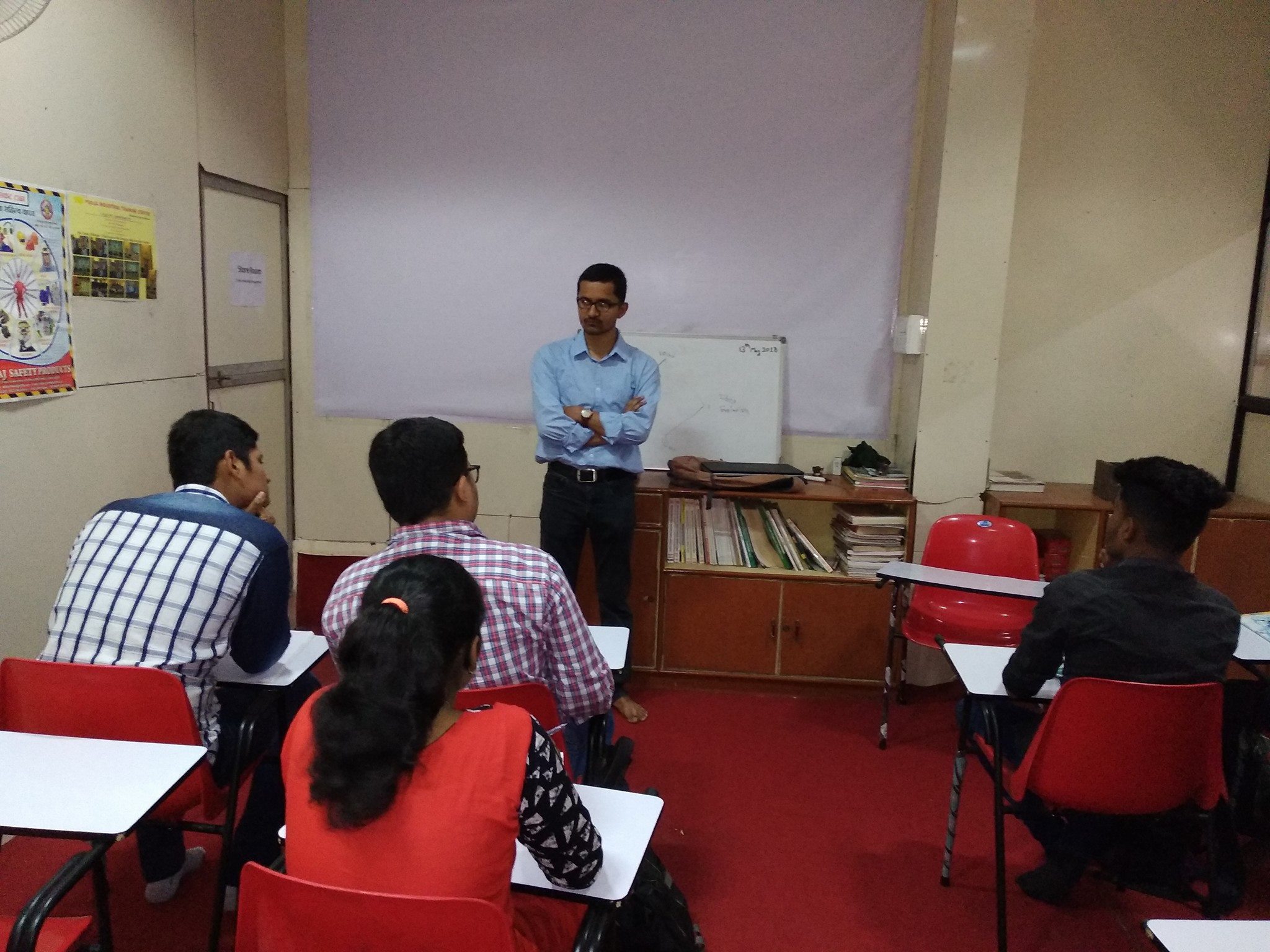
For students preparing for careers in industrial environments, these lessons are extremely relevant. Innovation is rarely a one-person activity. It usually happens through collaborative work where technicians, engineers, designers, and managers contribute their perspectives.
The discussion also highlighted that India’s manufacturing growth will increasingly depend on innovation within small and medium industries. Large corporations often invest heavily in research laboratories, but many practical industrial improvements originate from MSMEs working close to production challenges.
Students were encouraged to think about how their technical skills could contribute to such innovation. Even during training or internships in workshops and factories, observing operational problems can lead to ideas for improvement.
Interacting with young students pursuing industrial and manufacturing courses brought a refreshing perspective. Many of them were curious about how ideas become inventions and how inventions become businesses. Conversations continued even after the session as students shared thoughts about the machines and tools they were learning to operate.
One never really knows where the next meaningful innovation might emerge from. It could come from a research laboratory, a university project, or a small industrial workshop. Sessions like the Kanadlab Innovation & Startups Camp aim to encourage that curiosity and help young engineers recognise the potential value hidden within simple ideas.
Perhaps among those students was someone who may one day build the next impactful innovation or startup emerging from India’s manufacturing ecosystem.