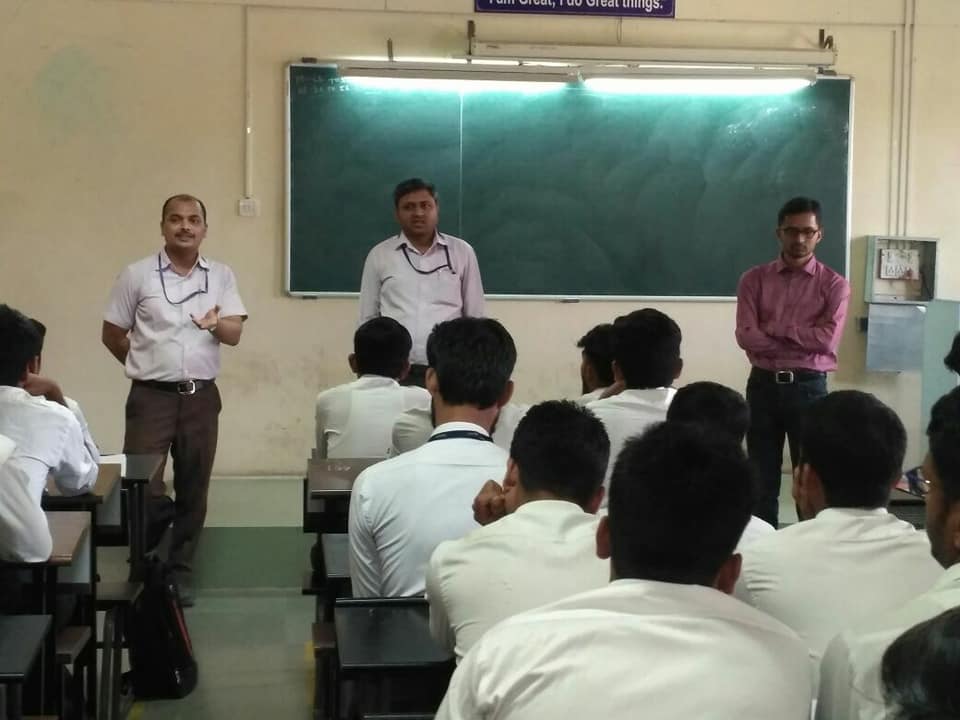
On 13 March 2018, an interesting step toward encouraging student-led innovation was taken at Amrutvahini College of Engineering, Sangamner. A Students Chapter for Innovations and Start-ups was initiated by Kanadlab Institute of Intellectual Property and Research, with the aim of creating a working platform where students could openly discuss their ideas, collaborate with peers, and explore the possibility of converting those ideas into real innovations.
The chapter was formally initiated by Abhijit Bhand, who addressed the students and shared insights drawn from his own journey as an engineering student. The idea for this initiative emerged from continuous interactions with students from the college who had been reaching out with questions about their project ideas, small innovations, and technical experiments.
It became clear that many students were thinking creatively, but they did not always have a structured environment where those ideas could be explored collectively. That realization led to the creation of a dedicated student chapter that could serve as a meeting point for innovation-oriented discussions and experimentation.
A Personal Story that Resonated with Students
During the interaction, Mr. Bhand shared a story from his own engineering days. As a student, he too had several ideas that seemed exciting at the time. Like many young engineers, he and a few classmates decided to form a small group to explore those ideas together.
They spent evenings discussing concepts, sketching designs, debating whether something would actually work, and occasionally discovering that an idea which looked promising on paper needed a lot more work in reality.
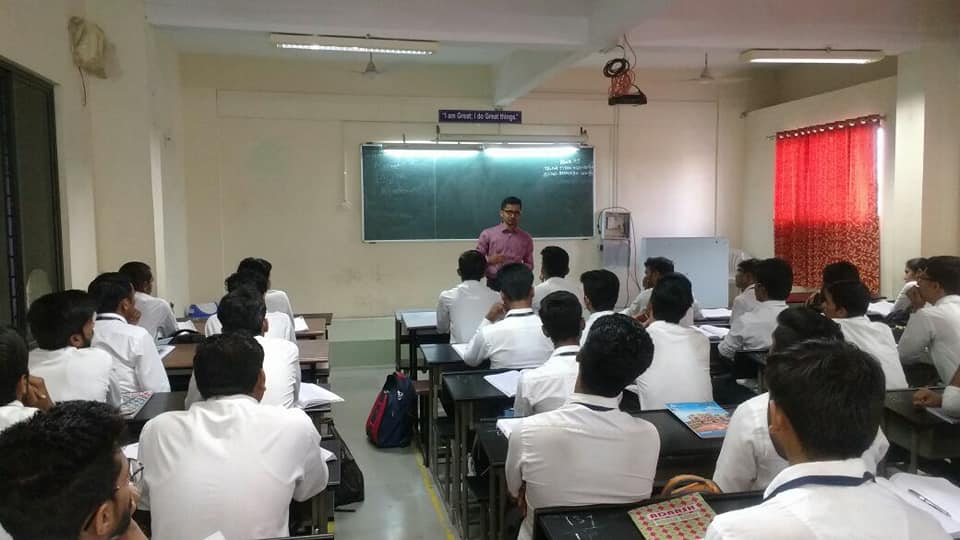
Looking back, he explained to the students that the real value of that experience was not just the technical outcome of those ideas. The process itself taught something much more important. Working together in a team helped develop qualities that are essential in today’s research and corporate environments. Learning to listen to different viewpoints, handling disagreements about technical approaches, dividing responsibilities, and pushing a project forward even when things did not go as planned were all part of that learning.
For many students sitting in the hall, that story felt familiar. Almost everyone has had a project group experience during engineering studies, but the discussion helped them see those experiences in a different light. What may look like a simple student project can actually be the first exposure to innovation thinking and collaborative problem solving.
Inspiration from Founders and Innovators
The conversation then moved toward examples of founders who began their journeys while still in academic environments. One such example discussed was Bill Hewlett and David Packard, who started what would eventually become Hewlett-Packard in a small garage. Their early work involved experimenting with electronic instruments, and their journey demonstrated how curiosity and persistence can grow into technological enterprises.
Another interesting story shared with the students was about Jan Koum, who co-founded WhatsApp after years of working on software ideas and understanding how communication technologies could be simplified for users. The discussion highlighted that many successful founders did not start with elaborate business plans. They started with a problem that fascinated them and a willingness to keep experimenting.
These stories helped students understand that innovation rarely follows a straight line. It often begins with curiosity, collaboration, and the courage to explore ideas even when the outcome is uncertain.
Why a Student Chapter Matters
The newly initiated student chapter at Amrutvahini College is meant to create exactly that kind of environment. Instead of working on ideas in isolation, students can now come together, discuss possibilities, and support each other’s efforts.
The platform will allow students to present their concepts, receive feedback, and learn about the innovation process in a practical way. Discussions will include how ideas evolve into prototypes, how intellectual property can protect inventions, and how some ideas can eventually develop into startups.
The aim is not simply to produce inventions, but to cultivate a mindset where students are comfortable exploring ideas and learning from experimentation.
Encouraging the Next Generation of Innovators
The response from students during the session was enthusiastic. Many were eager to talk about their own project ideas and discuss how they could be developed further. The chapter is expected to serve as a hub where such discussions can continue regularly.
The initiative also carries a broader vision. There are plans to replicate this model in other connected colleges so that more students can benefit from a similar platform for innovation and startup exploration.
The suggestion and encouragement from Prof. Wakchaure played an important role in shaping the idea of establishing such a chapter within the institution.
The launch of the Students Chapter at Amrutvahini College represents one more step toward building a culture where engineering students see themselves not only as future employees but also as potential innovators and entrepreneurs. When students begin discussing ideas, forming teams, and experimenting with solutions, the foundations of a stronger innovation and startup ecosystem begin to take shape.