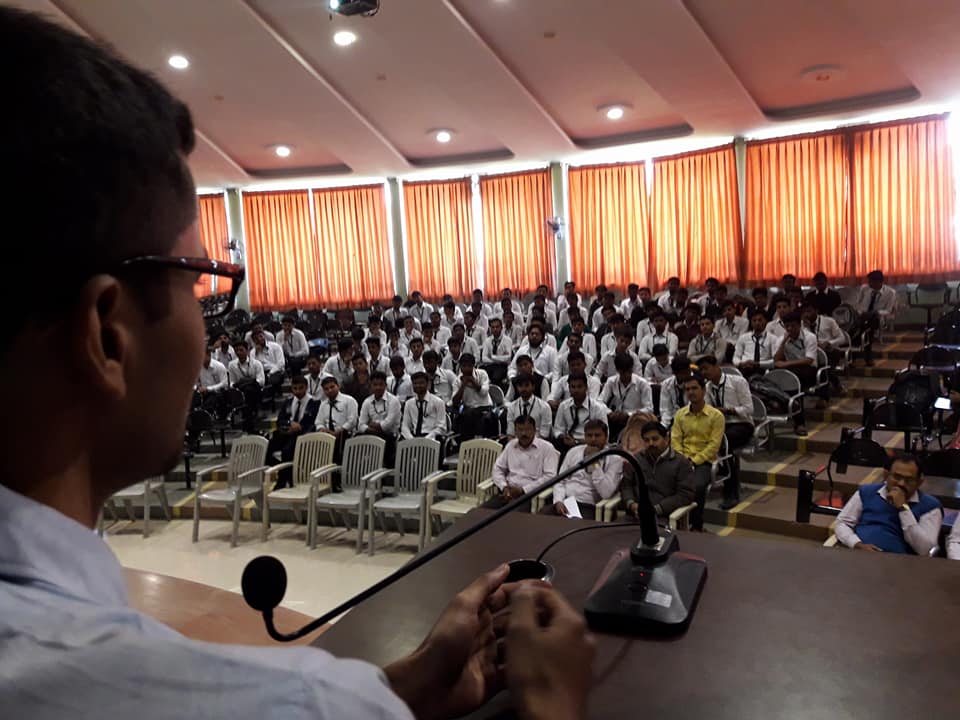
On 5 November 2017, a seminar on “Idea, Innovation & IPR” was conducted at the Department of Production Engineering of Amrutvahini College of Engineering, Sangamner. The programme was organised to introduce engineering students to the importance of intellectual property and its role in transforming technical ideas into inventions and eventually into viable business opportunities.
The session was delivered by Abhijit Bhand, who was invited by Dr. Bhaskar Borkar, Head of the Department of Production Engineering. The seminar witnessed participation from more than 100 students from engineering streams, many of whom were actively engaged in academic project work and prototype development as part of their curriculum.
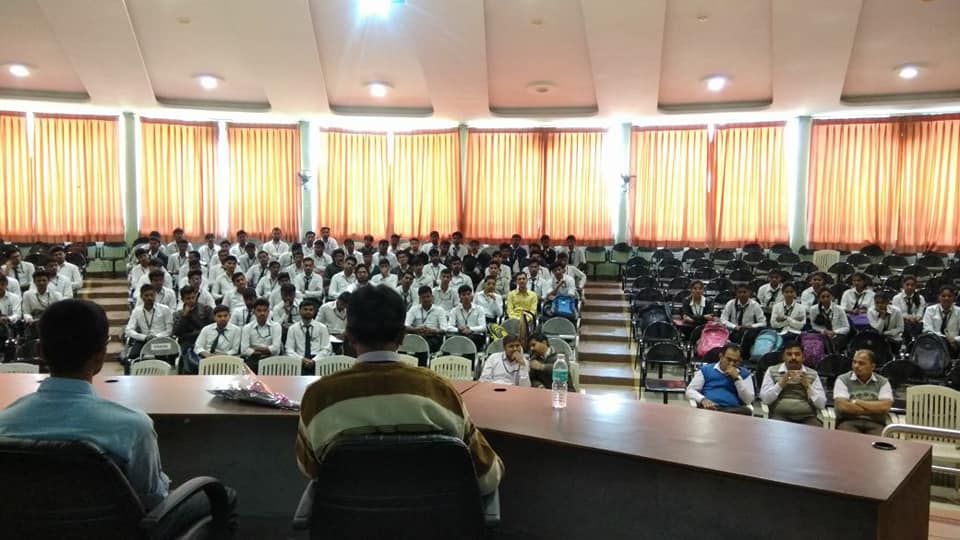
The objective of the programme was to demonstrate how engineering projects undertaken during college can evolve beyond academic evaluation and potentially become inventions capable of protection under intellectual property law and further development into entrepreneurial ventures.
From Student Projects to Real-World Innovation
Engineering students frequently develop creative ideas while working on academic projects. Many of these projects involve designing machines, improving production processes, developing automation systems, or creating technological solutions to everyday challenges.
However, in many cases these innovations remain confined to project reports or laboratory demonstrations.
The seminar focused on explaining how a student project can move through a structured path. An initial idea is first developed into a prototype or working model. If the solution demonstrates novelty and technical advancement over existing technologies, it may qualify as an invention. Once recognised as an invention, it can be protected through intellectual property rights such as patents. With proper development and support, such inventions can later be commercialised through startups or technology licensing.
Students were encouraged to recognise that many successful companies have their origins in academic research and student experimentation.
Understanding the Role of Patents
A key part of the session focused on patents and their importance in protecting technological inventions. Students were introduced to the concept of patentability, including the requirements of novelty, inventive step, and industrial applicability.
For engineering students working on mechanical designs, manufacturing technologies, robotics, and automation systems, these principles are particularly relevant. When a technological solution offers a new and non-obvious improvement over existing methods, it may qualify for patent protection.
The seminar explained that obtaining a patent does not simply provide legal protection. It also creates a valuable asset that can support product development, attract investment, and strengthen a startup’s market position.
Student Ideas Becoming Successful Innovations
To illustrate how ideas emerging from technical environments can evolve into successful enterprises, the session included several examples from both Indian and international innovation ecosystems.
One such example discussed during the seminar was GreyOrange, a robotics and automation startup founded by engineering graduates. The company developed advanced warehouse automation robots designed to improve logistics and supply chain efficiency. The founders began by experimenting with robotic systems and later built a company whose technologies are protected through intellectual property and deployed globally.
Another example referred to Ather Energy, a company started by engineering students from IIT Madras who developed an electric scooter designed for urban mobility. The startup invested significantly in product innovation, battery technology, and software integration, building a strong intellectual property portfolio around its electric vehicle technologies.
An international example discussed during the seminar was Dropbox, which originated from a student project by Drew Houston during his time at university. The initial idea emerged from a simple frustration with carrying USB drives. The concept evolved into a cloud storage platform that later became a global technology company built on proprietary software and protected technology infrastructure.
These examples helped students understand that many globally recognised companies began as ideas developed in academic environments.
The Role of Engineering Institutions in Innovation
Engineering institutions provide an ideal environment for experimentation and technological creativity. Laboratories, project work, and interdisciplinary collaboration allow students to test ideas and build prototypes.
The seminar highlighted that institutions can further strengthen innovation by encouraging students to document their inventions, evaluate patentability, and seek support for intellectual property protection. When academic projects are aligned with intellectual property awareness, the chances of converting ideas into commercial technologies increase significantly.
Students were encouraged to work closely with faculty members and research mentors to identify innovations that may have practical and commercial potential.
Entrepreneurship and Intellectual Property
Another important theme of the session was the connection between intellectual property and entrepreneurship. In the modern technology ecosystem, startups frequently rely on intellectual property to protect their innovations and establish competitive advantage.
A patented technology or a proprietary design often becomes the core asset around which a startup builds its business model. Investors also evaluate intellectual property portfolios when assessing the potential of technology ventures.
For students who aspire to start companies in the future, understanding intellectual property early can provide a strong strategic advantage.
Encouraging an Innovation Mindset
The seminar concluded with a discussion on how engineering students can develop an innovation-oriented mindset. Innovation does not always require complex technologies. Often it begins with observing problems in everyday systems and identifying ways to improve them.
Students were encouraged to remain curious, experiment with ideas, and view their academic projects as opportunities for real technological development.
With the right combination of creativity, technical knowledge, and intellectual property awareness, ideas developed in engineering classrooms can grow into inventions and eventually into successful businesses.
To end...
The seminar on “Idea, Innovation & IPR” conducted on 5 November 2017 at Amrutvahini College of Engineering, Sangamner provided students with valuable insights into the journey from idea to invention and from invention to enterprise. Delivered by Abhijit Bhand, the programme highlighted how intellectual property plays a central role in protecting and nurturing innovation.
With participation from more than 100 students, the session encouraged future engineers to think beyond academic requirements and explore how their technical ideas can evolve into meaningful inventions and business opportunities.
By introducing intellectual property awareness at the academic stage, such programmes contribute to building a stronger culture of innovation and entrepreneurship within engineering institutions and the broader technological ecosystem.