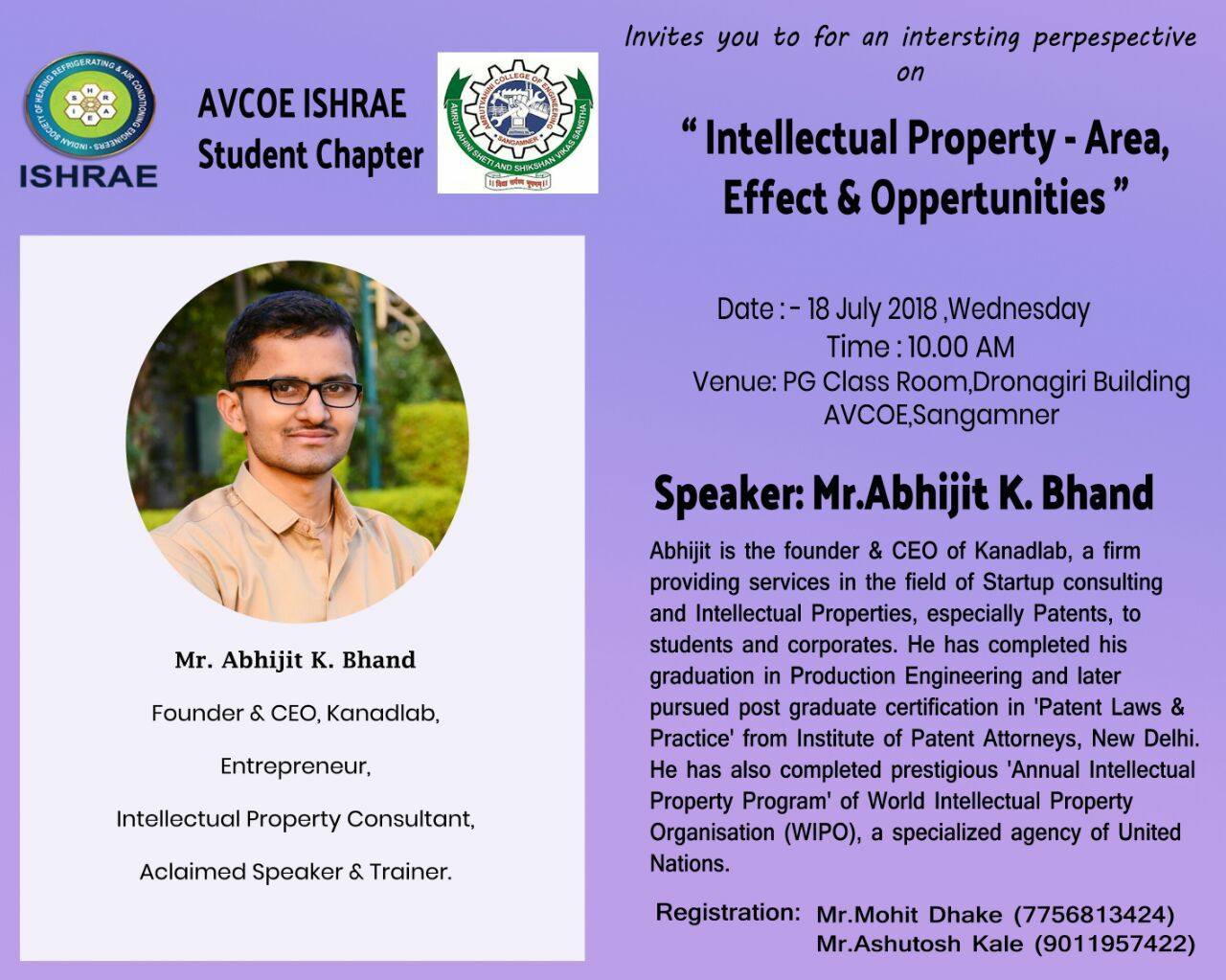
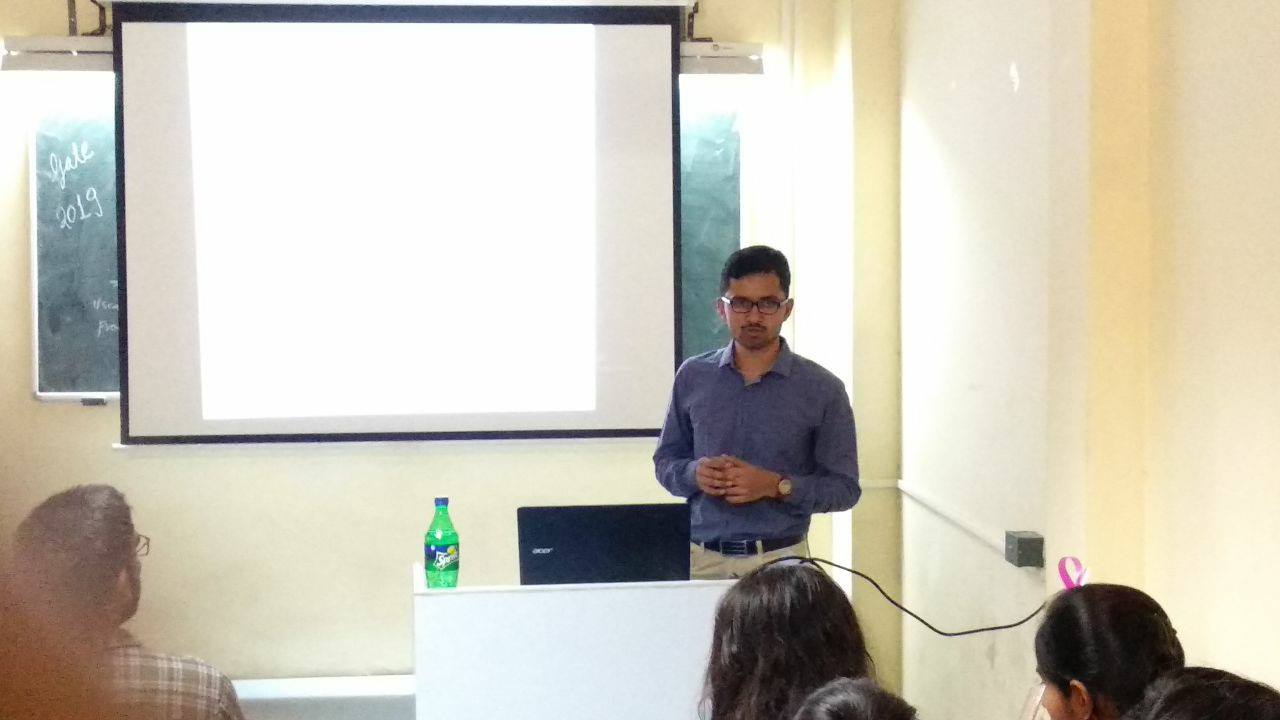
An insightful interaction on the role of intellectual property in engineering innovation was held at the Amrutvahini College of Engineering under the initiative of the The Indian Society of Heating, Refrigerating and Air Conditioning Engineers (ISHRAE) Students Chapter. The program focused on the theme “Intellectual Property – Area, Effect & Opportunities” and brought together members of the society, students of the engineering college, and faculty members interested in innovation within the heating, refrigeration, and air-conditioning sector.
The session featured Abhijit Bhand as the invited speaker, who addressed the participants on how intellectual property can support technological development and industrial growth in Maharashtra and across India. The program was coordinated by Prof. Eknath Bayas, whose efforts, along with the student management team of the ISHRAE chapter, made the event a lively and engaging exchange of ideas.
The discussion centred on the importance of intellectual property in sectors where engineering innovation plays a crucial role. Heating, refrigeration, and air-conditioning technologies are deeply embedded in everyday life, from cold storage facilities that preserve agricultural produce to air-conditioning systems used in hospitals, offices, and industrial plants. Behind many of these systems lie decades of engineering experimentation and patented inventions.
The session explored how several everyday technologies in the HVAC industry began as simple engineering ideas. One well-known historical example discussed during the interaction was the work of Willis Carrier, whose invention of modern air conditioning fundamentally transformed building design and industrial processes. Carrier’s early work on humidity control in printing facilities eventually led to technologies that shaped the entire air-conditioning industry.
Students were particularly interested in understanding how incremental innovations in this sector continue to drive progress. Many HVAC technologies evolve through small but significant improvements such as more efficient compressors, improved heat exchanger designs, advanced refrigerant control systems, or energy-efficient airflow mechanisms. These improvements are often protected through patents and industrial designs, allowing companies to maintain technological advantages.
Another interesting point discussed was how refrigeration technology has played a critical role in India’s food supply chain. Cold storage systems used for preserving fruits, vegetables, and dairy products rely on engineering solutions developed over years of experimentation. Many of these systems were developed by engineers and small manufacturing companies that focused on improving cooling efficiency or reducing energy consumption.
For students aspiring to work in HVAC and allied industries, such innovations present important opportunities. Many MSMEs involved in refrigeration equipment manufacturing, ducting systems, and industrial cooling solutions constantly work on improving their machines and systems. When these improvements are protected through intellectual property rights, companies can strengthen their market position and build technological reputation.
The conversation also touched upon how startups in the climate-tech and energy-efficiency space are increasingly focusing on cooling technologies. As cities grow and energy consumption increases, the demand for efficient air-conditioning systems and environmentally friendly refrigerants continues to rise. This opens new avenues for engineers and innovators who are willing to explore solutions that reduce energy consumption and environmental impact.
Throughout the session, students raised thoughtful questions about patents, industrial designs, trademarks, and copyrights. The curiosity among participants reflected a growing awareness that engineering innovation and intellectual property protection often go hand in hand.
One of the key messages shared during the interaction was that intellectual property should not be viewed merely as a legal subject. For engineers and technology professionals, it represents a practical mechanism to secure innovations and encourage further research and development.
The discussion also highlighted how India’s industrial growth will increasingly depend on protecting and managing intellectual assets. When innovators, startups, and industries understand how to use intellectual property strategically, they can create sustainable competitive advantages and contribute to technological progress.
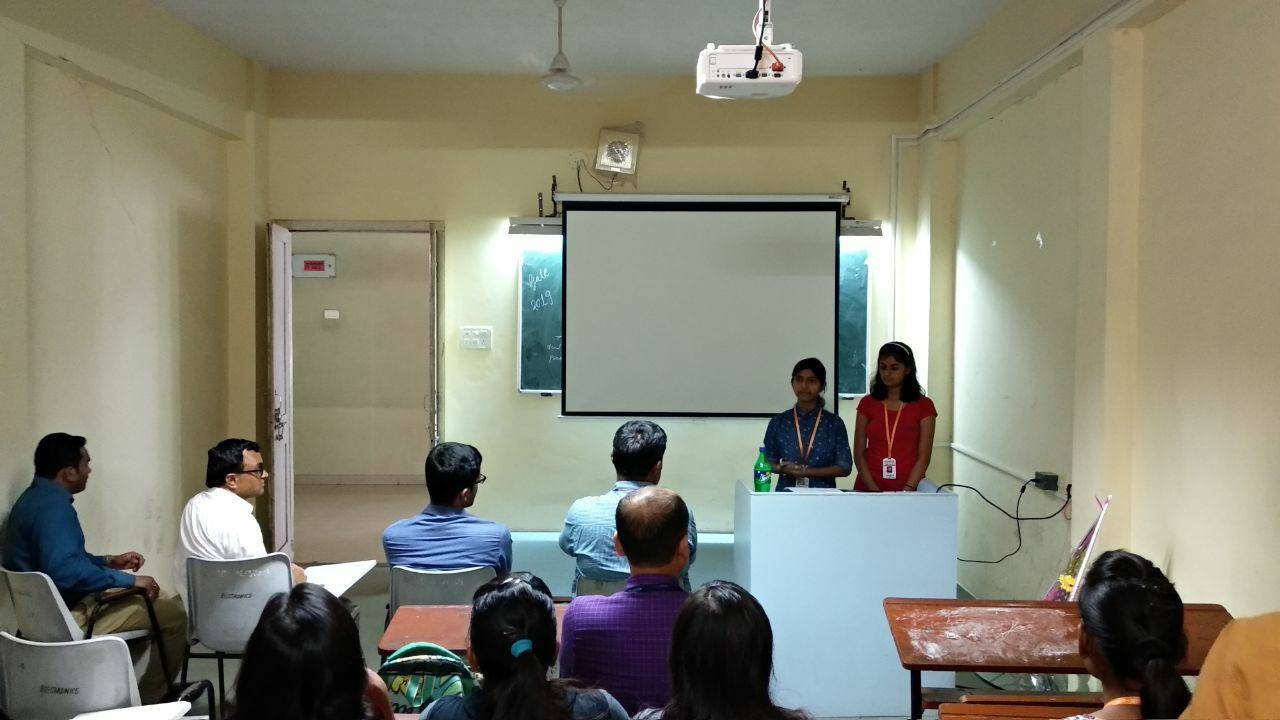
The interaction with the ISHRAE members and students at Amrutvahini College demonstrated a strong interest in exploring the intersection between engineering innovation and intellectual property protection. With faculty members, student leaders, and professional society members actively participating, the session created a meaningful dialogue about how ideas in the field of heating, refrigeration, and air conditioning can evolve into protected inventions and impactful technologies.
The program concluded with appreciation for the efforts of the ISHRAE Students Chapter and Professor Eknath Bayas for organising the event and bringing together professionals and students to discuss innovation, intellectual property, and opportunities within the engineering ecosystem.