On 7 January 2018, a seminar on “Opportunities in Research & Intellectual Property” was conducted at Ithape College, Sangamner. The programme brought together more than 200 students who were keen to understand how research, innovation, and intellectual property intersect in today’s technology-driven economy.
The session was delivered by Abhijit Bhand, who interacted with students on the importance of intellectual property rights and the opportunities available for engineers and researchers in this field. The seminar created a lively environment where legal concepts were discussed through real-world stories and industry examples, making the subject accessible and engaging for the audience.

The conversation began with a discussion on how intellectual property affects everyday technologies. Students were encouraged to look around them and identify products that represent years of research and technological development. From smartphones to automobiles and software systems, nearly every modern product is built upon layers of protected intellectual property.
One of the most engaging parts of the session was the discussion around the well-known turmeric patent case. In the mid-1990s, researchers in the United States were granted a patent claiming the wound healing properties of turmeric. For many in India, this seemed surprising because the medicinal use of turmeric had been known and practiced in traditional households for generations.
The matter was eventually challenged by the Council of Scientific and Industrial Research, and the case was pursued under the leadership of Raghunath Anant Mashelkar. By presenting documented evidence showing that the healing properties of turmeric were already known in traditional knowledge and literature, the patent was successfully revoked in the United States.
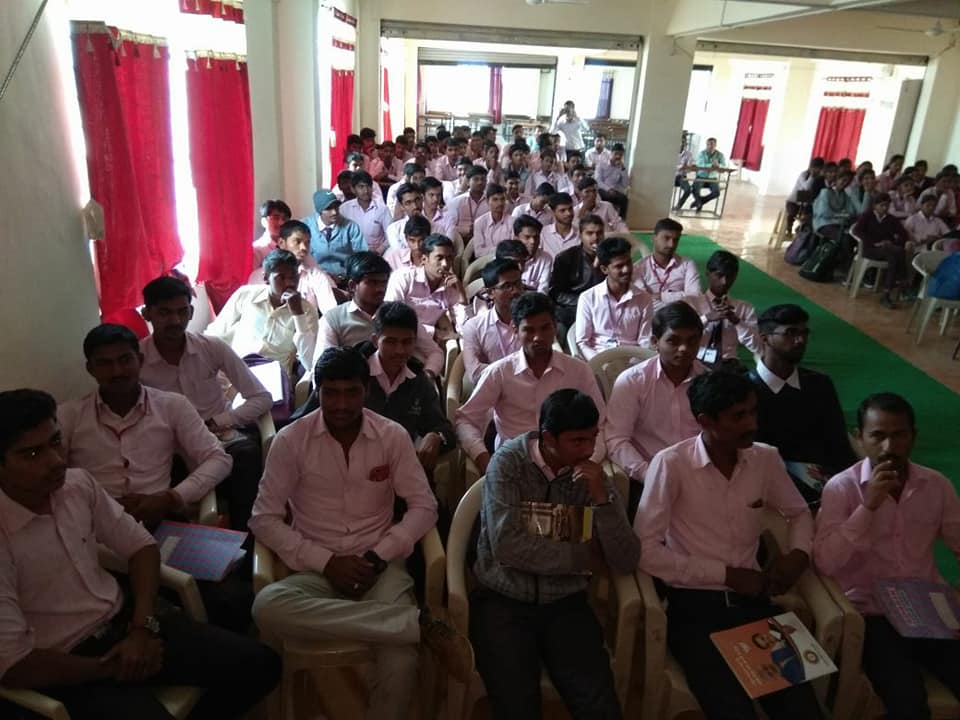
For the students present in the auditorium, this story demonstrated two important lessons. First, intellectual property can influence global recognition of knowledge and innovation. Second, documentation of knowledge plays a critical role in protecting a nation’s intellectual heritage.
From there, the discussion moved toward how patents operate in modern industries. The pharmaceutical sector was used as a primary example. Pharmaceutical companies invest enormous resources into research and development in order to discover new molecules and therapies. Patents provide these companies with a period of exclusivity, allowing them to recover the investments made in research, clinical trials, and regulatory approvals.
Without patent protection, companies would find it difficult to sustain large-scale research efforts. Students were introduced to the idea that patents are not simply legal privileges but economic instruments that support innovation.
The automobile industry provided another interesting angle for discussion. Modern vehicles consist of thousands of patented technologies ranging from engine components and safety mechanisms to electronic control systems and fuel efficiency improvements. Large automobile manufacturers build extensive patent portfolios that protect their technological advancements and help maintain competitive advantage.
Companies such as Volkswagen and Bosch were discussed as examples of organisations that continuously invest in engineering research and file patents across multiple technological domains. Their innovations influence everything from fuel injection systems to vehicle safety technologies.
The conversation then shifted toward the broader use of intellectual property in global technology companies. Firms like IBM have historically been among the largest patent holders in the world, building extensive portfolios across computing technologies, artificial intelligence, and semiconductor design. Patents not only protect these inventions but also generate revenue through licensing agreements.
Similarly, companies such as Apple demonstrate how intellectual property operates across multiple layers of a product. Apple’s success is not built solely on engineering innovation but also on industrial design and brand identity. The distinctive design of its devices, the user interface, and the brand itself are all protected through different forms of intellectual property including patents, design registrations, and trademarks.
These examples helped students understand that intellectual property functions as an integrated system. Technology, design, and branding often work together to create commercial value.
The interaction with students was particularly energetic. Many of them raised questions about how intellectual property can be used by young innovators and startups. For students working on final-year projects, the idea that their prototypes could potentially lead to patentable inventions was an exciting possibility.
Following the seminar, there was also an opportunity to interact with some of the final-year students and review a few of their project ideas. The discussions revolved around how these projects could be refined further, documented properly, and potentially evaluated from an intellectual property perspective.
What stood out during the visit was the curiosity among the students. They were not merely interested in understanding intellectual property as a legal concept but were keen to see how it connects with research, technology development, and entrepreneurship.
The programme created a space where engineering education, research thinking, and intellectual property awareness came together. Conversations moved from traditional knowledge cases like turmeric to modern examples from the automotive, pharmaceutical, and technology industries.
The interaction with students at Ithape College reflected a growing awareness among young engineers that innovation is not only about building a product but also about protecting the knowledge behind it and creating long-term value from it.