In a significant initiative to promote innovation and entrepreneurial thinking among young engineers, Yashwantrao Bhonsale Polytechnic, Sawantwadi, in association with the Kanadlab Institute of Intellectual Property & Research, organized an online "Start-ups & Intellectual Property Awareness Programme." The webinar witnessed an overwhelming response, with 519 students participating from various engineering disciplines, reflecting the growing interest among students in entrepreneurship and intellectual property rights.
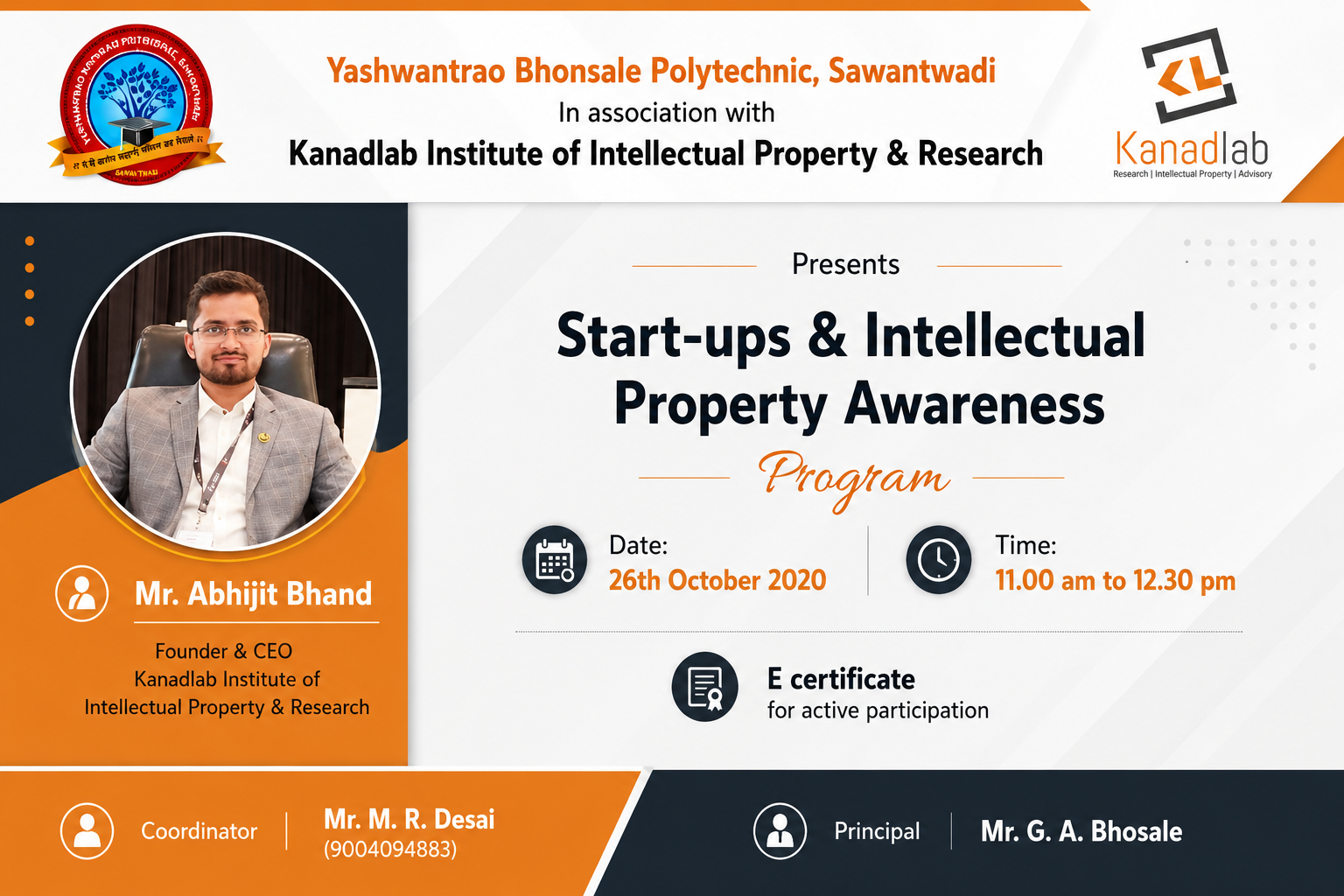
The programme featured Mr. Abhijit Bhand, Founder & CEO of Kanadlab Institute of Intellectual Property & Research, as the keynote speaker. Addressing the large gathering, Mr. Bhand emphasized that innovation alone is not sufficient to build successful enterprises unless it is supported by a sound intellectual property strategy. He observed that in today's knowledge-based economy, ideas have become valuable business assets, and protecting them through appropriate intellectual property mechanisms has become essential for entrepreneurs, startups, and technology innovators.
During his address, Mr. Bhand introduced participants to the fundamentals of patents, trademarks, copyrights, industrial designs, trade secrets, and geographical indications, explaining their practical significance in engineering, product development, software, branding, and business growth. He highlighted that every startup possesses intellectual property in one form or another, whether it is an innovative product, a unique manufacturing process, proprietary software, a distinctive brand identity, or original digital content.
A major focus of the session was the role of intellectual property in India's rapidly expanding startup ecosystem. Referring to flagship initiatives such as Startup India, the National IPR Policy, 2016, and various support mechanisms introduced by the Government of India, Mr. Bhand explained how startups today benefit from expedited patent examination, reduced official fees, and access to intellectual property facilitators. He remarked that these reforms have made intellectual property protection significantly more accessible to young innovators and first-generation entrepreneurs.
The session also examined how intellectual property contributes directly to business success. Participants learned that strong patent and trademark portfolios often influence investor confidence, enterprise valuation, technology licensing, and market competitiveness. Citing examples from global technology companies and Indian startups, Mr. Bhand demonstrated that many successful businesses derive a substantial portion of their value from intangible assets rather than physical infrastructure.
Addressing common misconceptions surrounding patents, Mr. Bhand clarified that not every idea is patentable and explained the three essential requirements of patentability—novelty, inventive step, and industrial applicability. He advised students to maintain proper documentation of their innovations, conduct prior art searches, and avoid publicly disclosing technical details before filing patent applications. According to him, timely protection of intellectual property often determines whether an innovation becomes a commercially valuable asset or enters the public domain without legal protection.
The programme also highlighted the increasing role of educational institutions in promoting innovation-led entrepreneurship. Mr. Bhand encouraged students to transform academic projects into startup opportunities by integrating technical excellence with intellectual property strategy and commercialization planning. He observed that colleges today are evolving beyond conventional teaching institutions into innovation hubs where research, incubation, and technology transfer play an increasingly important role.
Recognized for his contributions to intellectual property awareness and innovation management, Mr. Bhand emphasized that intellectual property should be viewed not merely as a legal subject but as a strategic tool for business growth, technology commercialization, and national economic development. He encouraged aspiring entrepreneurs to identify, protect, and manage their intellectual assets from the earliest stages of product development, enabling them to compete effectively in domestic and global markets.
The interactive session witnessed enthusiastic participation from the 519 students, who raised questions regarding patent filing procedures, startup registration, ownership of student innovations, software protection, trademark registration, and career opportunities in the field of intellectual property. The lively discussion reflected the increasing awareness among engineering students regarding the importance of protecting innovation in an increasingly competitive technological landscape.
The organizers appreciated the overwhelming response to the programme and thanked Mr. Bhand for delivering an insightful and practical session. They noted that the awareness programme had successfully sensitized students to the strategic importance of intellectual property in entrepreneurship and innovation while inspiring them to transform their technical ideas into commercially viable ventures.