Every day, consumers willingly pay a premium for products from companies such as Apple, L'Oréal, Samsung, Adobe, Nike, and many other global brands. While superior technology and product quality contribute to their success, a significant portion of their competitive advantage lies elsewhere—in intellectual property. From patented technologies and copyrighted software to globally recognized trademarks and distinctive product designs, intellectual property has become one of the most valuable assets in modern business.
This theme formed the basis of an engaging session on "Intellectual Property and Its Business Perspectives" delivered by Mr. Abhijit Bhand, Intellectual Property Consultant and Registered Indian Patent Agent, alongside Dr. (Adv.) Shraddha Damle, at Synod College, Shillong. Organized under the GLIPA-India Innovation & Intellectual Property Awareness Initiative, the programme brought together nearly 80 students and faculty members to explore how intellectual property influences business strategy, innovation, and economic growth.
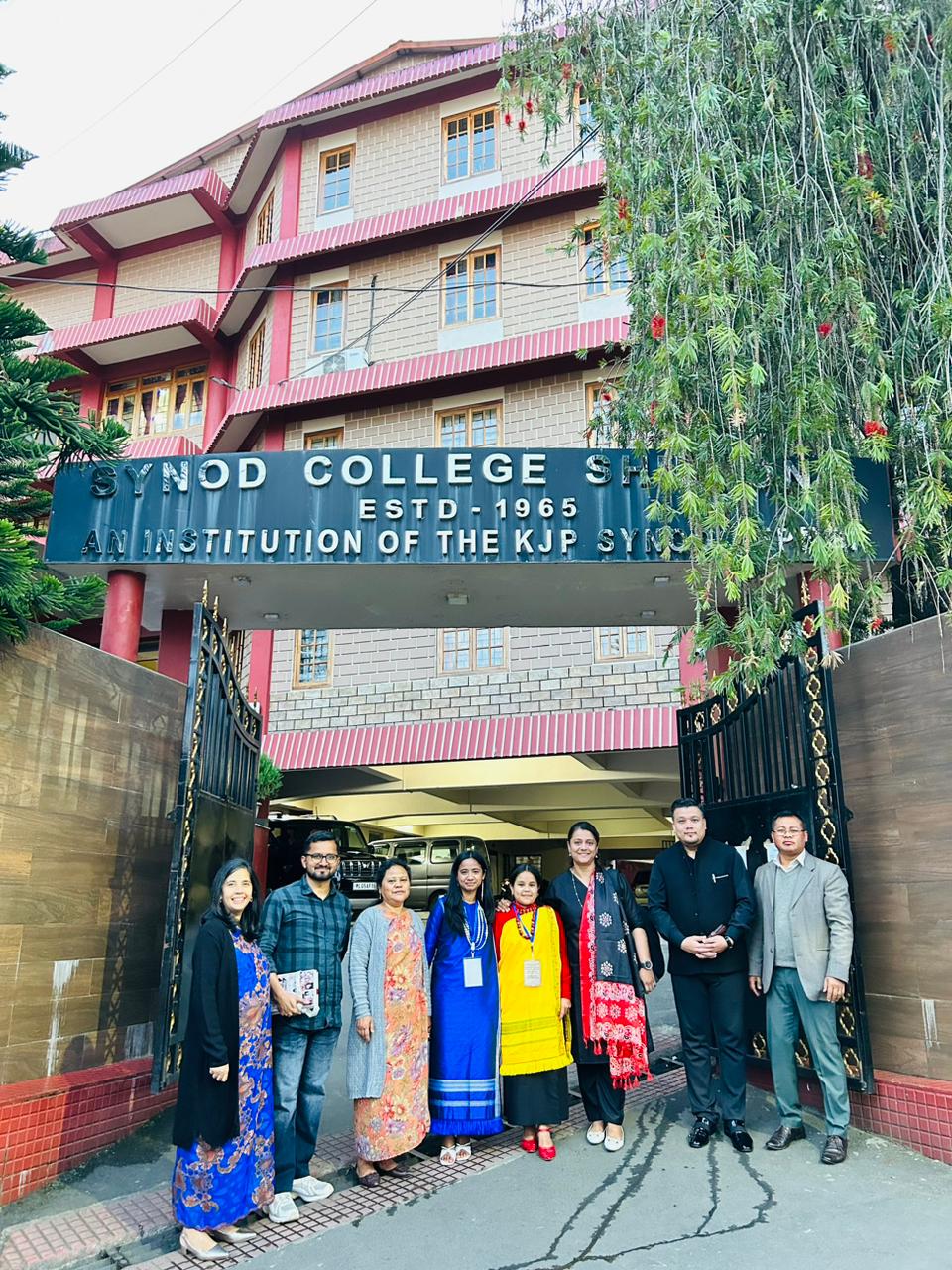
The session encouraged participants to move beyond the conventional perception of intellectual property as merely a legal subject. Instead, it highlighted how businesses strategically use patents, trademarks, copyrights, industrial designs, and trade secrets to establish market leadership, differentiate products, secure investments, and create sustainable competitive advantages.
Using examples from multiple industries, Mr. Bhand illustrated how intellectual property has become the backbone of modern business success. In the cosmetics industry, companies invest heavily in protecting novel formulations, packaging designs, fragrances, and globally recognized brands, enabling them to command premium pricing in highly competitive markets. In the software industry, copyrights, patents, proprietary algorithms, and licensing models form the foundation of billion-dollar enterprises, where the primary assets are often intangible rather than physical. Similarly, the electronics sector relies extensively on patent portfolios, industrial designs, semiconductor innovations, and trademark protection to safeguard technological breakthroughs and strengthen global market positions. Participants gained an appreciation of how companies continuously invest in research and intellectual property to maintain long-term commercial leadership.

The discussion also examined why intellectual property has become increasingly important for startups and emerging businesses. Rather than competing solely on price, innovation-driven enterprises use intellectual property to create barriers to entry, attract investors, license technologies, expand into international markets, and generate long-term enterprise value. Through practical examples and real-world business case studies, participants learned that intellectual property is no longer simply a legal protection mechanism—it is a strategic business tool that influences valuation, profitability, and sustainable growth.
Complementing these discussions, Dr. (Adv.) Shraddha Damle shared valuable insights into the evolving intellectual property landscape and its growing relevance in academic research, entrepreneurship, and innovation-driven industries. Together, the speakers provided participants with a multidisciplinary perspective on how intellectual property connects law, business, technology, and economic development.
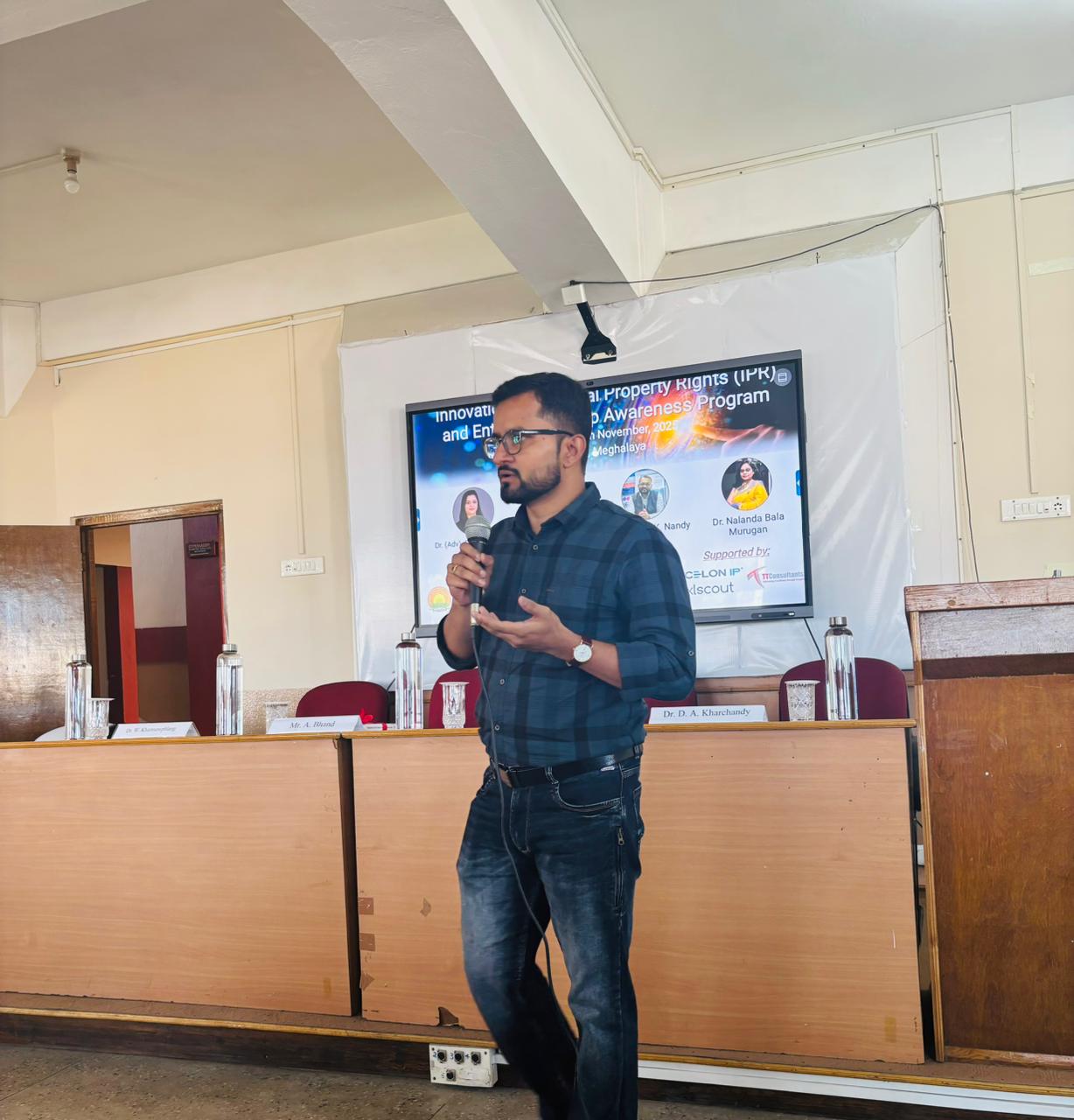
The interactive session concluded with a lively exchange of ideas, as students raised questions on entrepreneurship, commercialization of innovation, startup ecosystems, technology licensing, and career opportunities in the field of intellectual property. The discussions reflected an increasing curiosity among young learners to understand the commercial value of innovation in today's knowledge-based economy.
The programme formed part of GLIPA India's Innovation & Intellectual Property Awareness Outreach across the Northeastern region, an initiative aimed at promoting innovation, creativity, and intellectual property literacy among educational institutions. Special appreciation is extended to Dr. Nalanda Bala Murugan and Dr. Suman Nandy, whose dedicated planning, coordination, and leadership were instrumental in successfully organizing the outreach programme and ensuring its meaningful impact across participating institutions.
As businesses around the world continue to compete through innovation rather than physical assets alone, understanding intellectual property has become an essential skill for future entrepreneurs, professionals, and business leaders. By connecting intellectual property with real-world commercial success, the session encouraged participants to recognize innovation not merely as a creative process, but as a powerful driver of economic value and sustainable enterprise growth.