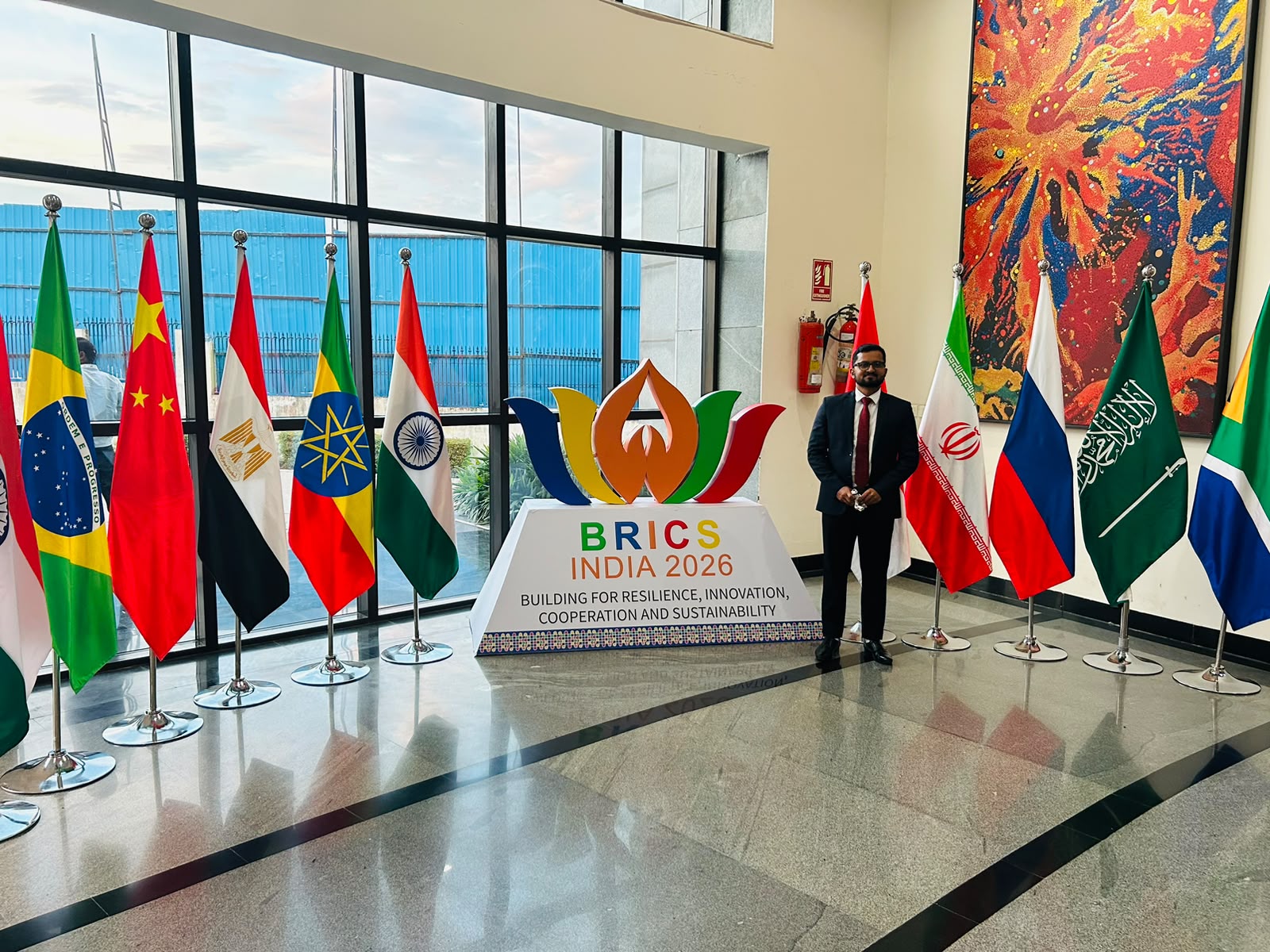
Recognizing the growing significance of intellectual property in research, innovation, and technology commercialization, the IPR Chair and Intellectual Property Rights Cell of the Indian Institute of Technology (IIT) Roorkee organized a workshop on "Strategic Intellectual Property Management" for students, faculty members, researchers, and alumni. The programme was aimed at equipping participants with the knowledge and practical tools required to strategically identify, protect, manage, and commercialize intellectual property generated through research and innovation.

The workshop featured Mr. Abhijit Bhand, Founder & CEO of Kanadlab Institute of Intellectual Property & Research, as the invited resource person. Addressing one of India's oldest and most prestigious technical institutions, Mr. Bhand highlighted that in today's knowledge-based economy, the success of research is measured not merely by publications but by its ability to generate technologies that create societal and economic impact. He observed that strategic intellectual property management has become an indispensable component of modern research institutions, startups, and technology-driven industries.
Beginning with an overview of India's intellectual property ecosystem, Mr. Bhand introduced participants to the country's evolving innovation landscape, emphasizing recent policy initiatives such as the National IPR Policy, 2016, the Startup India Action Plan, and reforms introduced to simplify patent prosecution and encourage technology commercialization. He noted that India has witnessed a significant increase in patent filings, startup registrations, and research collaborations over the past decade, making intellectual property management a critical competency for researchers and innovators.
A major focus of the workshop was the distinction between obtaining intellectual property rights and managing them strategically. Mr. Bhand explained that filing a patent should not be viewed as the final objective but rather as one component of a broader innovation strategy. Effective intellectual property management, he remarked, involves identifying commercially valuable inventions, evaluating patentability, developing filing strategies, monitoring competitors, conducting freedom-to-operate analyses, licensing technologies, and integrating intellectual property into long-term institutional and business objectives.
To demonstrate the practical significance of strategic IP management, several international examples were discussed. Participants learned how companies such as IBM, Qualcomm, and Tesla have leveraged patent portfolios not only for protecting innovations but also for generating licensing revenue, facilitating cross-licensing arrangements, attracting investment, and strengthening market leadership. The workshop highlighted that for research institutions, intellectual property can serve as a bridge between laboratory discoveries and successful technology transfer to industry.
The session also examined several landmark patent disputes that have shaped innovation policy worldwide. The long-running Apple–Samsung smartphone litigation was cited as an example of how patents and industrial designs influence competition in technology markets. Similarly, the Novartis AG v. Union of India judgment was discussed to illustrate India's approach toward balancing innovation incentives with public health considerations under Section 3(d) of the Indian Patents Act. Participants appreciated how these real-world cases demonstrated that intellectual property law extends far beyond legal doctrine and directly influences business strategy, investment, healthcare, and technological development.
Recognizing the academic profile of the audience, Mr. Bhand addressed several practical challenges encountered by universities and research institutions. He explained the importance of determining ownership of inventions developed through collaborative research, maintaining confidentiality before publication, deciding between patent protection and academic publication, and establishing institutional technology transfer mechanisms. He encouraged researchers to identify patentable innovations at the earliest stages of their projects and to work closely with institutional IPR Cells before publicly disclosing research findings.
The workshop further explored the various tools used in strategic intellectual property management, including prior art searches, patent landscaping, technology mapping, freedom-to-operate analysis, competitive intelligence, portfolio management, licensing, and technology valuation. Participants were introduced to the role of patent databases in tracking technological trends and understanding competitors' innovation strategies. Mr. Bhand explained that these tools enable organizations not only to protect their own inventions but also to make informed research, investment, and commercialization decisions.
The interactive session witnessed enthusiastic participation from students, professors, research scholars, and alumni, who raised questions relating to patent drafting, ownership of university inventions, international patent filing, commercialization pathways, and startup intellectual property strategies. Participants appreciated the workshop for combining legal principles with practical business perspectives and real-world examples relevant to both academic research and industry.
The organizers expressed their gratitude to Mr. Bhand for delivering an insightful and engaging workshop and reaffirmed IIT Roorkee's commitment to fostering a strong culture of innovation and intellectual property awareness within the institute. The programme concluded with a shared understanding that effective intellectual property management is no longer optional for leading research institutions but has become an essential pillar for translating scientific excellence into technologies that benefit society and contribute to national economic growth.